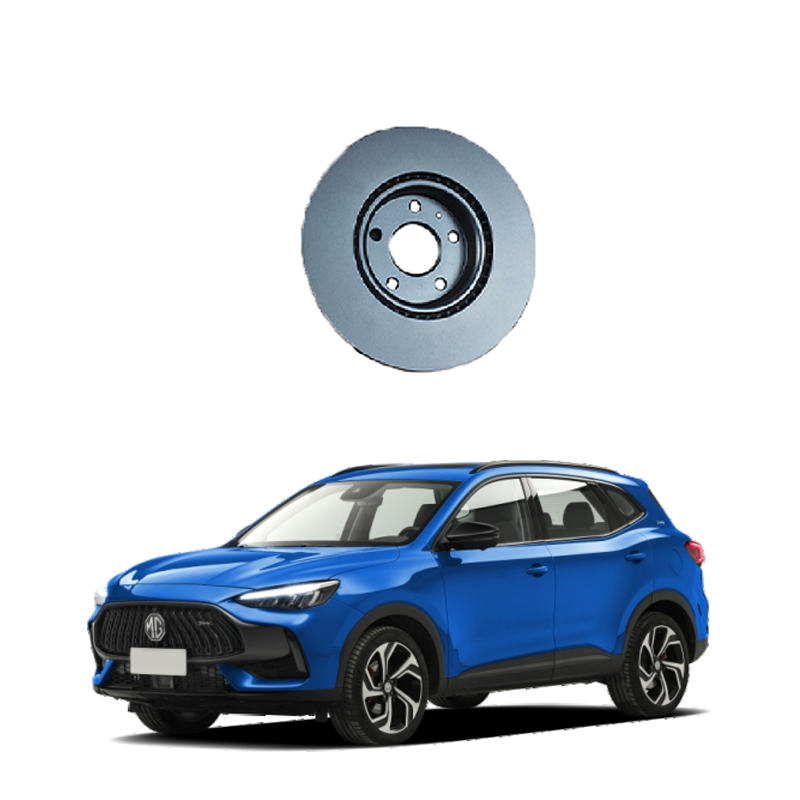
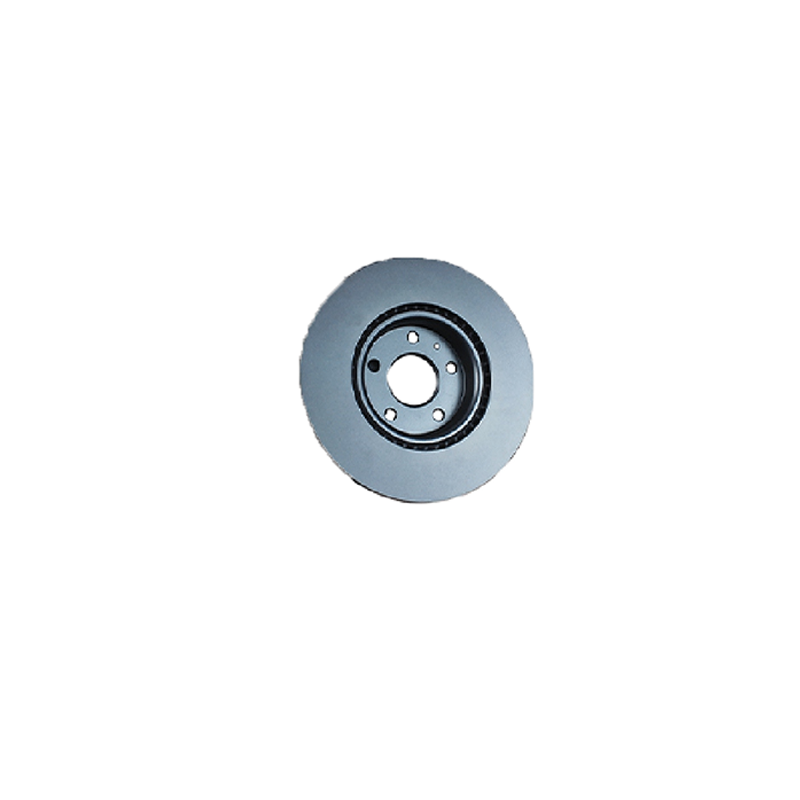
Front Brake Disc: The Core Component of Vehicle Braking
In the braking system of a vehicle, the front brake disc is undoubtedly the core component, bearing the majority of the braking tasks. Due to the majority of vehicles adopting a front-engine layout, the weight of the vehicle's front end is higher during normal driving, and during emergency braking, the inertia causes the center of gravity to shift further forward, which means the front brake disc needs to bear 70%-80% of the braking force. It is fixed to the wheel and rotates synchronously with the wheel. When the driver steps on the brake pedal, the brake caliper will push the brake pad to clamp the brake disc, converting the vehicle's kinetic energy into heat energy through the friction between the two, ultimately achieving deceleration or stopping.
To meet the high-intensity braking requirements, the front brake disc also has a sophisticated structural design. Currently, the front brake discs of mainstream models mostly adopt a ventilated disc design, with cooling slots on the disc body, which can quickly dissipate heat through the air flow during vehicle operation. The temperature resistance can reach above 650°C, effectively avoiding the thermal degradation phenomenon caused by prolonged braking. Some performance models also come with dual-piston calipers, further enhancing the braking response speed and braking force output, suitable for complex scenarios involving frequent braking. Additionally, the front brake disc can work in conjunction with auxiliary systems such as ABS and VSC, precisely adjusting the braking force during emergency braking to prevent wheel lockup and ensure the stability of the vehicle's handling.
Common Faults and Solutions of Front Brake Discs
Although the front brake disc is seemingly sturdy, it can also experience various faults during long-term use. These faults not only affect the braking effect but also may pose a threat to driving safety. Owners must always be vigilant.
Brake Abnormal Noise
This is the most common fault signal of the front brake disc. Different abnormal noises correspond to different problems. If a sharp metallic friction sound is emitted when braking, it is likely that the brake pad has reached the limit of wear, with the metal warning strips on its surface directly contacting the brake disc; if it is a low and dull noise, it may be that the piston of the brake caliper does not return properly, causing the brake pad to remain in contact with the brake disc for a long time. It is necessary to clean the caliper or replace the aged rubber sealing ring in time. In addition, after the vehicle is parked in a humid environment, the surface of the brake disc is prone to rust. The first time stepping on the brake pedal will also produce abnormal noise. Stepping on it a few times can remove the rust and restore normal operation.
Abnormal Brake Disc Wear
Abnormal wear of the brake disc surface, such as deep grooves, cracks, or the outer ring not being worn evenly, all belong to abnormal wear. When the sum of the thickness of the deep grooves on both sides of the brake disc exceeds 3 millimeters, it will cause braking jitter and a decrease in braking force, and it must be replaced in time. A gap appears on the inner side of the brake disc, which may be due to excessive wear of the brake pad causing uneven force distribution, or due to faults in the brake caliper, hose, or brake pump, or suspension system failure. Owners should first correct their driving habits and, if necessary, replace the qualified brake disc and repair the suspension system.
Reduced Braking Effect
If you feel that the brakes have become softer or the braking force is insufficient, in addition to checking if the brake fluid is leaking or mixed with air, you should also pay attention to the condition of the front brake disc. If the surface of the brake disc is unevenly worn, has dents or cracks, it will reduce the adhesion between the brake pad and the brake disc, resulting in a reduced braking effect. In addition, excessive wear of the brake disc will cause the braking stroke to lengthen and the feedback of the pedal to weaken. At this time, it is necessary to measure the thickness of the brake disc promptly. If it is below the minimum thickness standard specified by the manufacturer, it should be replaced immediately.
Key Points of Daily Maintenance for Front Brake Discs
To extend the lifespan of the front brake disc and avoid faults, daily maintenance is crucial. First, develop good driving habits, reducing the frequency of sudden braking and hard braking, to reduce the wear rate and heat load of the brake disc. Secondly, regularly check the condition of the brake disc. During each car wash, pay attention to whether there are scratches or rust on the surface. Check the thickness every 3-5 thousand kilometers at a professional institution. Additionally, do not wash the vehicle immediately after braking. The hot brake disc exposed to cold water is prone to thermal expansion and contraction, causing deformation. It is necessary to wait for it to cool down naturally before cleaning. At the same time, replace the brake fluid every two years or every 40,000 kilometers. Choose qualified products that are suitable for your vehicle model to ensure the stability of the hydraulic transmission in the braking system.
If you want to know more, keep reading the other articles on this site!
Please call us if you need such products.
Zhuo Meng Shanghai Auto Co., Ltd. is committed to selling MG&MAXUS auto parts welcome to buy.