What is the inner frame of the car's front bumper?
The inner frame of the car front bumper typically refers to the front bumper frame (or inner bar, crash bar assembly), which is a core metal structure located inside the plastic outer cover, used to support the shell and absorb collision energy. It is the main metal structure.
Core Definition and Composition
Essentially: It is not a single part, but a force-bearing frame system composed of the main crash beam + energy absorption box + mounting brackets, directly connecting to the vehicle longitudinal beams.
Material: Mainly high-strength steel or aluminum (for high-end/low-carbon models), while some older or lower-end models may lack the metal beams and only have foam.
Location: It is located behind the plastic outer cover of the bumper ("bumper skin") and in front of the engine radiator, completely covered by exterior accessories and invisible.
Main Functions
Collision energy absorption: During low-speed collisions, the energy absorption box collapses to absorb energy, preventing damage to the vehicle body structure; during high-speed collisions, it provides rigid support to protect the passenger compartment.
Structural support: It fixes the bumper shell, radar, cameras, fog lights, etc., maintaining the stability of the front face design.
Pedestrian protection: In collision with pedestrians, it reduces leg injuries by cooperating with the internal foam buffer layer (must meet regulatory stiffness requirements).
Common Misconceptions Clarification
Not equal to the crash bar: "Inner frame/frame" is a concept of an overall structure including the crash bar, energy absorption box, and brackets; "crash bar" only refers to the transverse main beam part.
Not equal to the plastic shell: The external visible plastic part is called "bumper outer panel" or "bumper skin", without the main anti-collision structural strength, only serving to guide flow, decorate, and provide initial buffering.
Not all vehicles are equipped with metal: Only a few low-cost models may use high-strength foam instead of metal crash bars, but regular passenger cars are equipped with metal frame systems.
If you need to confirm the specific model configuration, it is recommended to consult the maintenance manual or disassembly report of the vehicle, as different brands have differences in the naming and structural details of "inner frame" (such as whether it is separate, material grade, etc.).
The core function of the car front bumper inner frame (usually referring to the combination of crash bar + energy absorption box) is to absorb energy during low-speed collisions (usually <40km/h) to protect the structure and provide force transmission during high-speed collisions to protect the passenger compartment, and it serves as the installation and bearing base for sensors and the shell.
Core Function
Energy management and protection classification: The energy absorption box absorbs 60%-70% of the impact energy during low-speed collisions (usually <40km/h) through controlled collapse, preventing damage to the vehicle body beams and core components; during high-speed collisions, the crash bar transfers the remaining force to the vehicle frame to ensure the integrity of the passenger compartment.
Maintenance economy: The energy absorption box is designed as a component that can collapse and be replaced, small accidents only require replacing the inner frame components, significantly reducing maintenance costs and labor hours.
Structural support and integration: It fixes the outer cover of the bumper to maintain the gap tolerance of the design, while providing precise installation positions for millimeter-wave radar, cameras, etc., of intelligent driving sensors.
Key Components and Mechanism
Crash bar: Steel or aluminum main beam, responsible for resisting impact and distributing loads, is the "hard backbone" of passive safety.
Energy absorption box: Thin-walled metal component connecting the cross beam and the longitudinal beam, with induction grooves on the surface, which folds and deforms along a preset path during collision to "unload force".
Installation brackets: Integrates lamps, grilles, and sensor fixing points to ensure the aerodynamic channel and the stability of electronic systems.
Note: "Inner frame" is not a single part, but a system composed of the main beam and the energy absorption box; its design follows the logic of "outer soft, inner hard", with the shell responsible for pedestrian protection and aesthetics, and the inner frame responsible for the substantive mechanical protection.
If you want to know more, keep reading the other articles on this site!
Please call us if you need such products.
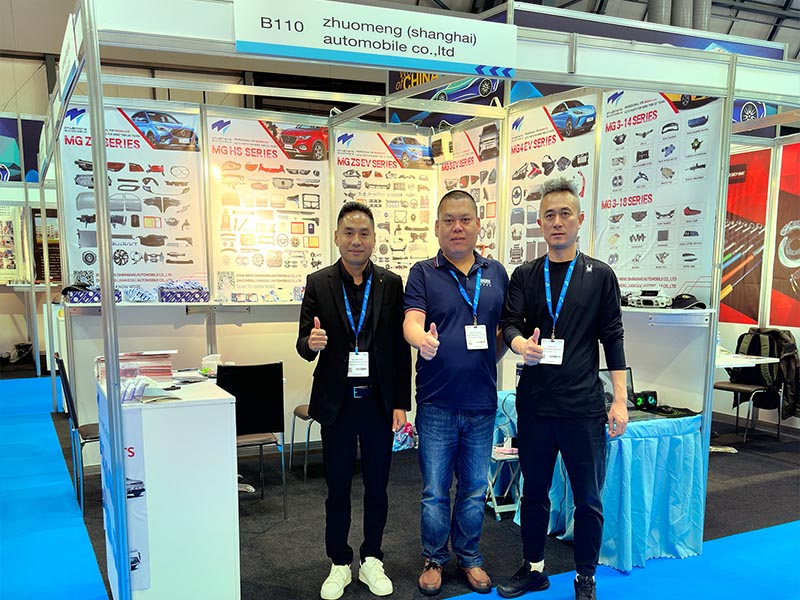
Zhuo Meng Shanghai Auto Co., Ltd. is committed to selling MG&750 auto parts welcome to buy.