What is an automotive crash protection bracket?
The automotive impact protection bracket is a supporting component that fixes the impact protection beam (rod) to the vehicle body. Its main function is to effectively transfer the impact force to the vehicle's longitudinal beams or door frame structures rather than being an independent energy absorption component.
Core Definition and Function
Essentially: It is a structural connection component located inside the bumper or door, usually not having the primary energy absorption function, but responsible for "supporting, positioning and force transmission".
Location: Commonly seen at the ends of the tubular impact protection rods (such as in Japanese and Korean car doors) or at the connection points between the front and rear bumper crossbeams and longitudinal beams.
Function: To ensure that the impact protection beam does not detach or shift during the impact, and to distribute the impact force to the main structure of the vehicle body, preventing local collapse failure.
Main Categories and Characteristics
Door Impact Protection Bracket: Fixed to the tubular side door impact protection rods, commonly used in Japanese and Korean models; Cap-shaped impact protection beams (European and American models) are mostly directly welded, and independent brackets are rarely used.
Bumper Connection Bracket: Connects the front and rear impact protection beams to the vehicle's longitudinal beams, some designs include collapse guiding structures to assist in energy transfer during low-speed impacts.
Material and Process: Mostly made of high-strength steel or composite materials, it needs to match the strength of the impact protection beam (1400MPa+), and the installation methods include welding, bolts or snap fasteners.
Common Misconceptions Clarification
Not an independent safety component: Installing an "impact protection bracket" alone is meaningless; it must be used in conjunction with compliant impact protection beams; without beams, the bracket alone cannot enhance collision safety.
Different from impact bars/rods: The impact bar is an external plastic/TPU anti-scuffing component; the impact beam is the core energy-absorbing steel/aluminum beam; the bracket is merely the "connection base" of the two.
If maintenance or replacement is involved, it is necessary to strictly follow the original factory installation specifications (such as welding points, bolt torque), incorrect installation will result in failure of force transmission during the impact, increasing the risk to the occupants.
The core function of the automotive impact protection bracket is to fix and connect the impact protection beam (rod) to the vehicle body structure, ensuring the effective transmission and dispersion of impact force, and protecting the occupant's survival space.
Core Function
Structural connection and fixation: Firmly connects the ends of the tubular impact protection rods to the inner panel of the door or the longitudinal beam, preventing detachment or displacement during the impact.
Force transmission and dispersion: In the event of side impact or low-speed collision, the impact force is efficiently transmitted from the impact protection beam to the vehicle's frame (such as A/B pillars, floor beams), avoiding local stress concentration that leads to severe intrusion of the door.
Maintaining geometric position: Ensures that the impact protection beam is at the designed height (usually 300-500mm) to match the collision test standards and the actual force points of the accident, maximizing the energy absorption efficiency.
Auxiliary energy absorption buffering: Some brackets are designed with elastic components or collapse structures, cooperating with the main beam for primary buffering, optimizing the energy absorption path. Additional Explanation
It is necessary to distinguish between "anti-collision brackets" and "anti-collision beams/rods": the former are installation connectors, while the latter are the main energy absorption structures. Without the brackets, the tubular anti-collision rods cannot form an effective support system within the vehicle door; if the brackets fail, even with a high-strength anti-collision beam, the occupants cannot be protected. Moreover, this component is different from the external decorative "anti-collision strips" or the "jackstand brackets" used for maintenance, and it belongs to a key passive safety structural component. It is factory-standard and not recommended to be added or modified randomly later.
If you want to know more, keep reading the other articles on this site!
Please call us if you need such products.
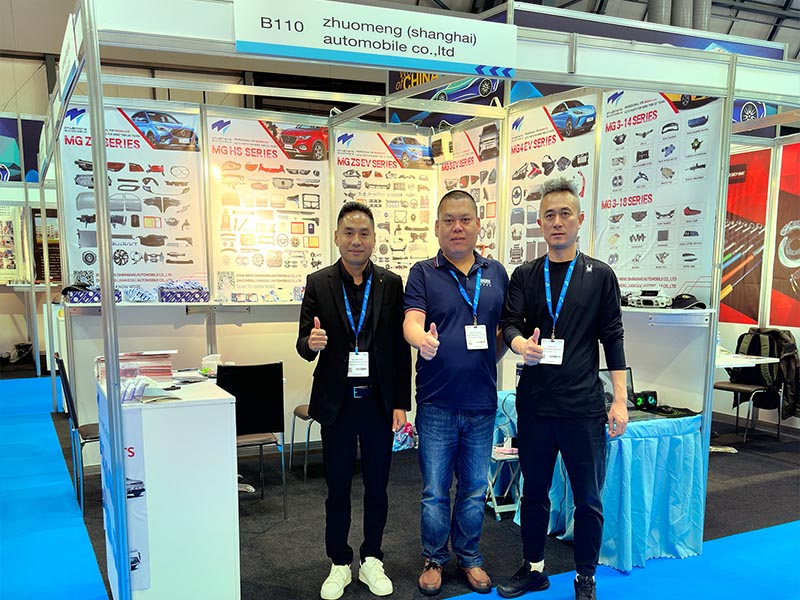
Zhuo Meng Shanghai Auto Co., Ltd. is committed to selling MG&750 auto parts welcome to buy.