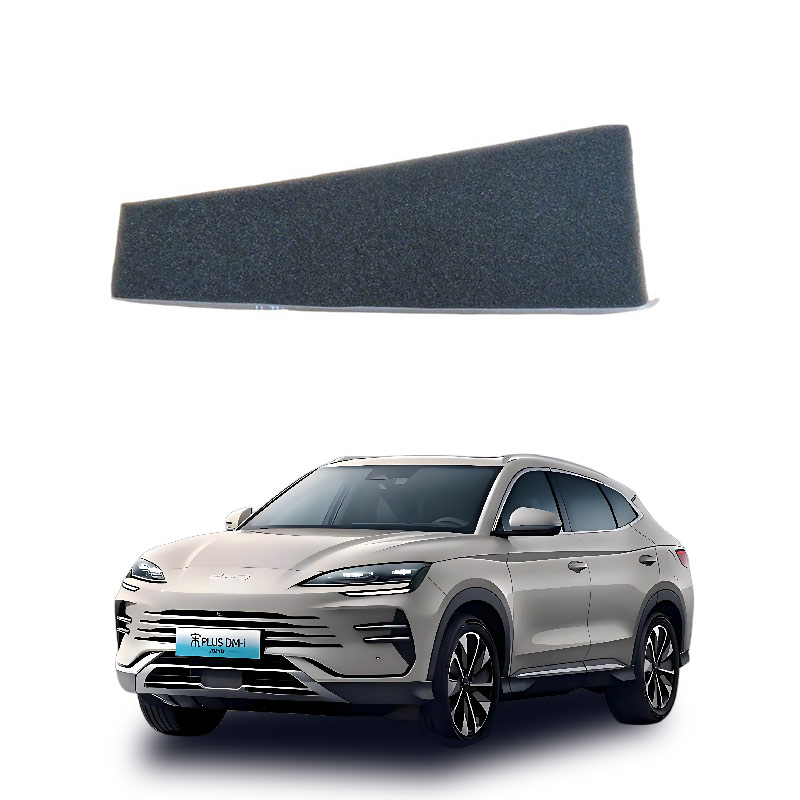
The rear panel of the car - what is the front-end noise reduction sponge?
"The rear side panel - front noise reduction sponge" is not a standard part name. It usually refers to the sound-absorbing/ cotton installed at the front end of the inner side of the rear fender or the inner lining plate of the rear fender arch.
Core definition and location
Actual identity: It belongs to the sound insulation material in the NVH (Noise, Vibration and Sound Insulation Roughness) system of the car. The material is mostly polyester fiber, polyurethane foam or melamine foam.
Installation location: It is located at the rear of the car body side, specifically in the metal cavity in front of the rear fender arch or on the inner lining plate, close to the rear of the front wheel area.
Naming origin: This term is often seen in accessory e-commerce or repair lists. Due to its position being at the "front end" of the "rear side panel" structure and its function being "noise reduction", it has been non-professionally combined and named. Main function
Absorbing high-frequency noise: Utilize the porous structure to consume the energy of sound waves through friction, mainly suppressing the road noise and tire noise generated by tire rolling.
Blocking resonance transmission: Fill the cavities of the body panels to reduce the resonance between the wheels rotating and the side panels of the vehicle, preventing noise from entering the cabin.
Auxiliary protection: Some materials have certain heat insulation and impact-resistant buffer effects against gravel impacts, protecting internal wiring or pipes.
Clarification of common misunderstandings:
- Not the inner sponge of the tire: It is not the "noise-absorbing cotton" attached to the inner wall of the tire, but a sound insulation component fixed on the metal structure of the vehicle body.
- Not the sealing strip: Different from the rubber sealing strips around the doors, its main function is to absorb sound rather than achieve airtight sealing.
If replacement or addition is needed, it is recommended to confirm the inner lining structure of the rear fender of the specific model, and choose flame-retardant, environmentally friendly, and moderately dense polyester fiber materials to avoid using inferior asphalt-based materials to prevent odor and health risks.
The noise reduction sponge at the front end of the car's rear side panel mainly functions to absorb cavity resonance noise and suppress high-frequency vibration of the body panel, thereby improving the interior quietness.
Core functions:
- Sound absorption and noise reduction: Utilize the porous structure to convert sound wave energy into heat energy, mainly attenuating mid-high frequency noises (such as the reflected sound of wind noise and road noise entering the cabin), preventing sound from repeatedly reverberating in the tailgate or cabin cavity.
- Shock absorption and buffering: Adhered to the inner side of the metal panel, increasing damping quality, reducing the plate resonance caused by road bumps during vehicle movement, and avoiding the generation of "buzzing" low-frequency resonance sounds.
- Filling gaps: Filling the irregular gaps between the interior panel and the vehicle body metal to block the "sound bridge" path through which sound directly enters the passenger compartment through air gaps.
Feature description:
- Frequency focus: Has a significant absorption effect on high-frequency noise, but has limited isolation ability for low-frequency noise (such as engine rumbling), usually requiring the use of shock absorption plates in combination.
- Installation location: Generally located behind the rear fender interior panel or at the front end of the trunk side wall, close to the tire arch cover or behind the rear seats, aiming to cut off the transmission chain of external noise to the cabin interior.
If the noise reduction sponge is missing or falls off due to aging, you may hear obvious cavity wind noise or metal tremor. It is recommended to check if it is fully adhered.
Common faults of the noise reduction sponge at the front end of the car's rear side panel usually manifest as detachment, aging and cracking, or moisture failure, resulting in increased road noise/fan noise or abnormal sounds. The core of the handling lies in determining the extent of damage and choosing to re-adhere or replace the original or high-quality substitute parts to restore the sound insulation performance.
Fault diagnosis and handling plan:
- Minor detachment (with intact adhesive layer): Clean the contact surface of the adhesive layer of oil and dust, use automotive-specific high-temperature adhesive (such as 3M 8800) to re-adhere, avoid vibration before curing.
- Severe aging/broken: If the sponge has deteriorated, absorbed water and hardened, or torn, self-repair is ineffective. It is recommended to directly replace the original or high-quality substitute part to restore the sound insulation performance.
- Missing/loose snap fasteners: Check if the fixing snap fasteners are broken. If missing, install plastic expansion snap fasteners to assist in fixation. Relying solely on glue on bumpy roads is prone to detachment again.
Key steps for self-repair:
- Thorough cleaning: Use a damp cloth to wipe the adhesive area of the chassis/panel, remove dirt and dust, then dry with a dry towel to ensure the surface is absolutely dry.
- Selecting the correct adhesive: Do not use 502 or ordinary glass glue (not resistant to high temperatures and prone to melting), use automotive-specific flexible and high-temperature resistant glue.
- Pressing and curing: Apply the adhesive and press it together, let it stand for more than 24 hours before driving, avoid water immersion or severe bumps during this period. Notes for Attention
Quality Assurance Inspection: If the vehicle is still within the warranty period, for such non-human damage-related detachments of accessories, you can try to apply for a free claim for replacement at the 4S store.
Safety Warning: The rear side panels are mostly located at the wheel arches or the underside of the vehicle. If the detached sponge is hung too low, it may get caught in the wheels. Once you notice this, you should handle it as soon as possible.
Professional Intervention: If it involves disassembling the interior panels or conducting extensive work on the underside, it is recommended to have it handled by a professional repair shop to avoid damaging the slots or wiring harnesses during the disassembly and assembly process.
If you want to know more, keep reading the other articles on this site!
Please call us if you need such products.
Zhuo Meng Shanghai Auto Co., Ltd. is committed to selling MG&MAXUS auto parts welcome to buy.