What is the lower tie bar of a car
The lower tie bar of a car is a key component in the car suspension system. Its main function is to prevent excessive lateral roll of the vehicle body when turning and maintain the balance of the vehicle body.
Core function
Lateral stability: By the torsional force of the anti-roll bar (down pull bar), the body roll during cornering is suppressed, and the difference in suspension bounce is reduced.
Enhancing rigidity: As a lower balance bar, it improves the rigidity of the vehicle body structure, preventing deformation of the vehicle body or displacement of the four wheels.
Structural features
Installation position: It is usually fixed on the lower arms of the left and right suspensions, presenting a U-shaped metal connecting rod structure.
Working principle: The rebound force generated by the torsion of the rod body is utilized to balance the force on the suspension.
Distinction of related components
Unlike the side skirts (the crossbar under the door), the side skirts belong to the body spoiler kits, which are used to reduce air resistance and have nothing to do with the suspension system.
The main function of the lower tie bar (anti-roll bar) of a car is to prevent excessive lateral roll of the vehicle body when turning, maintain the balance of the vehicle body, and enhance driving safety and handling stability .
Core function
Preventing roll: When turning, the vehicle body experiences lateral roll due to centrifugal force. The lower tie bar limits the difference in suspension jump through torsional resistance, reduces the lifting amplitude of the wheels, and avoids excessive body tilt.
Enhance rigidity: Connect independent suspensions as a whole to increase the rigidity of the chassis, reduce vehicle body deformation, balance the torque of all four wheels, and extend the lifespan of shock absorbers.
Additional effect
Improve handling: By limiting suspension displacement and enhancing tire adhesion, it makes cornering smoother and driving more agile.
Safety Assurance: Reduce the risk of rollover during high-speed sharp turns or emergency evasive maneuvers, and enhance vehicle stability.
The difference from the lower bracket
The lower tie rod focuses on suspension balance, while the lower bracket mainly undertakes the functions of supporting the vehicle body, dispersing vibrations and transmitting torque.
Faults in the lower tie rod of a car are usually manifested as abnormal noises when turning, veering off course, unstable handling and other symptoms, which require timely inspection and repair . The following are the specific manifestations, causes and handling suggestions:
Common fault manifestations
Abnormal noise: When the road surface is uneven, a "tap-tap" sound is emitted from the faulty side, especially on turning or bumpy sections.
Veering off course: When braking or driving, the vehicle veers to one side and requires frequent direction corrections.
Abnormal handling: The steering wheel feels sometimes light and sometimes heavy, and the left and right sides are inconsistent, affecting driving stability.
Poor shock absorption: Enhanced jolting sensation and reduced cornering flexibility.
Main causes of failure
Youdaoplaceholder0 Impact damage : Side impact or severe jolting may cause deformation or breakage of the lower tie rod.
Youdaoplaceholder0 Wear and aging : Rubber pads, ball heads and other components wear out after long-term use, and their buffering performance declines.
Youdaoplaceholder0 Material/design defect : Some models are prone to breakage due to insufficient material strength or design issues.
Youdaoplaceholder0 Corrosion and rusting : A humid environment accelerates the rusting of metal parts and reduces their strength.
Handling suggestions
Youdaoplaceholder0 Examination and diagnosis :
The faulty side can be initially determined by the location of the abnormal noise and the direction of deviation.
Use a jack to lift the vehicle and check if there is any loosening, deformation or breakage at the connection of the lower tie rod.
Youdaoplaceholder0 maintenance steps :
Disassemble the old parts: Loosen the connecting nut and remove the damaged lower tie rod.
Install new parts: Replace the lower tie rod of the same model, ensure the nut is tightened and adjust the positioning parameters.
Road test certificate: After driving, check whether the abnormal noise has disappeared and whether the handling has returned to normal.
Precautions
Failure to handle faults in a timely manner may lead to more serious damage to the suspension system or potential safety hazards.
If you want to repair it by yourself, you need to have professional tools and experience. It is recommended to give priority to choosing 4S stores or professional repair points.
If you want to know more, keep reading the other articles on this site!
Please call us if you need such products.
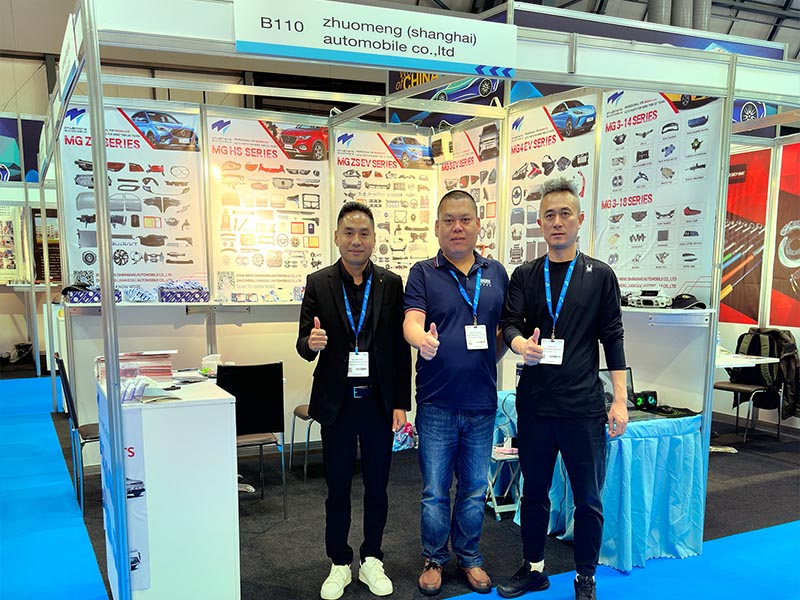
Zhuo Meng Shanghai Auto Co., Ltd. is committed to selling MG&MAXUS auto parts welcome to buy.