What is the function of the lower tie rod in a car
The function of the lower tie bar of a car is mainly reflected in the following aspects:
Youdaoplaceholder0 Reduce body roll : When the vehicle turns or drives on uneven roads, the lower tie bar can effectively suppress the lateral body roll of the vehicle, helping to maintain the balance of the vehicle and improve driving stability.
Youdaoplaceholder0 Enhance chassis rigidity : By connecting chassis components, the lower tie bar can increase the rigidity of the overall structure, prevent vehicle body deformation or four-wheel alignment displacement, thereby improving handling and ride comfort.
Youdaoplaceholder0 Optimize the performance of the suspension system : The lower tie bar works in coordination with the suspension system to balance the torque distribution between the left and right wheels, reduce excessive jumping of the single-side suspension, and extend the service life of components such as shock absorbers.
Youdaoplaceholder0 Enhance safety and handling : When taking high-speed turns or making emergency lane changes, the lower tie bar helps maintain the adhesion between the tires and the ground, reducing the risk of skidding or overturning, and making the vehicle more responsive.
It should be noted that the specific design and function of the lower tie bar may vary by model, but its core functions are all centered around stabilizing the vehicle body and optimizing the dynamics of the chassis.
When the lower tie rod of a car (usually referring to the lower support arm or similar pull rod component in the suspension system) malfunctions, it can cause a series of driving problems, affecting the vehicle's stability, handling and safety. The following are common fault manifestations and corresponding suggestions.
Common manifestations of faults
Youdaoplaceholder0 Abnormal noise from the chassis : When passing over speed bumps, bumpy roads or turning, you may hear a metallic clanging sound or a "click". This is due to the wear of the ball joint of the lower tie rod or the aging of the rubber sleeve, causing looseness.
Youdaoplaceholder0 Handling anomaly : The vehicle rolls more when turning, and it may veer off course when driving in a straight line. The steering wheel needs to be continuously corrected to maintain its trajectory. The steering response may become sluggish or the play level may increase.
Youdaoplaceholder0 Increased bumpy feeling : After the suspension system fails, the road vibrations will be directly transmitted to the vehicle body, causing the vehicle body to bounce continuously when passing over speed bumps and reducing the ride comfort.
Youdaoplaceholder0 Abnormal tire wear : Due to inaccurate wheel alignment, tires may experience uneven wear (such as uneven shoulder wear), which shortens tire life and affects grip.
Youdaoplaceholder0 Difficulty in steering or shaking : When turning, you may feel increased resistance, the steering wheel shakes, and even the wheels jump or sway at low speeds.
Analysis of Fault Causes
The damage of the lower tie rod is usually caused by the following factors:
Youdaoplaceholder0 Long-term wear : The rubber bushing or ball head ages and cracks due to prolonged use, losing its buffering effect.
Youdaoplaceholder0 External force impact : When hitting the shoulder or pothole, components may deform or be damaged due to excessive force.
Youdaoplaceholder0 Corrosion factors : A humid environment can easily cause metal parts to rust, affecting their strength and lifespan.
Youdaoplaceholder0 Design or manufacturing defect : Some models may have design issues that make the lower tie bar more prone to damage.
Countermeasures and maintenance suggestions
Youdaoplaceholder0 Timely inspection : Once the above symptoms are found, a professional technician should conduct a chassis inspection as soon as possible, with a focus on checking whether the ball joint, rubber sleeve and connection parts of the lower tie rod are loose or damaged.
Youdaoplaceholder0 targeted repair :
If only the rubber sleeve or the ball head is damaged, the relevant parts can be replaced separately (at a lower cost). If the lower support arm is deformed or broken as a whole, the assembly needs to be replaced.
After the repair, it is essential to perform four-wheel alignment to restore the vehicle's stability.
Youdaoplaceholder0 Safety first : A faulty tie rod may cause serious safety hazards (such as high-speed deviation or steering failure). It is recommended to avoid further driving until the repair is completed.
If the problem involves components such as the steering wheel adjustment lever or lever, it is necessary to separately check for faults in the wiring connection or mechanical structure.
If you want to know more, keep reading the other articles on this site!
Please call us if you need such products.
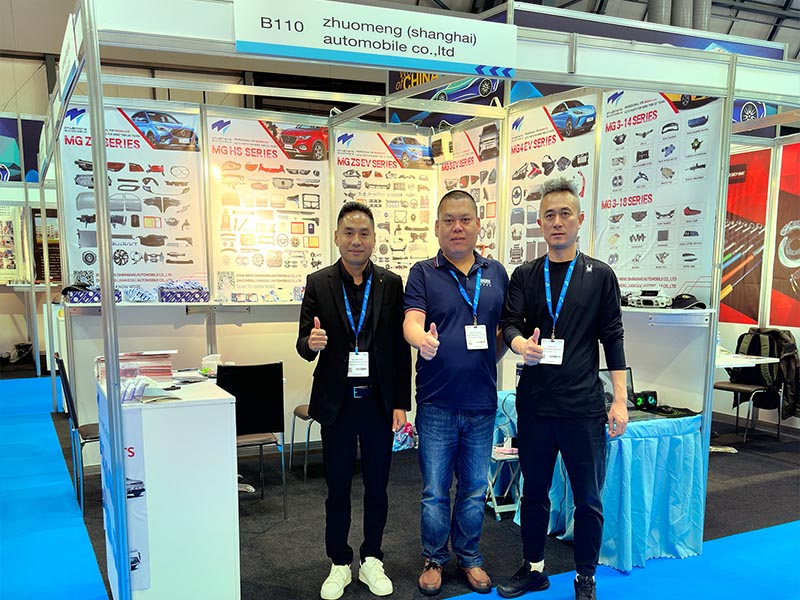
Zhuo Meng Shanghai Auto Co., Ltd. is committed to selling MG&MAXUS auto parts welcome to buy.