The function of seat belts
The functions of seat belts are as follows: Preventing secondary injuries: When a car brakes suddenly in an unexpected situation, it can bind the driver and passengers to the seats to prevent them from surging forward, thereby protecting the driver and passengers from secondary collisions and causing injuries. Automobile accident investigations show that in the event of a frontal collision, if a seat belt is worn, the fatality rate can be reduced by 57%, in a side collision by 44%, and in a rollover by 80%. Restraint and buffering: The function of a car seat belt is that when a vehicle collides or an emergency brake is applied, the pre-tensioning device will instantly tighten the loose seat belt during wearing, firmly securing the occupant to the seat and preventing a secondary collision. Once the tightening force of the seat belt exceeds a certain limit, the force-limiting device will appropriately loosen the seat belt to keep the force on the chest stable. Therefore, car seat belts play a role in constraining displacement and buffering, absorbing impact energy, dissolving inertial force, and avoiding or reducing the degree of injury to the driver and passengers. The following is the main structure of a car seat belt: Webbed: The webbed is made of synthetic fibers such as nylon or polyester, approximately 50mm wide and 1.2mm thick. Depending on different uses, the required strength, elongation and other properties of the seat belt are achieved through weaving methods and heat treatment. It is also the part that absorbs conflict energy. Regulations in various countries have different requirements for the performance of seat belts. Fixed mechanism: It includes buckles, lock tongues, fixed pins and fixed seats, etc. The buckle and lock tongue are devices for fastening and unfastening the seat belt. The part where one end of the webbing is fixed to the vehicle body is called a fixed plate, the fixed end of the vehicle body is called a fixed seat, and the bolt used for fixation is called a fixed bolt.
When a car seat belt is damaged, corresponding repair measures should be taken based on the specific type of fault. In case of severe damage, it should be immediately taken out of use and professional repair should be sought at to ensure driving safety. Here are the common troubleshooting methods:
Common Faults and Maintenance methods
Youdaoplaceholder0 lock failure :
If the lock fails to hold or release normally, it can be disassembled to inspect the internal parts. Replace them if they are damaged and clean them if there are foreign objects.
If the lock is completely ineffective, a new snap should be replaced and it must be ensured that it meets safety standards.
Youdaoplaceholder0 webbing wear or tear :
Mild wear and tear can be treated with professional repair tools.
In case of severe tearing or deformation, the entire webbing must be replaced. Do not mend it by yourself.
Youdaoplaceholder0 reel failure :
If a spring fails, a new one should be replaced. If mechanical parts are stuck, they should be cleaned and lubricated.
If the seat belt cannot be stretched or retracted, the rewinder as a whole may need to be replaced.
Youdaoplaceholder0 electronic system failure :
Problems with the airbag module, sensing sensor or seat belt switch should be detected with diagnostic instruments. Faulty components should be repaired or replaced.
When the fault light remains on continuously, it is necessary to check the circuit, sensor or instrument panel.
Self-handling and professional maintenance advice
Youdaoplaceholder0 situations that can be handled by oneself : simple issues such as removing foreign objects from the lock and a light cleaning of the webbing.
Youdaoplaceholder0 situations where professional repair is required :
Involving safety modules, circuits or the internal structure of the rewinder.
The vehicle has been involved in a collision or the seat belt has been subjected to strong tensile loads.
After self-repair, it is necessary to strictly test whether the locking and winding functions are normal.
Safety Precautions
A faulty seat belt may affect the collision protection effect and should be avoided from being used before repair.
When changing the seat belt, qualified accessories should be selected and the induction circuit should be installed correctly.
Regularly check the condition of the seat belt. If any aging or loosening is found, deal with it promptly.
If you want to know more, keep reading the other articles on this site!
Please call us if you need such products.
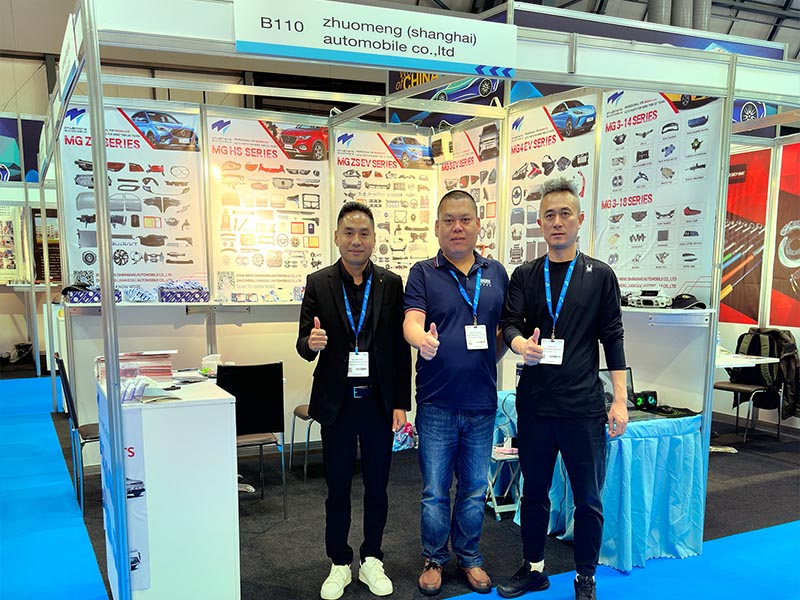
Zhuo Meng Shanghai Auto Co., Ltd. is committed to selling MG&MAXUS auto parts welcome to buy.