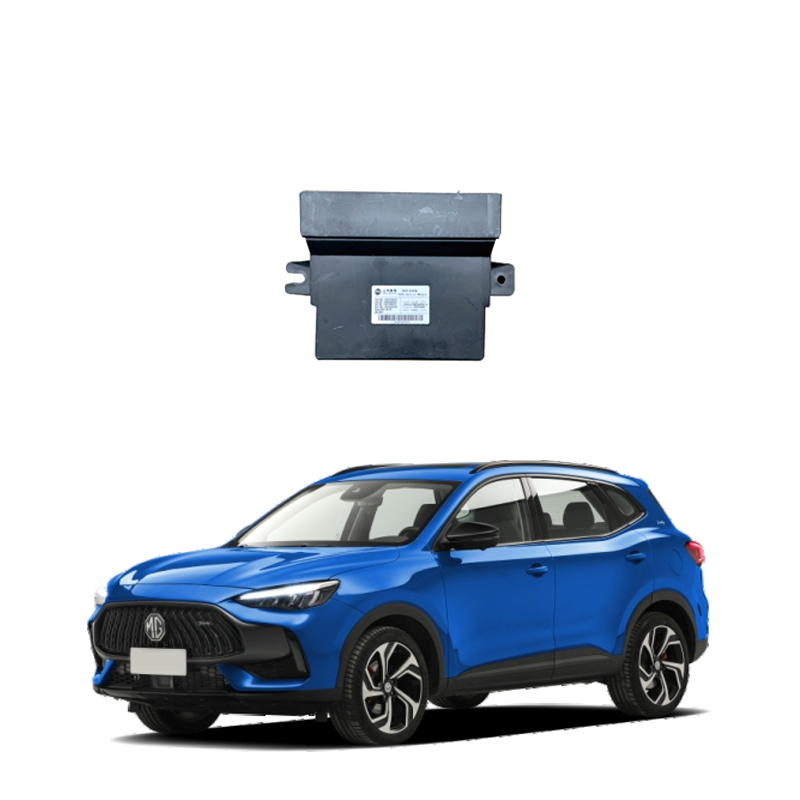
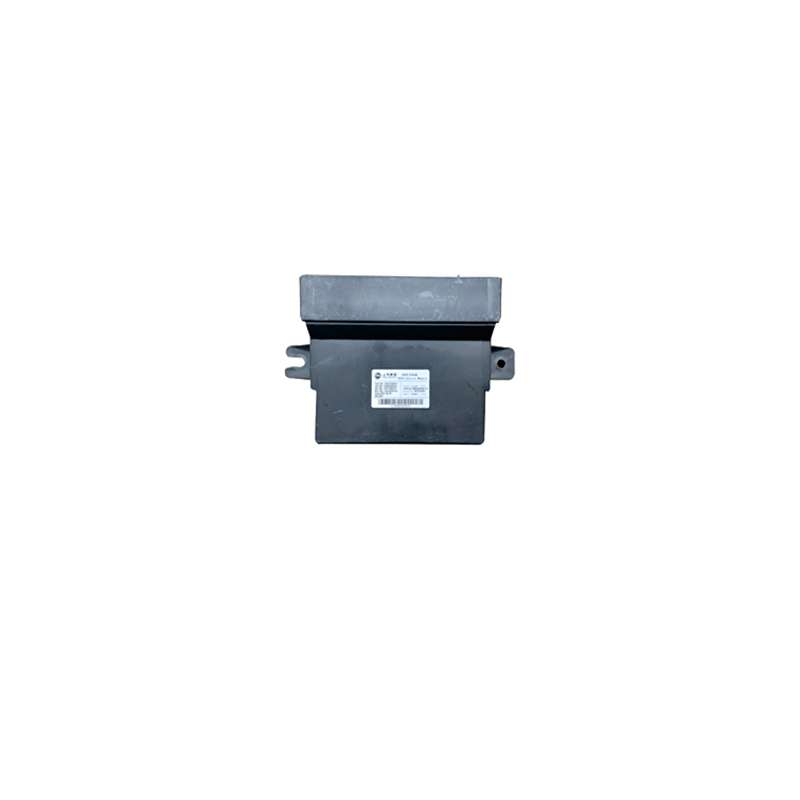
The core function of the vehicle start-up control module
As the "nerve center" of the power system, the vehicle start-up control module serves as a crucial link connecting the driver's instructions with the engine's operation. Its functions cover power regulation, safety protection, and intelligent management across multiple dimensions.
From the perspective of power output, the engine control module (ECU) integrates data from components such as crankshaft position sensors and air flow sensors to precisely adjust the fuel injection pulse width and ignition advance angle with a millisecond-level response speed. In emergency acceleration conditions, the ECU will simultaneously increase the fuel injection volume and advance the ignition timing, enhancing the power response by 15%-25%; in idle conditions, it maintains the theoretical optimal air-fuel ratio of 14.7:1 through closed-loop control, ensuring stable engine operation while increasing fuel economy by 8%-12%. The ignition control module (ICM), as a power electronic switch, precisely controls the primary circuit of the ignition coil based on the ECU's instructions, generating high-voltage electricity to provide energy to the spark plug, serving as the direct executor for engine ignition.
The safety protection function is another core value of the start-up control module. When detecting sensor failures, detonation, or other abnormalities, the ECU will immediately store the fault code and trigger the dashboard warning light. In severe cases, it will activate the limping mode to limit power output, preventing further damage to the engine. The body control module (BCM) uses the CAN network to achieve coordinated protection of the start-up logic. When the vehicle speed reaches 10 km/h, it automatically locks the doors, triggering audible and visual alarms in case of illegal intrusion, and even preventing illegal start-up through the engine anti-theft system. Additionally, the start-up control module has power management capabilities, integrating the power supply of traditional distributed electrical equipment, reducing the number of wiring harnesses by over 40%, lowering the risk of short circuits and wear, and improving maintenance efficiency.
Typical fault manifestations of the start-up control module
As the vehicle ages, the start-up control module may encounter various problems due to component aging or wiring faults, mainly manifesting as three types: abnormal start-up, power fluctuations, and abnormal energy consumption.
The most obvious manifestation is start-up failure. When the ignition module fails, it will fail to precisely control the ignition timing, causing difficulties in engine start-up or even complete inability to ignite. If the ECU has a power circuit failure or memory damage, it will directly lead to the failure of ignition and fuel injection instructions, completely paralyzing the start-up system. Some models may also experience start-up abnormalities due to CAN communication failure, such as the P00A8 fault code indicating a signal transmission interruption between vehicle modules, causing the start-up relay to fail to receive the ECU's instructions.
Power output fluctuations are the hidden manifestation of the fault. A faulty ignition module will cause incomplete combustion, resulting in insufficient power during vehicle operation, sluggish acceleration, and a delay of approximately 0.5-1 second in speed increase; in idle conditions, the engine will also experience periodic vibrations, and in severe cases, it will directly shut down. Abnormal ECU sensor data can also cause power disorder, for example, a deviation in the air flow sensor signal will lead to incorrect fuel injection calculation, causing power interruption during load changes.
Abnormal energy consumption and emissions are the derivative effects of the fault. A faulty ignition module will result in incomplete combustion, increasing fuel consumption by 10%-15%, and causing carbon monoxide and hydrocarbon emissions to exceed the standard by 2-3 times. If the ECU enters the limping mode, it will maintain basic operation by limiting fuel injection volume, although it can prevent engine damage, it will further exacerbate fuel consumption increase, and in some models, fuel consumption may even double.
Fault diagnosis and response strategies
When facing start-up control module faults, a multi-dimensional troubleshooting method combining fault code analysis, signal detection, and component testing should be adopted. In professional diagnosis, the problem direction is first determined by reading the fault codes through OBD-II. Codes P0351-P0358 directly point to the fault of the ignition module, while P00A8 indicates abnormal CAN communication. Then, the primary voltage waveform of the ignition module is detected using an oscilloscope. If the waveform shows noise or interruption, it can be confirmed that the internal components of the module are damaged. For ECU faults, it is necessary to further check whether the power circuit voltage is within the normal range of 13.5-14.5V, and at the same time, analyze whether there is a deviation in the sensor signals through data flow analysis.
During daily maintenance, car owners can take early warnings by observing abnormal phenomena. If the vehicle experiences a start-up delay of more than 3 seconds, idle vibration amplitude exceeding 50 rpm per minute, or a sudden increase in fuel consumption of more than 10%, it is necessary to promptly go to a professional institution for testing. During repair, it is necessary to note that replacing the ignition module requires applying high-temperature conductive silicone grease to ensure heat dissipation, and ECU programming should use the original factory-matched program to avoid secondary faults caused by parameter mismatch. In addition, regularly cleaning sensor carbon deposits and checking the firmness of the wiring harness connection can effectively reduce the occurrence rate of faults in the start control module. The above text systematically summarizes the core functions, typical faults and response plans of the vehicle's start control module, covering both technical parameters and practical maintenance suggestions. It can provide reference for automotive maintenance personnel and also help car owners understand the operation logic of the vehicle's start system.
If you want to know more, keep reading the other articles on this site!
Please call us if you need such products.
Zhuo Meng Shanghai Auto Co., Ltd. is committed to selling MG&MAXUS auto parts welcome to buy.