Car Spark Plug: The Key Guardian and Fault Warning of the Engine's Power Heart
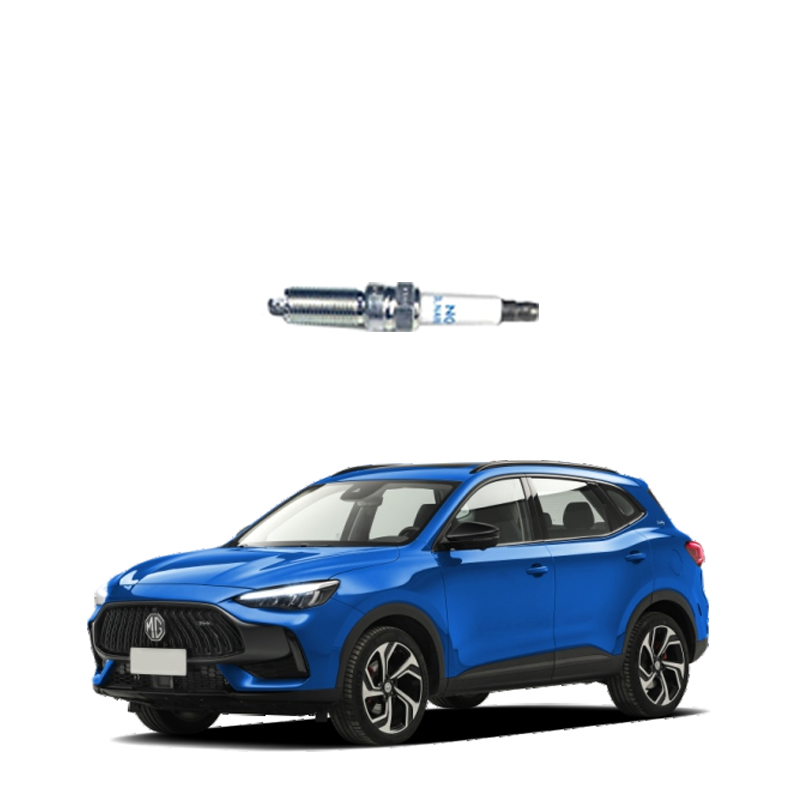
In the precise operation system of a car engine, although the spark plug is small in size, it can be regarded as the "key switch" for power output. Its core function is to convert the high-voltage electricity transmitted by the ignition coil into an electric spark, precisely igniting the combustible mixture in the cylinder, driving the piston to do work, and providing continuous power to the engine. This process is like "a spark igniting a wildfire", and during each working cycle of the engine, the spark plug needs to complete the ignition at a frequency of several thousand times per minute. Once it fails, the engine will be paralyzed.
In addition to its core ignition function, the spark plug also undertakes multiple auxiliary duties. It tightly seals the spark plug hole to maintain the stability of the pressure in the cylinder, prevent the leakage of high-temperature and high-pressure gas, and ensure the efficiency of the engine. At the same time, by adjusting the ignition timing and spark intensity, the spark plug can adapt to different engine conditions: optimizing fuel economy at low speeds, ensuring strong power output at high speeds, like a precise "commander of combustion". Its ceramic insulator also has cooling and insulation functions, which can not only dissipate the heat of the electrode to extend the lifespan but also prevent the high temperature in the combustion chamber, creating conditions for stable operation. What's more, it is worth mentioning that the condition of the spark plug can directly reflect the health of the engine. Abnormalities such as carbon deposits and erosion often indicate faults in the fuel injection system or insufficient combustion, and can be regarded as the "health indicator" of the engine.
However, the spark plug is also one of the most easily worn components in the engine. Working under high temperature and high pressure for a long time, it is inevitable to encounter various faults. The most common is electrode wear. As the mileage increases, the electrode gap will gradually expand from the initial 0.8-1.1 millimeters, resulting in weakened ignition energy and insufficient combustion of the mixture, which can lead to power loss, increased fuel consumption, and other problems. When the gap exceeds 2 millimeters, it may even fail to ignite completely, causing engine cylinder shortage, manifested as severe shaking at idle speed, acceleration jolts, and in severe cases, accompanied by fault light alarms.
Carbon deposits are another major "enemy" of the spark plug. The impurities produced by incomplete combustion of fuel adhere to the surface of the spark plug, increasing the resistance of the electrode, weakening the spark intensity, causing difficulties in cold start, unstable idle speed. If the carbon deposits are severe, they may even cause spark plug leakage, significantly reducing the ignition efficiency. In addition, insulation damage, mismatch in calorific value, and improper installation can also affect the performance of the spark plug: cracks in the insulator will cause spark leakage, excessive or insufficient calorific value will respectively cause pre-ignition or delayed ignition, and improper installation torque may cause cylinder leakage, further exacerbating power loss.
Spark plug failures are not difficult to detect. Owners can receive early warnings through abnormal vehicle manifestations. Difficulty starting, especially multiple failed starts in cold environments, is often a signal of excessive electrode gap or excessive carbon deposits; slow response to acceleration, inexplicably increased fuel consumption by 10%-15%, may indicate insufficient ignition energy or reduced combustion efficiency; while regular shaking at idle speed and jerking during driving are likely to be manifestations of single or multiple cylinder ignition failure. Once these symptoms are detected, it is necessary to check the condition of the spark plug and, if necessary, replace it with an appropriate model.
To extend the lifespan of the spark plug, owners should follow the replacement cycle based on the material characteristics: ordinary nickel alloy spark plugs are recommended to be replaced every 2-3 thousand kilometers, platinum spark plugs can be extended to 4-6 thousand kilometers, and iridium spark plugs can last up to 8-10 thousand kilometers. In daily driving, avoid long-term low-speed driving, use inferior fuel, regularly clean engine carbon deposits, and pay attention to using a professional torque wrench during installation to ensure good sealing performance. Only by attaching importance to the maintenance and replacement of the spark plug can the engine always operate efficiently and provide stable and powerful power output for the vehicle.
If you want to know more, keep reading the other articles on this site!
Please call us if you need such products.
Zhuo Meng Shanghai Auto Co., Ltd. is committed to selling MG&MAXUS auto parts welcome to buy.