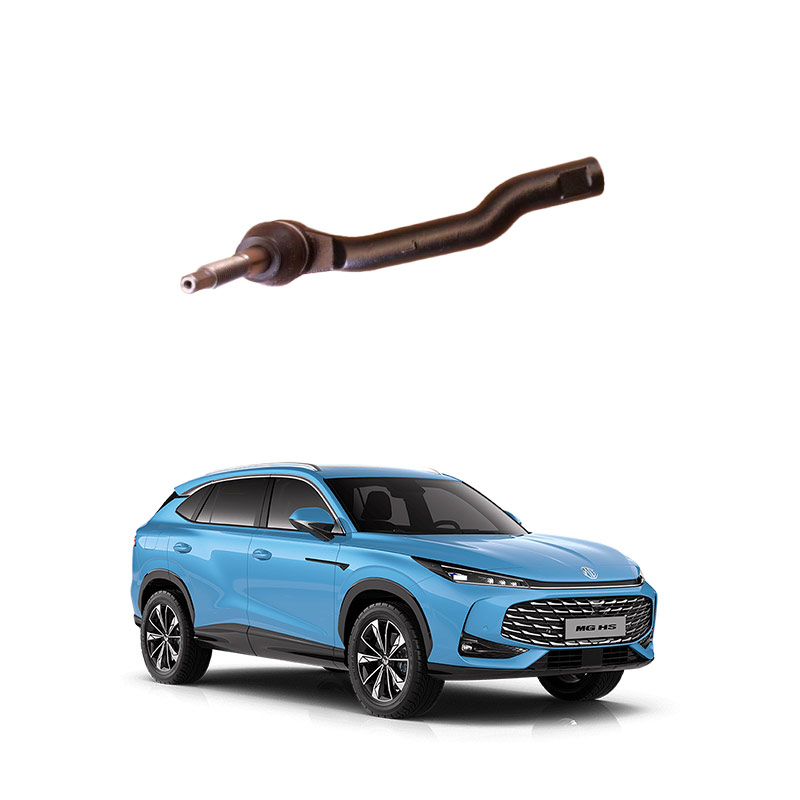
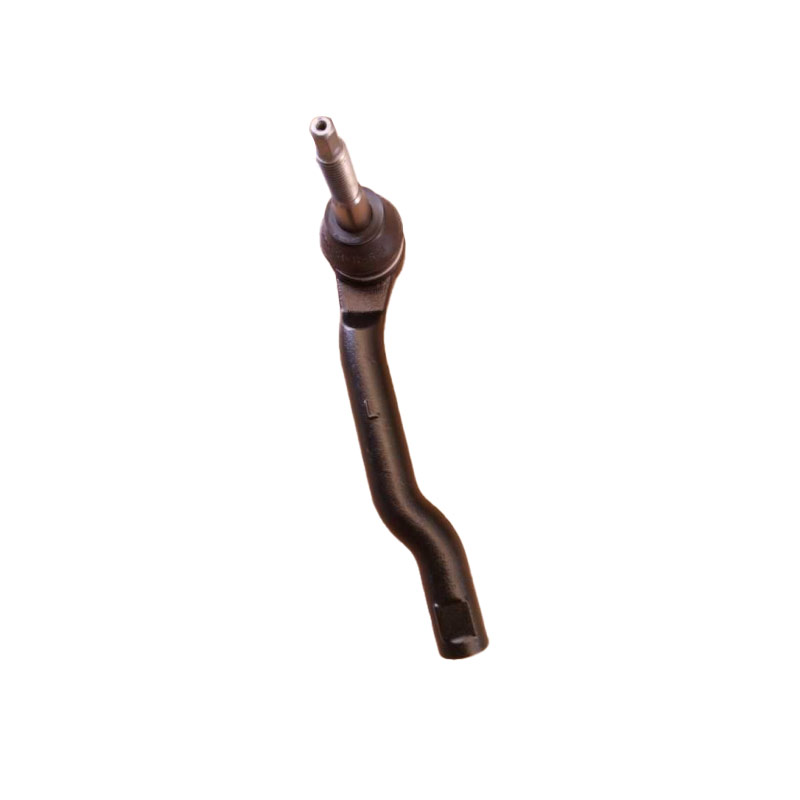
The function of the outer ball joint of the car steering gear
Transmitting steering force and achieving wheel steering
The outer ball joint of the car steering gear is the core component of the steering system. Its main function is to transfer the steering force input from the steering wheel to the wheels, enabling vehicle steering. Its specific functions include:
Power transmission hub: Connecting the steering tie rod and the steering knuckle (or wheel hub), converting the rotation of the steering gear into the steering action of the wheels, ensuring the precise execution of the steering wheel command.
Multi-directional rotation adjustment: Through the spherical structure design, the tie rod can freely swing in the vertical/horizontal direction, adapting to the angle changes of the wheels during turning, enhancing steering flexibility.
Stability and safety support: Bearing the lateral pressure and vibrations during driving, reducing steering impact; if worn, it can cause the steering wheel to become loose, deviate, or make abnormal noises, directly affecting the stability of control and the lifespan of the tires.
When the outer ball joint of the car steering gear is damaged, the main symptoms include: unstable driving direction, brake deviation, abnormal noise on bumpy roads, abnormal movement of the steering wheel, and steering failure. In severe cases, it may cause the wheels to swing and detach. The specific symptoms are as follows:
Unstable driving direction: The vehicle is difficult to maintain a straight line, the steering wheel "jumps" or shakes left and right, more obvious at high speeds.
Brake deviation: The vehicle deviates to one side during braking, prolonging the braking distance and increasing the risk of loss of control.
Abnormal noise on bumpy roads: When passing over or uneven roads, the chassis emits a "clack" or "tap" sound.
Abnormal steering wheel: The gap becomes larger, the virtual position is obvious, or the steering feedback is sluggish.
Uneven tire wear: Due to the unbalanced force, "wear out the tire", shortening the tire lifespan.
Steering failure: In extreme cases, the steering wheel cannot control the wheels, possibly causing the wheels to swing and detach.
When the outer ball joint of the car steering gear is damaged, the most typical abnormal sound is "clack clack" or "tap" sounds. This abnormal sound becomes very obvious in specific driving situations and is an important signal for determining the damage of the ball joint.
Specific manifestations are:
On bumpy roads or passing over: The chassis will emit a clear and rhythmic "clack clack" sound, which is caused by the collision and friction between the components after the ball joint is worn.
During turning or steering operation: A "tap tap" sound can be heard, especially more obvious when the steering wheel is turned slowly at low speed.
At high speed: In some cases, there may be periodic sounds, accompanied by steering wheel shaking or body numbness.
These abnormal sounds are the direct manifestation of ball joint wear and increased gap, which are clear warnings emitted by the vehicle and should be given sufficient attention.
After the ball head of the steering tie rod is damaged, it is recommended to replace a pair (left and right sides) to ensure driving safety and control stability, but it is not absolutely mandatory. The specific judgment should be based on the vehicle's usage age and wear degree.
Recommendation for replacement and core basis
The situation where a pair is replaced first:
When the vehicle has been used for more than 3 years or has traveled more than 60,000 kilometers: The wear degree of both ball heads is usually similar, replacing only the damaged side is likely to cause uneven steering force, deviation, or abnormal tire wear.
When there are obvious fault symptoms: Such as steering wheel shaking, driving deviation, or abnormal noise, indicating that the system is out of balance, replacing a pair can avoid secondary repairs.
The situation where only the damaged side can be replaced:
New vehicles or those with a low mileage (<3 years/30,000 kilometers): After professional testing and confirmation that the other side has no gap (test by shaking the wheel with your hand), only the faulty side can be replaced to save costs.
The core reason for having to replace a pair
Safety risk: Replacing only one side is likely to cause steering system imbalance, leading to loss of control of the direction at high speed, increasing the accident risk by more than 40%. Wear synchronicity: The ball joint of the steering tie rod is subjected to the same road impact. When one side is damaged, the other side is usually already in the fatigue stage, resulting in a 30%-50% reduction in lifespan.
If you want to know more, keep reading the other articles on this site!
Please call us if you need such products.
Zhuo Meng Shanghai Auto Co., Ltd. is committed to selling MG&MAXUS auto parts welcome to buy.