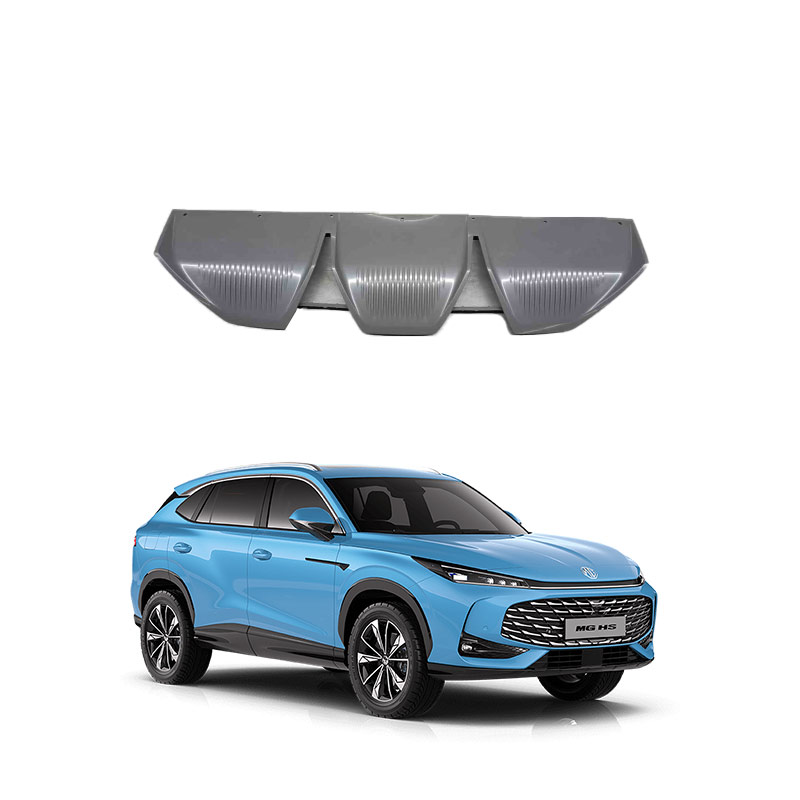
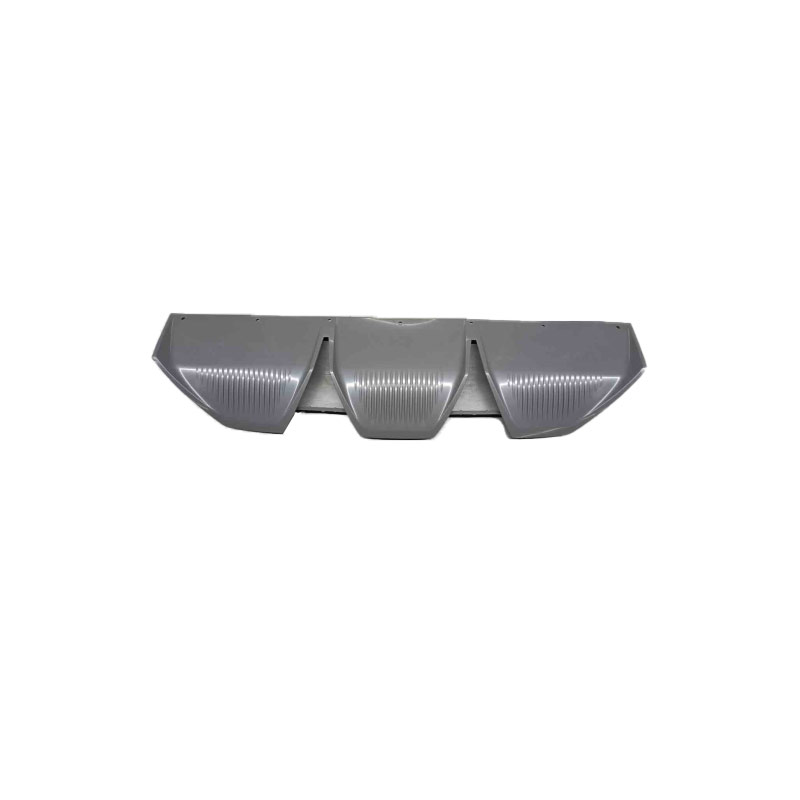
What is the underbody trim panel of the car's rear bumper?
The plastic component below the car's rear bumper is commonly referred to as the rear bumper lower panel, or sometimes as a diffuser, rear lip, or rear spoiler (for some models).
This component is mainly made of plastic and is fixed to the bottom of the rear bumper using screws or clips. Its functions are diverse:
Aerodynamic optimization: When the vehicle is traveling at high speed, the diffuser can guide the airflow in an orderly manner, reducing air resistance and lift, lowering the air pressure, thereby enhancing the vehicle's stability and grip, especially effectively preventing the rear wheels from "floating" at high speeds.
Protective function: As a "shield" at the bottom of the vehicle, it can absorb and disperse minor impacts from road debris, curb stones, etc., protecting the rear bumper and the components below, such as the exhaust pipes and oil lines, reducing maintenance costs.
Aesthetic design: Its streamlined design is in harmony with the overall style of the vehicle, enhancing the vehicle's sportiness and visual hierarchy, and is an important detail for improving the appearance of the model.
Noise reduction and environmental protection: By smoothing the airflow, it reduces the noise caused by airflow turbulence, improves the interior quietness; in the event of a collision, its material can also provide some protection for pedestrians.
It should be noted that in some materials, "lower panel" emphasizes decorative aspects, while "diffuser" focuses on aerodynamic functions. However, in practical applications, these two terms are often used interchangeably, especially at the rear bumper location, where the function typically combines both decoration and aerodynamic optimization.
The plastic plate below the car's rear bumper is usually called the rear bumper lower panel, diffuser, or rear spoiler. It plays multiple important roles in vehicle design.
Its main functions can be summarized as follows:
Enhancing driving stability: When traveling at high speed, the rear bumper lower panel can effectively guide the airflow, reducing the lift generated at the bottom of the vehicle, preventing the rear wheels from "floating", making the vehicle more stable and adhering to the ground, improving handling.
Optimizing aerodynamic performance: By smoothing the airflow, it reduces air resistance and turbulence, thereby lowering the drag coefficient, helping to reduce fuel consumption and improve fuel economy.
Protecting the vehicle and components: As a physical barrier, it can absorb and disperse impact forces from road debris, curb stones, etc., protecting the rear bumper, exhaust pipes, wiring harnesses, and other critical components at the bottom from scratches and damage.
Enhancing safety: In low-speed collisions, the lower panel acts as a first buffer layer, reducing the impact on the vehicle structure; in high-speed collisions, it can work in conjunction with the vehicle's safety system to help distribute the impact force, indirectly protecting the occupants and pedestrians.
Enhancing the vehicle's appearance: Its smooth line design integrates with the overall style of the vehicle, enhancing the vehicle's sportiness and visual sophistication, and is an important decorative element.
This component is usually made of high-strength plastic and is fixed to the bumper using screws or clips. If damaged, it is also easy to disassemble and replace.
For most modern models, the rear bumper lower panel is a manifestation of the diffuser.
The rear bumper lower panel (also commonly known as the rear bumper lower lip, rear guard plate, or diffuser panel) is a plastic or composite material component at the bottom of the vehicle's rear, mainly serving to beautify the bottom lines of the vehicle body, guide the airflow to reduce drag, and to some extent protect the rear bumper and the end of the chassis from scratches, debris, and minor impacts.
When this component malfunctions, common problems include cracking, detachment, deformation, paint peeling, or loose fasteners. The causes of the failure may be due to minor collisions, long-term aging, low-temperature brittleness, or poor installation quality.
Main failure manifestations and solutions
Minor cracks or small-scale damage If it is only a small crack that does not affect the structure, temporary repair can be done using plastic welding rods or special adhesives, but the aesthetic and durability are limited.
If the damage affects the appearance or causes abnormal sounds, it is recommended to replace it to avoid further damage during driving.
Complete detachment or severe deformation
This usually occurs due to the breakage of the fixing snap or the loosening of the screws.
Temporary treatment: Stainless steel self-tapping screws can be used to reinforce the original installation point (usually on the left and right and the middle), but be careful not to damage the original vehicle structure.
Recommended treatment: Replace with the original factory parts or compatible aftermarket parts to ensure a good fit with the vehicle body curvature and prevent water ingress or chassis corrosion.
Paint peeling or surface aging
Some models (such as Haval H6) have experienced the problem of the paint on the lower panel peeling like paper, mostly caused by the defect of the original factory spraying process or improper maintenance later.
This kind of problem cannot be solved by simple repair, and replacing a new part is the only long-term solution.
Replacement and repair suggestions
Accessory selection:
Original factory parts: High fit and good color matching, but the price is higher. They can be purchased through 4S stores or authorized channels.
Aftermarket parts: Good cost performance, but there may be color differences or installation gaps. Choose a brand with a good reputation.
Remanufactured parts: Economical, but it is necessary to confirm that there are no hidden damages and that it is completely matched with the model and year of the vehicle.
Whether to repaint:
If the color does not match the original vehicle after replacement, usually, it is necessary to repaint to maintain the coordination of the vehicle's appearance.
Year inspection impact:
The lower panel of the rear bumper is an exterior part of the vehicle. If it is severely damaged, loose or missing, it may be judged by the year inspection agency as "affecting the integrity of the vehicle's appearance" or "having safety hazards" and cannot pass.
Some car owners were wrongly judged as "modifying the exhaust" due to replacing non-original style lower panels, resulting in a failed year inspection. It is recommended to prioritize choosing original style accessories.
Repair suggestions:
If you are unsure about the cause of the fault or lack the ability to handle it yourself, it is recommended to go to a professional repair shop or brand authorized service center for inspection to avoid misjudgment or secondary damage.
Tips: Even if the lower panel is only a plastic part, it is not recommended to remove it directly. It still has practical functions for vehicle aerodynamics and chassis protection. Removing it may increase the risk of chassis corrosion and affect driving stability.
If you want to know more, keep reading the other articles on this site!
Please call us if you need such products.
Zhuo Meng Shanghai Auto Co., Ltd. is committed to selling MG&MAXUS auto parts welcome to buy.