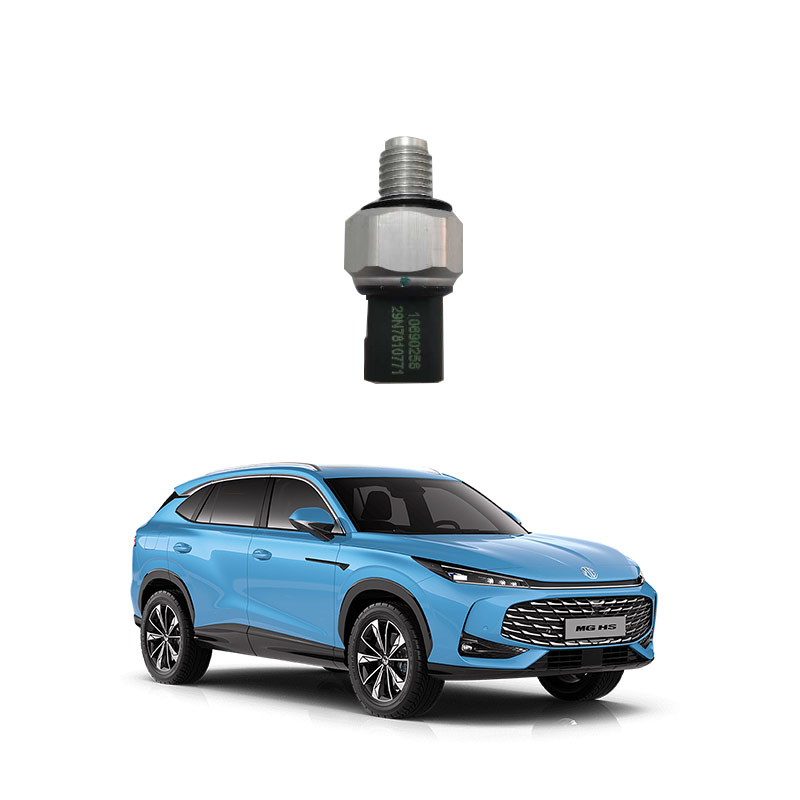
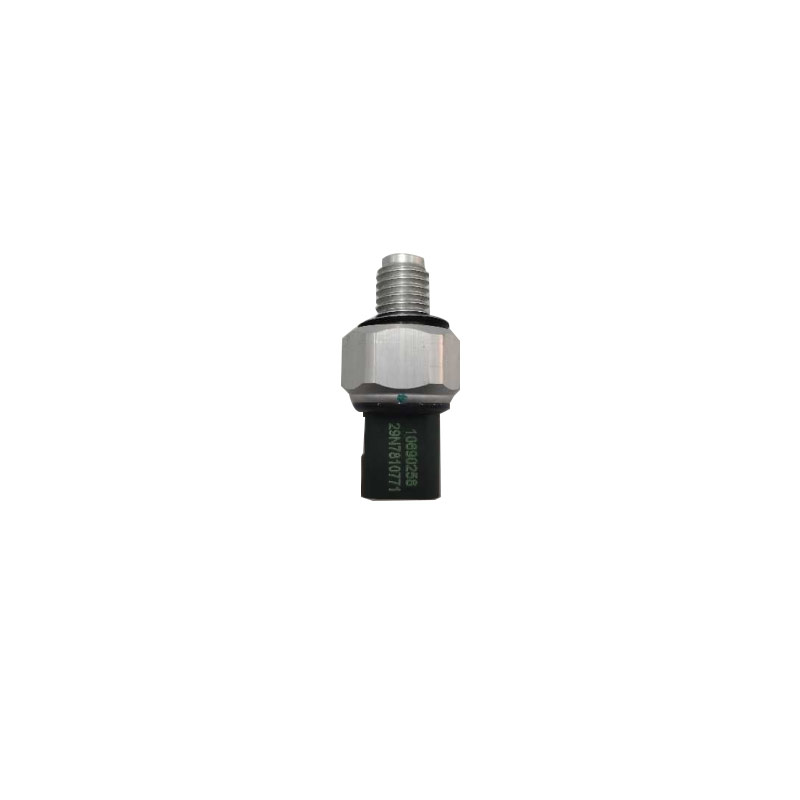
What is the automotive oil sensor plug?
The automotive oil pressure sensor, also known as the oil pressure sensor, is a crucial monitoring component in the engine lubrication system. Its main function is to continuously monitor the internal oil pressure of the engine and convert the detected pressure signal into an electrical signal, which is then transmitted to the vehicle's dashboard or engine control unit (ECU).
When the oil pressure is abnormal (such as too low), the oil pressure sensor will trigger the oil pressure alarm light on the dashboard, alerting the driver to pay attention promptly to prevent serious damage to the engine due to insufficient lubrication. Therefore, it is hailed as the "safety guardian" for ensuring the healthy operation of the engine.
Main functions
Pressure monitoring: Through the internal pressure diaphragm or sensor chip, it senses changes in oil pressure and converts them into electrical signals.
Signal transmission: It transmits the electrical signals to the oil pressure gauge on the dashboard to display the real-time pressure value.
Alarm triggering: When the pressure is below the safety threshold, the alarm circuit is activated, lighting the warning light.
Auxiliary control: In some vehicles, the ECU will adjust the engine's operating state based on the oil pressure data, such as limiting the power output to protect the engine.
Brief description of the working principle
The oil pressure sensor usually contains a thick film pressure sensor chip and a signal processing circuit. When the engine is running, the oil pressure pushes the diaphragm inside the sensor, changing its resistance or capacitance value, generating a voltage difference, which is converted into a voltage signal, amplified and processed before being output. If the pressure is too low, the alarm circuit will immediately trigger the warning.
Common fault manifestations
The oil pressure alarm light is constantly on or frequently flashes
The oil pressure displayed on the dashboard is zero or fluctuates violently
The engine makes abnormal noises, power decreases, and fuel consumption is abnormal (possibly due to ECU misjudgment and power limitation)
The pointer of the pressure gauge points to the top or the alarm light does not go out during the grounding test
Location reference
The oil pressure sensor is usually located near the oil filter, and the specific position varies depending on the vehicle model. It is commonly found in:
Above or on the side of the oil filter
Near the oil filter seat at the rear of the engine cylinder block
In some vehicle models, it may be near the cylinder cover or intake pipe connection
Note: The sensor thread specifications, pressure thresholds, and wiring methods may vary for different vehicle models. When replacing, it is recommended to use original or OEM standard parts, and ensure proper application of sealant and torque tightening to prevent oil leakage.
The failure of the automotive oil pressure sensor (i.e., the oil pressure sensor) will directly affect the monitoring of the engine lubrication system. If not promptly addressed, it may lead to serious mechanical damage. The following are the common fault symptoms, causes, and solutions.
Main fault symptoms
The dashboard warning light is on: After the vehicle starts, the oil pressure warning light remains on (not for a brief self-check), or it flashes repeatedly while driving. Some models will display text prompts such as "Low oil pressure" or "Sensor failure", while high-end models may show abnormal jumps in oil pressure values (such as showing below 0.5 bar or above 10 bar at idle).
Engine performance abnormalities: Approximately 60% of the fault cases will be accompanied by a decrease in power, manifested as slow acceleration and delayed response to overtaking; some vehicles' ECU will trigger a protection mechanism, limiting the engine speed (usually not exceeding 3000 rpm), or causing idle jitter or difficulty starting in cold conditions.
Abnormal engine noise and hidden damage: Due to insufficient lubrication, knocking sounds may occur in the camshaft or valve seat, or abnormal noise from the timing chain. Long-term failure can lead to irreversible damage such as bearing wear, piston ring scratches, and repair costs typically exceed 5,000 yuan.
Fault codes and abnormal data flow: Using an OBD diagnostic tool, specific fault codes can be read, such as P01CA (excessive voltage on the oil pressure sensor circuit) or P01CB (low voltage). Under normal circumstances, the deviation between the actual oil pressure sensed by the sensor and the data received by the ECU should be ≤ 0.1 bar. If it exceeds 0.3 bar, it can be determined that the sensor is abnormal.
Other manifestations: Some vehicles may experience increased fuel consumption, the engine fault light (Check Engine) remaining constantly on, or abnormal oil pressure readings on the dashboard (such as a fixed display of 0.99 bar at idle speed).
Common fault causes
The failure of the oil sensor plug itself is only one of the reasons. More often, it is a systemic problem that causes the detection to be abnormal:
Oil issues: Insufficient oil quantity, dirty oil, abnormal viscosity (too thin or too thick), poor oil quality.
Oil circuit and component failures: Oil pipe leakage, clogged oil filter, worn oil pump, bypass valve or pressure limiting valve spring being too soft/ jammed/ steel ball damaged.
Circuit and sensor itself: Short circuit, open circuit, poor contact in the sensor's internal circuit, or aging of the sensor, damaged sealing ring leading to oil leakage, water ingress/entry of impurities.
Other factors: Excessive engine temperature, improper installation position, unstable power supply voltage, excessive clearance between the crankshaft and the bearing, etc.
Response and solution methods
Immediately check the oil level: If the oil is too little, add it to the upper and lower limits of the dipstick. If the level is normal but the warning light is still on, do not continue driving.
Replace with high-quality oil: Use full synthetic oil that meets the vehicle specifications. Avoid using inferior or expired products.
Professional inspection: It is recommended to have the vehicle inspected at a professional repair shop within 48 hours, with a focus on checking:
Sensor resistance value (normal range is usually 50–1000 Ω, varying with temperature).
The condition of the oil circuit, oil pump, pressure limiting valve, etc.
Whether the circuit connection is normal.
Replace the sensor: If the sensor is confirmed to be damaged, replace it with an original or reliable quality part, and ensure proper installation.
Preventive measures: Regularly replace the oil and oil filter, avoid rapid acceleration and braking, reduce the impact on the engine, and develop the habit of regular maintenance.
Important reminder: The oil sensor plug itself does not directly lubricate the engine, but its failure will prevent the owner from knowing the true oil pressure. If driven due to misjudgment, it may cause the engine "wearing out the bearing", with consequences far more serious than replacing the sensor.
If you want to know more, keep reading the other articles on this site!
Please call us if you need such products.
Zhuo Meng Shanghai Auto Co., Ltd. is committed to selling MG&MAXUS auto parts welcome to buy.