What is the protective cover on the interior of a car?
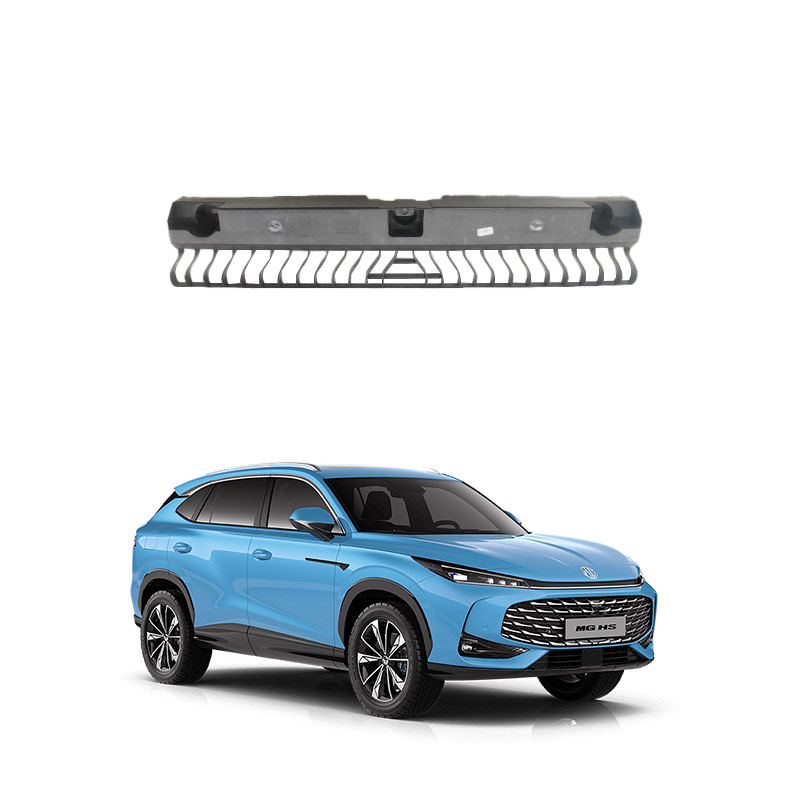
The term "car upper guard" as mentioned by you might involve conceptual confusion. According to the professional terminology of vehicle construction, "grille" and "guard plate" are two components located at different positions on the vehicle and have completely independent functions.
The "car grille" (also known as "fender guard" or "cooling tank guard") is the core component located between the headlights and the front bumper. Its main function is to provide necessary ventilation and cooling for the engine cooling tank, air conditioning system, etc., and to filter out flying stones, insect swarms, etc., to protect the internal delicate components. At the same time, it is also an important visual identifier of the brand design.
The "guard plate" (usually refers to "engine guard plate" or "chassis guard plate") is a protective component installed under the engine, and its function is to protect the engine oil pan, transmission, etc., key components, from being scratched and damaged by road stones, potholes, etc., and to also prevent the erosion of mud, rainwater on the chassis, and to some extent, optimize the airflow to reduce wind resistance.
Therefore, there is no such standard component as "guard plate on the grille". What you might be referring to is the following two situations:
The grille itself: It is the "fender guard" or "cooling tank guard", the core decorative and functional component of the front end.
The guard plate: This is a protective plate installed under the grille, at the chassis position, and is not an integral part of the grille.
In simple terms, the grille is "on the front", and the guard plate is "below", they are two independent components. If you see the plate below the grille and inside the front bumper, it is the "guard plate for the engine", not "guard plate on the grille".
"Guard plate on the upper part" might refer to "guard plate of the car", which is a protective device installed on the chassis and under the engine, mainly providing multiple protections for the vehicle's core components and optimizing the driving performance.
The main functions of the guard plate are as follows:
Protecting key chassis components: As a physical barrier, it effectively blocks flying stones, gravel, and other debris on the road surface, preventing them from directly hitting the engine oil pan, transmission, etc., of fragile components, avoiding scratches, dents, and leakage damage.
Anti-corrosion and anti-rust: In rainy, wet weather, or in coastal areas, the guard plate can reduce the direct contact of corrosive substances such as rainwater, mud water, salt-containing snow (containing salt), and acid rain with the metal parts of the chassis, significantly delaying the corrosion process of the chassis, engine brackets, etc., and extending the vehicle's lifespan.
Optimizing aerodynamic performance: The guard plate can make the vehicle's bottom more flat, guiding the airflow smoothly through, and reducing the turbulence and drag coefficient at the bottom of the vehicle. This helps improve the stability of the vehicle at high speeds and indirectly reduces fuel consumption and improves fuel economy.
Maintaining the cleanliness of the engine compartment: When driving on unpaved roads, rural dirt roads, or construction sections, the guard plate can effectively prevent dirt, dust, and sewage from being splashed into the engine compartment by the tires, preventing debris from adhering to belts, interface of lines, etc., and reducing the risk of faults caused by such situations.
Improving water-crossing safety: When passing through water sections, the guard plate can to some extent prevent water from directly splashing into the engine compartment, reducing the risk of electrical components getting wet and short-circuiting.
Reducing driving noise: Some materials of the guard plate (such as resin, plastic) have certain sound insulation and sound absorption effects, reducing the noise caused by the impact of sand and stones on the chassis and the noise generated by high-speed airflow, improving the comfort of the driver and passengers.
The guard plate has various materials, and different materials are suitable for different vehicle usage scenarios:
Iron guard plate: The highest level of protection, suitable for hard SUVs that often go off-road and through complex terrains, but it is relatively heavy, which may slightly increase fuel consumption. Aluminum alloy guard panel: Achieves a good balance between weight, protection and heat dissipation, and is currently the mainstream choice for urban SUVs and family cars. Resin/plastic protective panel: Lightweight, low cost, and with good toughness, it can effectively handle minor scratches and sand invasion on urban roads. Moreover, it is unlikely to interfere with the safety design of the vehicle during a collision, making it suitable for daily commuting vehicles.
If you want to know more, keep reading the other articles on this site!
Please call us if you need such products.
Zhuo Meng Shanghai Auto Co., Ltd. is committed to selling MG&MAXUS auto parts welcome to buy.