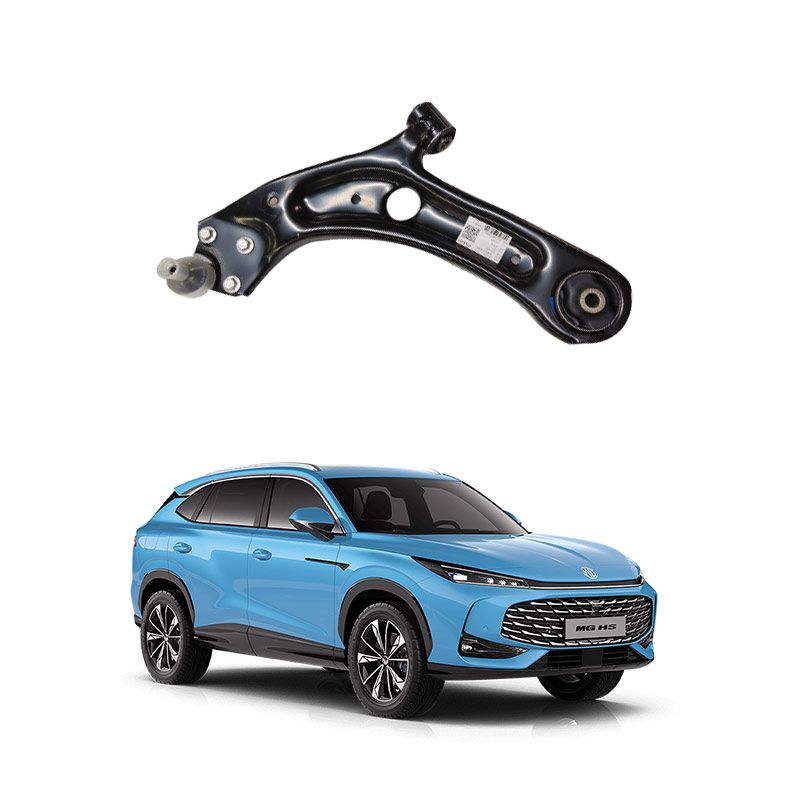
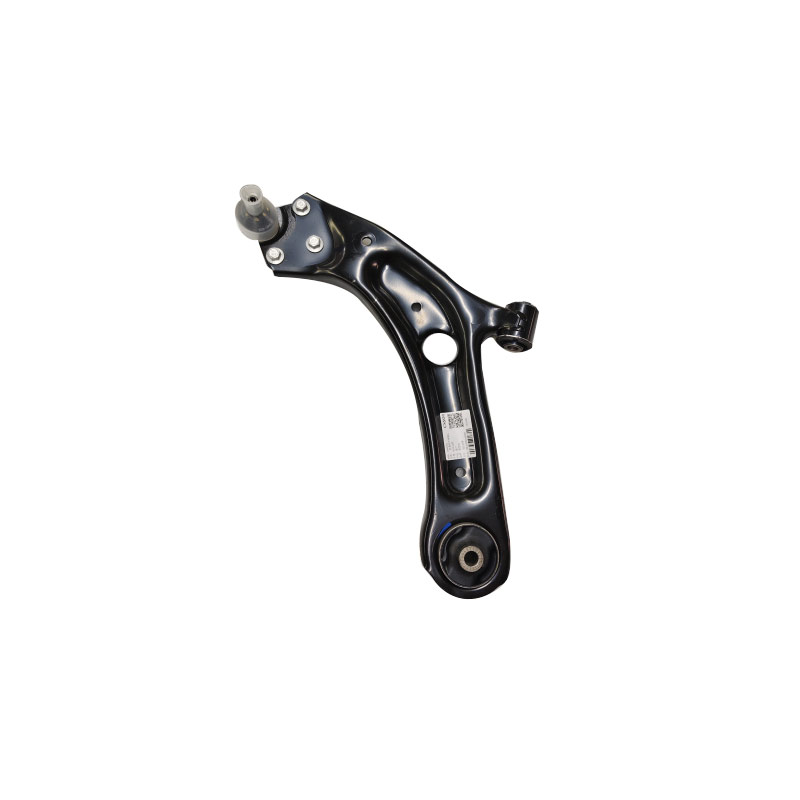
What is the front lower arm of a car?
The front lower arm of a car is a key component in the vehicle's suspension system, primarily responsible for connecting the wheels to the body and undertaking the tasks of supporting the vehicle's weight, transmitting forces, buffering vibrations, and ensuring driving stability and handling performance.
Core functions:
Support and force transmission: As the main load-bearing component of the suspension system, the front lower arm transmits the road impact, lateral force, and longitudinal force from the wheels to the body, while also supporting the vehicle's weight.
Buffering vibrations: It usually contains rubber bushings that effectively absorb and reduce the vibrations from the road surface, enhancing the ride comfort.
Stabilizing control: Working in conjunction with shock absorbers, springs, and other components, it ensures that the wheels maintain their correct positioning (such as camber and caster angles) during driving, thereby improving steering accuracy and vehicle stability.
Structure and materials:
The front lower arm is typically made of aluminum (for lightweight and strength) or cast iron/pressed steel (for cost and durability), and some assemblies include ball joints, hangers, etc.
In a multi-link suspension, the lower arm (or lower arm shaft) design can actively adjust the geometric parameters of the wheels to optimize tire grip.
Position and importance:
It is located in the front wheel area, with one end connected to the steering knuckle through a ball joint and the other end fixed to the frame or subframe.
If cracks, deformations, or worn rubber bushings occur, it can lead to vehicle drift, abnormal tire wear, heavy steering, and even fracture risks. Therefore, regular rust checks and structural integrity assessments are necessary, and four-wheel alignment should be performed after replacement.
The front lower arm is a key component of the vehicle's chassis suspension system, primarily responsible for connecting the wheels to the body and supporting the vehicle's weight and buffering vibrations. If it fails, it will directly affect the vehicle's handling, comfort, and safety.
Common symptoms of front lower arm failure:
Abnormal noise: When passing over uneven road surfaces,减速带, or when turning at low speed or reversing, the front of the vehicle will emit "clattering" or "grinding" sounds as metal impacts or friction occur. This is the most common fault symptom, usually caused by worn ball joints, loosening, or aging rubber bushings.
Reduced handling performance: Steering becomes less sensitive, heavy, or "floaty," with blurred steering feedback, and reduced stability when changing lanes or turning. It feels "unresponsive."
Vehicle drift: When driving on straight roads, the vehicle will unconsciously drift to one side, even if the steering wheel remains centered. This is often due to damaged lower arm causing incorrect wheel positioning parameters (such as caster and camber angles).
Abnormal tire wear: Due to incorrect positioning parameters, tires will exhibit abnormal wear patterns such as unilateral wear or zigzag wear, shortening tire lifespan. Reduced Comfort: The road bump sensation has significantly intensified, and the vehicle's shock absorption capacity has decreased, resulting in a poorer riding experience.
Safety Risks: In severe cases, it may cause steering failure or the vehicle veering off course during braking, greatly increasing the risk of accidents.
Common Fault Causes
Rust and Aging of Rubber Bushings: The rubber bushings at both ends of the lower arm will harden and crack over time, causing an increase in connection gaps and resulting in abnormal noises and a sense of looseness.
Impact and Wear and Tear: Long-term driving on poor road conditions or severe impacts (such as hitting the shoulder or potholes) can cause deformation of the lower arm, wear or fracture of the ball joint.
Improper Maintenance: Lack of regular inspections and failure to promptly identify and replace worn components will accelerate the damage process.
Special Warning
Recently, there have been a number of concentrated complaints about abnormal noises from the front lower arm of vehicles (models such as L6, L7, L8, L9, etc.). Some owners reported that the abnormal noises occurred shortly after purchasing the vehicle, and the problem recurred after replacing the components, raising doubts about the design or materials.
If your vehicle belongs to this type of model and has similar problems, it is recommended to contact the official after-sales service promptly and keep relevant records.
Recommendation: When the vehicle's mileage exceeds 80,000 kilometers or if any of the above symptoms occur, it is recommended to promptly visit a professional repair shop for a chassis inspection. In necessary cases, replace original or quality-reliable parts (such as Champion brand, etc.) to ensure driving safety.
If you want to know more, keep reading the other articles on this site!
Please call us if you need such products.
Zhuo Meng Shanghai Auto Co., Ltd. is committed to selling MG&MAXUS auto parts welcome to buy.