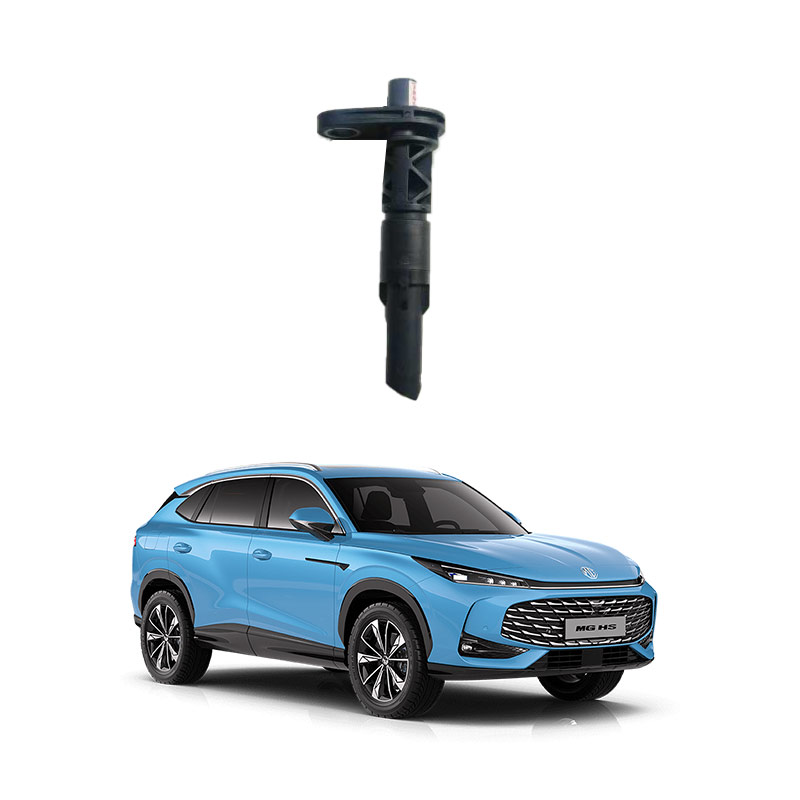
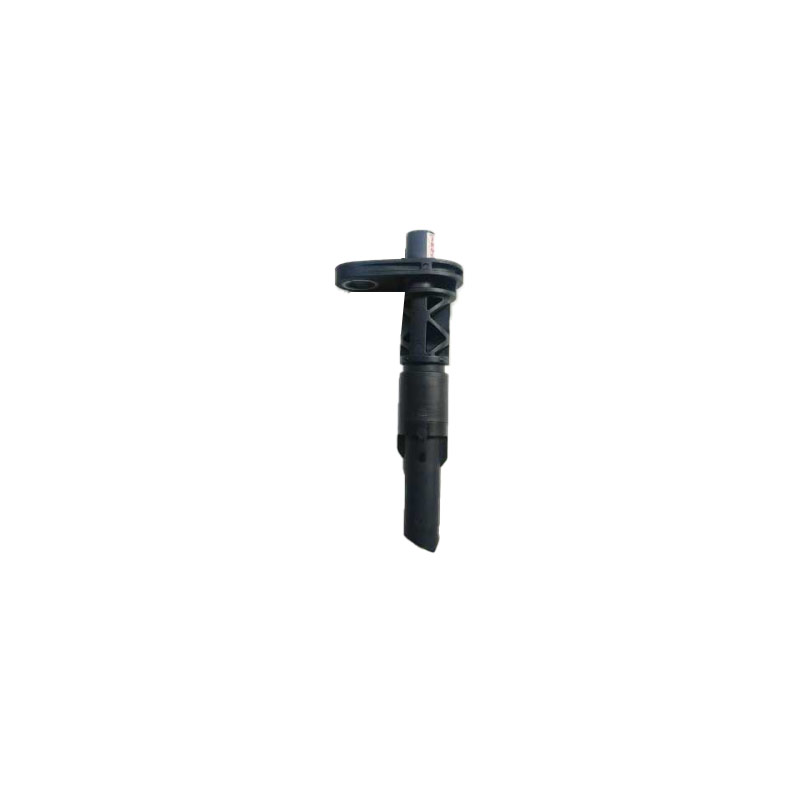
What does the car crankshaft sensor mean?
The crankshaft sensor, also known as the crankshaft position sensor, is a core sensor in the engine electronic control system. It is mainly used to detect the rotation position of the crankshaft, the top dead center signal of the piston, and the engine speed, and provides key data to the engine control unit (ECU) to control ignition timing and fuel injection timing. The working principle of the crankshaft sensor depends on its type, which mainly includes magnetic-electric induction type, Hall effect type, and photoelectric type. The magnetic-electric induction type generates signals through electromagnetic induction, the Hall effect type identifies position using Hall voltage changes, and the photoelectric type transmits information through light hole obstruction and photoelectric signal conversion; these sensors usually work in conjunction with the camshaft position sensor to accurately determine the crankshaft angle and angular velocity, ensuring the accuracy of ignition and fuel injection timing. Its function is crucial, not only determining the ignition and fuel injection times, but also analyzing the crankshaft angle fluctuations to detect engine misfire and providing data support for idle control and fuel evaporation control. In automotive maintenance, common faults of the crankshaft sensor include signal loss or interference, which may cause difficulties in engine startup, unstable idle, or power loss; detection methods usually involve checking wiring connections, output signals, or sensor resistance values to ensure normal operation.
Common faults of the crankshaft sensor include signal loss or interference, which may cause difficulties in engine startup, unstable idle, or power loss; the detection methods usually involve checking wiring connections, output signals or sensor resistance values to ensure normal operation.
The failure of the crankshaft sensor can lead to symptoms such as engine failure to start, chaotic ignition and fuel injection timing, increased engine vibration and acceleration shutdown, etc., and it is necessary to check and replace it in time.
Abnormal start-up and operation symptoms
The failure of the crankshaft sensor directly affects the ignition and fuel injection timing of the engine, and is manifested as:
Difficulty starting or inability to start: Due to the sensor's inability to provide the crankshaft position signal, the ECU (engine control unit) cannot control ignition and fuel injection, resulting in a start-up time of more than 5 seconds or multiple ignition failures, and in severe cases, high-voltage electricity and fuel injection are cut off.
Engine vibration and power loss:
Unstable idle: The engine speed fluctuates irregularly between 600-1200 rpm, and the steering wheel resonance is obvious.
Weak acceleration: The engine speed is difficult to exceed 3000 rpm when climbing, and the exhaust pipe may emit popping sounds or white smoke (due to incomplete combustion).
Risk of engine shutdown during driving: A sudden power interruption may occur during high-speed driving, and the ECU enters a protection mode and forcibly shuts down, which is extremely dangerous.
System functions and warning symptoms
Electronic system failure:
Functions such as cruise control, automatic start-stop, and exhaust braking are directly paralyzed.
The fault light is constantly on or flashing, and some models trigger EPS/ABS linkage alarms.
Abnormal emissions and fuel consumption: Continuous white smoke with gasoline-like odor is emitted, the oxygen sensor reports a fuel mixture imbalance fault code, and fuel consumption increases significantly.
Differences in fault severity manifestations
Minor fault: The vehicle is weak on uphill driving, the response of the accelerator is sluggish, but the power performance does not change significantly.
Serious fault: It is completely unable to start, and the motor may make a sound of piston hitting the valve (in older models).
When the crankshaft position sensor of the engine fails, the vehicle will exhibit symptoms such as abnormal start-up, power loss, increased vibration, and the fault light being on, as follows:
Abnormal start-up
Loss of sensor signal will cause chaotic ignition and fuel injection timing, manifested as:
Cold start difficulty: It takes multiple attempts to ignite, and in severe cases, it is completely unable to start.
Start-up time extension: The engine rotation time is significantly longer, and there may be abnormal sounds.
Driving problems
The fault causes power system imbalance, and common symptoms include:
Weak acceleration: The response of climbing or overtaking is slow, and the accelerator pedal must be fully depressed to raise speed.
Idle vibration: The engine vibrates violently when parked, and the steering wheel or seat has obvious resonance.
White smoke emission: Incomplete combustion causes white smoke to be emitted from the exhaust pipe. Fuel consumption increase: Due to inaccurate fuel injection control, fuel efficiency decreases.
Electronic system failure
Abnormal sensor signals will trigger a chain reaction:
The fault light comes on: The engine fault light on the dashboard is constantly on or flashing.
Function failure: The cruise control and exhaust braking systems cannot be used.
Risk of engine shutdown: The engine may suddenly shut down while driving at high speed, posing safety hazards.
If you want to know more, keep reading the other articles on this site!
Please call us if you need such products.
Zhuo Meng Shanghai Auto Co., Ltd. is committed to selling MG&MAXUS auto parts welcome to buy.