What is the car blower motor?
The automotive blower motor is the core driving component in the car's air conditioning or heating system, primarily functioning to generate air flow to regulate the temperature, humidity, and air quality inside the vehicle.
Working principle and structure: The motor converts electrical energy into mechanical energy to drive the rotor or blades to rotate, drawing in air and pushing it into the ventilation system before delivering it to the outlets. Its speed can be controlled by adjusting the resistance in the circuit to achieve multi-speed control, thereby changing the air volume.
Location and integration: The motor is typically installed in the front of the vehicle near the engine compartment, integrated with components such as the air conditioning evaporator and heater core, forming the heating, ventilation, and air conditioning system (HVAC). In electric vehicles, it is also deeply coupled with heat pump systems, battery thermal management, etc., becoming a key component of the vehicle's thermal management system.
Technical evolution and function expansion: Traditional brushed DC motors are gradually being replaced by brushless DC motors (BLDC) to improve efficiency, reduce noise, and meet the needs of intelligent cabins for zone temperature control and voice control. At the same time, it also needs to work in coordination with the air purification module (such as HEPA filters), operating stably under high static pressure and low noise conditions to improve indoor air quality.
The automotive blower motor is a core component of the air conditioning system, responsible for driving the rotor to rotate and generating air flow to regulate the interior environment.
Its core functions include: Firstly, regulating the interior temperature by blowing cold air (from the evaporator) or warm air (from the water heater) into the cabin, quickly lowering or raising the temperature and enhancing comfort; secondly, promoting air circulation, supporting internal circulation (recirculation of interior air) and external circulation (introducing fresh air from outside), improving air quality and reducing dust; moreover, assisting in dehumidification and dehumidification, helping to clear window fog in humid weather, enhancing safety; finally, achieving wind volume control by adjusting the motor speed (such as multi-speed regulation) to change the air volume according to different needs.
In terms of working principle, after being powered on, the motor drives the rotor to rotate, using centrifugal force to draw in air and direct it to the air conditioning box, with the air volume controlled by the input voltage or speed adjustment resistor. Modern vehicles may also integrate automatic modes, intelligently adjusting the speed based on sensor data.
When the blower motor fails, common symptoms include the blower not turning at all, turning slowly, or having abnormal noises (such as a "buzzing" sound), resulting in no air or insufficient air output from the air conditioning or heating system.
The causes of failure are diverse, mainly involving mechanical, circuit, and motor issues. Mechanical aspects include dust accumulation on the rotor bearings over time, increasing friction and causing the rotor to jam or the coil to overheat and damage; loose screws between the motor and the fan blade can also prevent the motor from driving the fan blade. Circuit issues include short circuits in the power lines, poor contact, blown fuses, relay failures, or damaged control switches, which can interrupt power supply; capacitor failures (such as insufficient capacity or leakage) can affect motor startup. Motor-specific failures such as burned coils, broken or short-circuited windings can directly lead to failure.
During diagnosis, one can first check for basic circuit issues, then address the motor. For example, checking if the fuse is blown, ensuring proper power line connections, if the power supply is fine but the motor does not turn and has a "buzzing" sound, it may be a capacitor failure that requires replacement; for a jammed rotor, after power off, try dripping lubricating oil onto the bearing and moving the fan blade. If these methods do not work, usually a motor replacement or repair is required.
If you want to know more, keep reading the other articles on this site!
Please call us if you need such products.
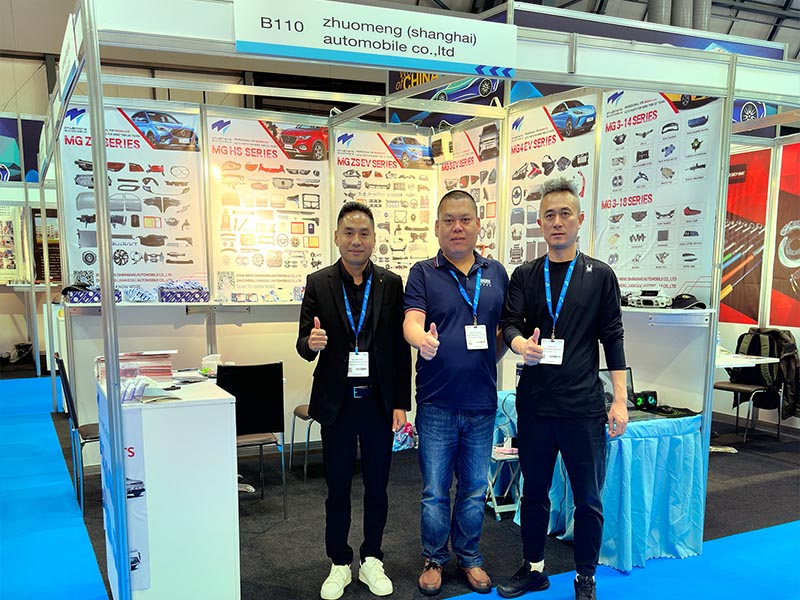
Zhuo Meng Shanghai Auto Co., Ltd. is committed to selling MG&MAXUS auto parts welcome to buy.