How often should the air conditioning filter be replaced?
The standard replacement cycle for car air conditioning filter is every 1 year or 15,000 kilometers (whichever comes first), but it should be adjusted flexibly according to the driving environment.
The standard replacement cycle and its core basis
Base cycle: Most car manufacturers (such as Mercedes) recommend replacing it every 12 months or 15,000 kilometers, suitable for urban commuting and good air quality scenarios.
Scientific basis: The filter accumulates dust and mold over time, causing a 30% or more decrease in air volume or generating odors, affecting the air quality inside the car.
Adjustment suggestions for special environments
High-pollution areas (such as smog and dust environments):
Shorten to every 6 months or 8,000 kilometers for replacement to avoid particle blockage of the filter.
Damp climate (such as the southern rainy season):
Check once every 3-4 months and replace immediately if mold spots or odors are found to prevent mold growth.
High-frequency driving scenarios (such as ride-hailing, long-distance driving):
Replace every 6 months or 10,000 kilometers as the air conditioning is used frequently, accelerating filter wear.
Self-checking and replacement techniques
Judging the replacement time:
The air outlet wind volume significantly weakens (below the new car state by 30%).
Smell of mold, sour smell, etc. are irritating.
After disassembly, the filter turns black and is heavily clogged (below the driver's glove box).
Purchase suggestions:
Prioritize original factory or brands meeting OE standards (such as Bosch, Mahle), avoiding secondary pollution from inferior filters.
The air filter is suitable for areas with heavy smog, but the replacement cycle is the same as the ordinary filter.
The core difference between car air conditioning filter and air filter lies in the object of protection: The air filter protects the engine, filtering the air entering the engine; the air conditioning filter protects the passengers inside the car, filtering the air entering the cabin.
Core function and filtering object differences
Air filter:
Function: Filters the air entering the engine, intercepting dust, sand particles, pollen, etc., to prevent them from wearing the cylinder wall, blocking the fuel injector or polluting the engine oil.
Impact: If it fails, it will cause a decrease in engine power, increase fuel consumption, and in severe cases, require major repairs.
Air conditioning filter:
Function: Filters the air entering the car, blocking PM2.5, pollen, exhaust odors and bacteria, ensuring respiratory health (such as reducing sneezing by car owners in Shanghai after replacement).
Impact: Failure only affects the air quality inside the car, does not damage the vehicle, but may cause allergies or odors.
Installation position and appearance comparison
Air filter:
Location: Inside the engine compartment, usually a black plastic box (marked "AirFilter"), connected to the engine through the intake pipe.
Appearance: Large hole, coarse fibers, square or circular (about the size of a palm), made of thick non-woven fabric.
Air conditioning filter:
Location: Behind the passenger seat glove box (90% of models) or in the windshield water guide slot.
Appearance: Small hole, fine fibers, smaller size (about half the size of a palm), in white (ordinary type) and black (activated carbon type).
Air conditioning filter is a component of the car air conditioning system, mainly used to filter solid impurities such as dust, pollen, soot in the external air, and adsorb harmful gases such as ozone, odors, and sulfur dioxide. It is divided into ordinary type and activated carbon type, the latter having stronger odor adsorption capacity. This component can effectively prevent pollutants from entering the cabin, avoiding allergic reactions for passengers due to inhalation of dust or harmful gases. Daily maintenance requires cleaning the surface dust of the filter with compressed air. It is recommended to replace once every 10,000 kilometers, and the replacement cycle can be shortened in areas with poor air quality. It can adsorb moisture, soot, ozone, odors, carbon oxides, SO2, CO2, etc. from the air; it has strong and lasting water absorption capacity.
It can prevent the car windows from being fogged up, ensuring clear vision for drivers and passengers and enhancing driving safety; it can provide fresh air in the driver's cabin, avoiding passengers from inhaling harmful gases and ensuring driving safety; it can effectively kill bacteria and eliminate odors.
It can ensure that the air in the driver's cabin is clean without the growth of bacteria, creating a healthy environment; it can effectively separate solid impurities such as dust, core powder, grinding particles, etc. in the air; it can effectively intercept pollen to prevent passengers from having allergic reactions that may affect driving safety.
If you want to know more, keep reading the other articles on this site!
Please call us if you need such products.
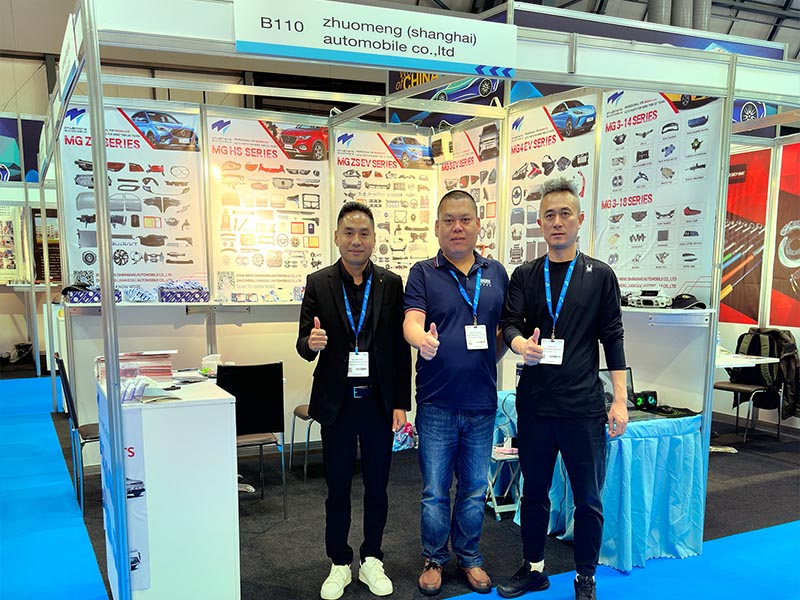
Zhuo Meng Shanghai Auto Co., Ltd. is committed to selling MG&MAXUS auto parts welcome to buy.