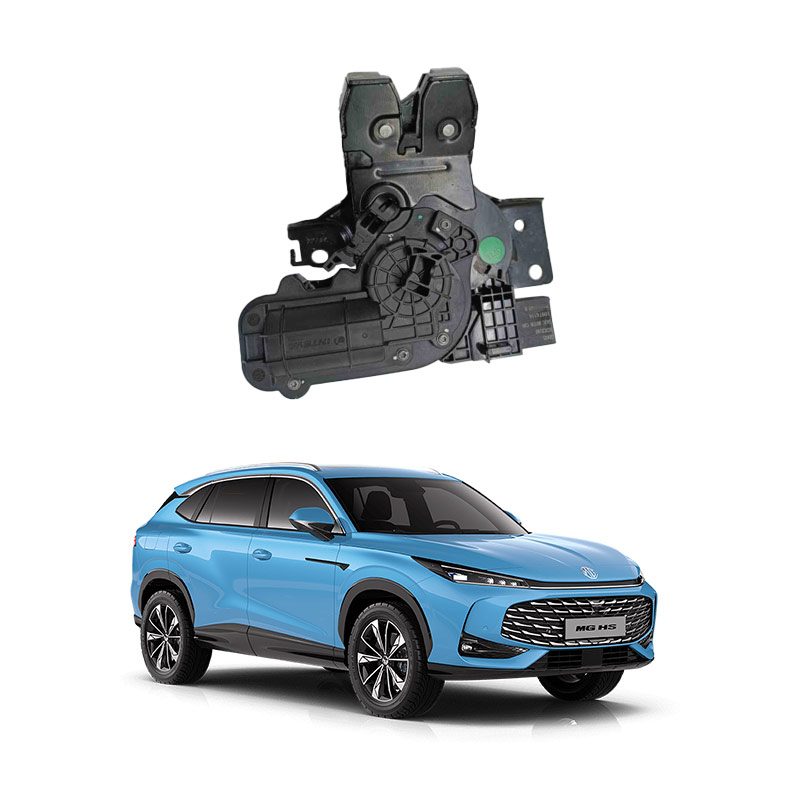
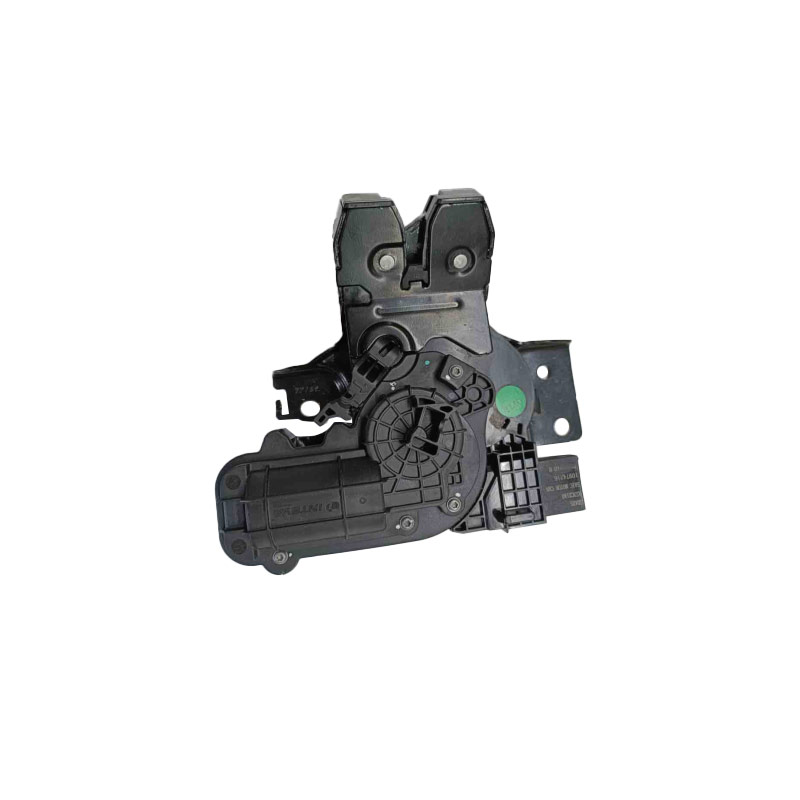
The function of the car trunk lock block
The car luggage compartment lock (also known as the trunk lock) is a key component in the vehicle tailgate closing system. Its main functions can be summarized as follows:
Ensure the tailgate is securely closed: When closing the luggage compartment, the lock block engages with the lock catch, preventing the tailgate from accidentally opening due to bumps, sudden braking, or high-speed airflow during driving. This is its core safety function.
Enable remote control and Cooperation control: As part of the vehicle's central locking system, the lock block works in conjunction with the mechanical and electronic systems. When the owner uses a remote key or the interior button, the motor or pawl mechanism inside the lock block will move the lock tongue, achieving remote unlocking, locking, and Cooperation control with the doors.
Enhance sealing and protection: A properly functioning lock block ensures that the tailgate is tightly attached to the vehicle body, effectively blocking rain, dust, and noise from entering the vehicle, protecting the contents in the trunk safely, and improving the vehicle's quietness.
Strengthen anti-theft performance: Modern lock blocks usually feature anti-misoperation designs and are linked to the vehicle's electronic coding system. Only authorized keys can trigger unlocking, providing an additional security barrier for the vehicle.
In summary, although small in size, the luggage compartment lock is an important safety component that ensures driving safety, enhances convenience and comfort when using the vehicle.
The working principle of the car luggage compartment lock mainly consists of two types: mechanical lock and electronic lock. The core is to achieve physical locking and unlocking through the engagement of the lock tongue and lock catch, but the control methods are different.
Mechanical lock: It operates by inserting a key into the lock hole and rotating it. The pins inside the lock core interact with the lock tongue to achieve locking or unlocking. This method does not rely on the vehicle's power supply and can still function in special situations such as when the vehicle is out of power. The structure is simple and reliable.
Electronic lock: It is controlled by the vehicle's electronic system. Common methods include:
Remote key unlock: Pressing the key button sends a signal to the vehicle's electronic control unit (ECU), which then controls the lock mechanism to perform unlocking.
Interior button unlock: Pressing the button connects it to the central door lock system, and the signal is transmitted to the ECU to achieve unlocking.
Automatic locking function: Some models automatically lock the trunk when the vehicle reaches a certain speed.
Sensing opening: Using foot movement to achieve keyless opening, but be cautious to avoid accidental operation.
The lock mechanism structure is typically composed of the lock core, lock catch, and lock body, which work together to ensure a secure closure.
Common causes and corresponding solutions for car luggage compartment (trunk) lock failures are as follows, based on the latest information:
Main failure causes and solutions
Mechanical structure abnormality (most common)
Lock catch stuck or deformed: Long-term use, accumulation of dirt or rust can cause the lock catch spring elasticity to decrease, preventing the lock tongue from returning. Try pressing the lock catch externally while having an assistant pull the interior opening handle to assist in resetting. If ineffective, spray WD-40 or other rust-removing lubricants inside the lock catch and wait for 10-15 minutes before attempting again. If the lock catch is severely rusted or deformed, replace the new lock catch component.
Lock core wear or rusted: Wear, dust accumulation, or water rust inside the lock core can cause difficulty in turning the key or inability to lock. Try cleaning the dust inside the lock core. If the wear is severe or there is rust, it is recommended to replace the lock core separately (models such as Volkswagen Tiguan support separate replacement, with controllable costs).
Lock catch screws loose: In some models, due to long-term jolting, the lock catch fixing screws become loose, causing the lock tongue to fail to engage properly. Use a screwdriver to check and tighten the screws around the lock catch.
Electrical system failure (for electric tailgate models)
Power supply or motor issue: Check if the fuse for the trunk lock mechanism in the vehicle fuse box has blown. Replace the fuse with a fuse of the same specification. If the fuse is normal but the lock mechanism does not respond, the motor may have burned out. Replace the lock mechanism assembly.
Control module or wiring failure: Abnormal signals from the body control module (BCM), short circuits in the wiring, or loose connections may prevent the locking command from being executed. Use a diagnostic tool to read the fault codes to determine the specific problem. Some models may trigger an anti-fault locking mechanism when powered on, causing the lock to fail. Try powering off and then operating again.
Sensor misreporting: If the track of the electric tailgate is obstructed by foreign objects or the sensor malfunctions, the system may misjudge it as "not closed properly" and fail to lock. Check if there are any obstructions on the track and try holding the tailgate switch for 10 seconds to reset the system.
Remote key or signal issue
Key battery low voltage: This is the simplest cause of the fault. Replace the key battery (usually CR2032 type) and if the function returns, it is this reason.
Signal interference or key failure: In a strong electromagnetic environment such as near high-voltage lines or wireless base stations, the remote signal may be interfered with. Try operating in an open area. If replacing the battery does not work and the mechanical key also cannot open, it may be necessary to re-match the key or replace the key assembly at a 4S store.
Lack of proper closure of the trunk lid
Hydraulic support rod failure: Aging support rods or oil leakage can cause the trunk lid to fail to close completely and the lock tongue to not engage the lock. Lift the trunk lid manually. If you feel looseness on one side or uneven resistance, replace the support rod.
Hinges loose or deformed: Loose hinges or deformed frames can also cause poor closure. Check if the gap between the trunk lid and the vehicle is uniform. If necessary, adjust or replace the hinges.
Temporary faults caused by usage habits
Overstacked or overloaded items in the trunk: Items piled up on the trunk lid prevent it from closing completely. Reorganize the items to ensure the lid can close naturally.
Forceful closing of the trunk lid: Pressing the trunk lid forcefully will damage the lock block motor or lock mechanism structure. It is recommended to close and open gently to avoid impact.
Preventive suggestions
Regularly (suggested every six months) clean the lock and lock core with rust and lubricant remover to prevent rust and dust accumulation.
Avoid water entering the lock core, especially after washing the car or in rainy weather.
Replace the remote key battery in time to avoid malfunction due to low battery voltage.
If any abnormalities (such as abnormal sounds or jamming) are found, handle them promptly to prevent small problems from escalating into major faults.
If the above methods cannot solve the problem or involve deep-seated faults in the electronic system, it is recommended to go to a professional repair facility (such as a 4S store) for diagnosis to avoid further damage from disassembling.
If you want to know more, keep reading the other articles on this site!
Please call us if you need such products.
Zhuo Meng Shanghai Auto Co., Ltd. is committed to selling MG&MAXUS auto parts welcome to buy.