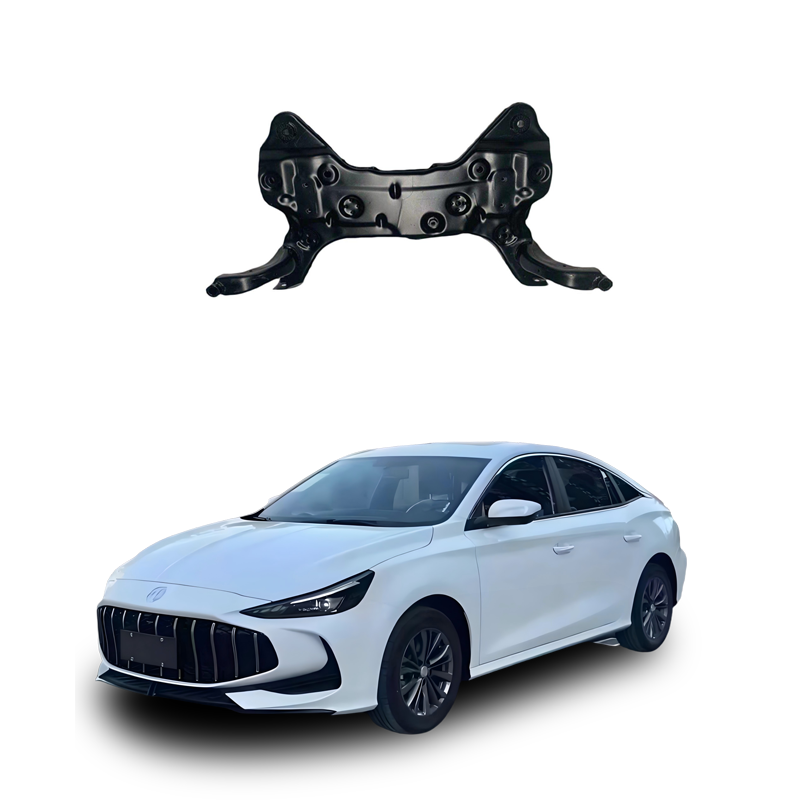
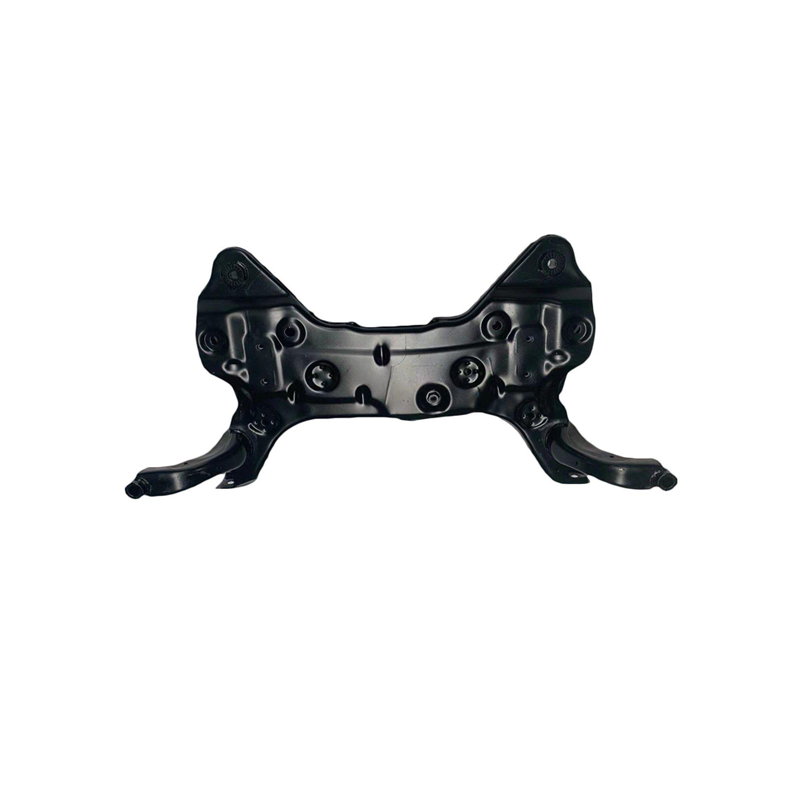
What is the car bonnet frame?
The yuánwǎng liáng is also known as the auxiliary frame. It refers to the support structure that holds the front and rear axles and the suspension, enabling the axles and suspension to connect with the "main frame" through it. After installation, it can prevent vibration and noise from entering the cabin, reducing the direct transmission of these sounds into the vehicle interior.
The core function of the vehicle's main beam (sub-frame) is to serve as the key supporting and connecting structure of the chassis, mainly used for fixing the powertrain, supporting the suspension system, enhancing the rigidity of the vehicle body, and playing an important role in safety protection and improving the comfort of the driver and passengers.
Core function: The central structure for supporting and connecting the chassis
Fixing the powertrain and supporting the suspension system: The main function of the main beam is to stably support and fix the engine and transmission (powertrain), while providing a solid installation support point for the front and rear axles and suspension systems. The suspension system is connected to the main frame (vehicle body) through it, forming a stable assembly.
Enhancing the rigidity of the vehicle body and chassis: As a transverse structural component connecting the vehicle body, the main beam can significantly increase the overall strength and rigidity of the vehicle body and chassis, enhancing the structural stability of the vehicle during driving.
Structure and material: The main beam is usually made of steel by stamping or welding, while high-end models may use cast aluminum to ensure strength while reducing weight. Its structure includes upper and lower plates, strengthening plates, and sleeves for installing components such as the suspension.
Safety protection: Collision buffering and component protection
Absorbing and distributing collision impact force: In a frontal collision, the main beam can act as the first buffer barrier, effectively absorbing and distributing part of the impact energy, reducing the direct transmission of impact force to the driver's cabin, and providing additional safety protection for the occupants.
Protecting critical components from direct damage: Through its structural position, the main beam can protect the engine, transmission, oil pan, and other key components from direct impact or scratches, especially when passing over rough roads, reducing the risk of chassis damage.
Comfort improvement: Vibration and noise isolation
Filtering power system vibration: The main beam can effectively block the vibration generated by the engine, transmission, and other powertrain components during operation, preventing it from directly entering the cabin.
Damping road noise and bumps: At the same time, it can also dampen the road bumps and noise transmitted by the suspension system, significantly improving the quietness and ride comfort inside the vehicle, and this function is particularly prominent in luxury sedans and off-road vehicles.
The main beam (also known as the sub-frame) is a key component of the vehicle chassis, mainly responsible for supporting the engine, transmission, and connecting the vehicle body and suspension system, being crucial for the stability, handling, and safety of the vehicle. If the main beam is damaged, it will cause a series of symptoms that directly affect driving safety.
Typical symptoms of vehicle main beam damage
Unstable driving, shaking steering wheel: Deformation or loose connections of the main beam will cause the vehicle body posture to be unbalanced, resulting in obvious shaking during driving, and the steering wheel will also shake, especially more sensitive at high speeds.
Abnormal noise from the chassis: When driving on uneven roads, speed bumps, or cobblestone roads, continuous "clanging", "creaking", or "dinging" metal knocking sounds can be heard, which is usually caused by the aging, cracking of the rubber sleeve, or loosening of the fixing bolts, resulting in direct collision of metal components.
Abnormal tire wear: Deformation of the main beam will change the positioning parameters of the wheels (such as front toe angle, caster angle), causing single-sided wear, bias wear, or sawtooth wear of the tires, significantly shortening the tire lifespan.
Reduced steering and handling performance: The vehicle steering becomes sluggish or inaccurate, the chassis feels "loose" during cornering, the body side-slip intensifies, and the handling confidence is significantly reduced.
Reduced braking performance: The deformation of the main beam as a chassis component may affect the brake lines or suspension system's force balance, causing the vehicle to veer or have uneven braking force distribution during braking.
Reduced acceleration performance: Due to the destruction of the chassis structure stability, the power transmission efficiency is reduced, and the vehicle may have a "heavy" or "dragging" feeling during acceleration. Suspension system malfunction: The suspension system loses its stable support, and the vehicle's shock absorption effect on bumpy roads deteriorates, significantly reducing the ride comfort.
Under what circumstances must theYuanbao beam be replaced?
The degree of damage to theYuanbao beam determines whether it should be repaired or replaced. The following situations must be replaced, rather than simply repaired:
Structural deformation: If the vehicle has suffered a severe collision, theYuanbao beam has undergone irreversible deformations such as bending, twisting, or breaking, and cannot be restored to its original accuracy through correction.
Weld seam cracking or fracture: Cracks or fractures occur at the weld seams where theYuanbao beam is connected to the suspension arm and the vehicle body, presenting a risk of instantaneous failure.
Severe rusting: For vehicles traveling in humid or salt-alkali areas, if theYuanbao beam has extensive rust penetration (rust area exceeding 30%), the metal strength has significantly decreased.
Severe aging or detachment of rubber sleeves: The rubber sleeves (gaskets) on theYuanbao beam have cracked, aged, or expanded in diameter, resulting in excessive connection gaps, and abnormal sounds and vibrations cannot be completely resolved through repair.
Original design flaws or recalls: For some models, due to design or material issues, theYuanbao beam has batch safety hazards. The manufacturer will issue a recall notice. In such cases, it is necessary to replace the improved parts for free.
Note: Minor impacts that do not cause deformation or cracks can be resolved through inspection, rust prevention treatment, or replacement of rubber sleeves; however, if any of the above severe situations occur, a brand-newYuanbao beam must be replaced, and after replacement, a four-wheel alignment should be performed to restore the vehicle's normal driving performance.
TheYuanbao beam is a core component related to driving safety. Any suspected damage should be inspected at a professional repair facility as soon as possible. Do not drive with a faulty vehicle.
Please provide the text that you would like me to translate accurately
If you want to know more, keep reading the other articles on this site!
Please call us if you need such products.
Zhuo Meng Shanghai Auto Co., Ltd. is committed to selling MG&MAXUS auto parts welcome to buy.