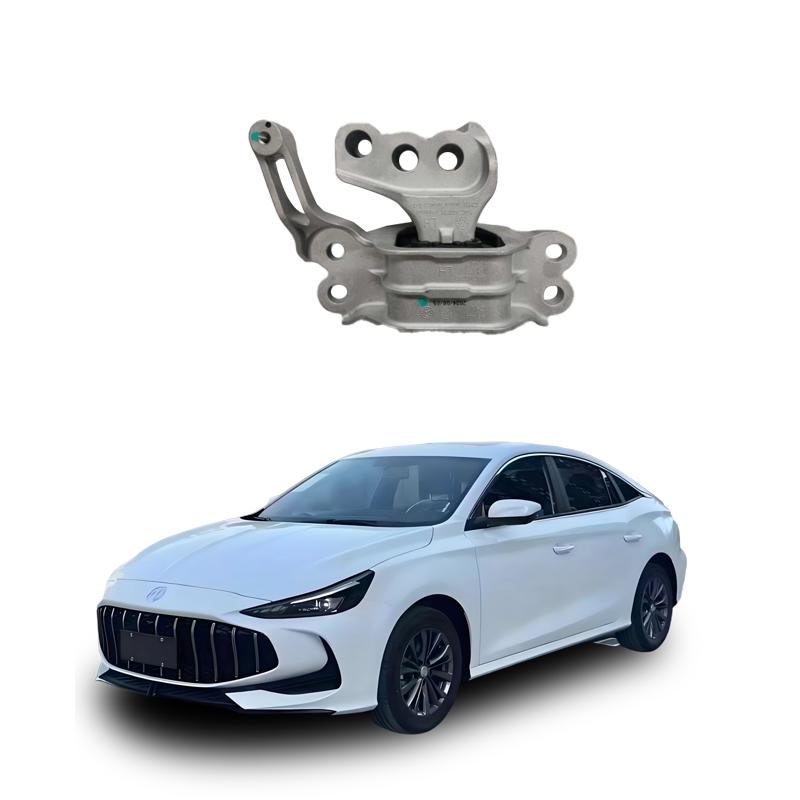
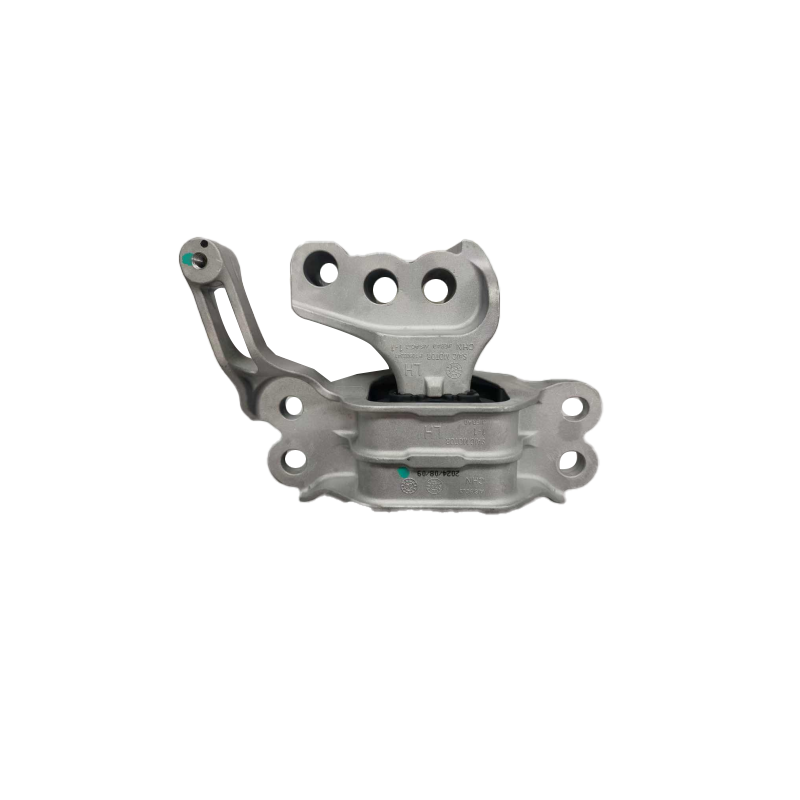
What is the car transmission housing bracket?
The transmission bracket is a crucial component in the automotive power system, primarily used to support and fix the transmission, ensuring its stable position during driving and effectively absorbing and isolating vibrations transmitted from the engine and the road surface.
The core functions of the transmission bracket can be summarized as follows:
Stability and Fixation: It bears the weight of the transmission and keeps it firmly in place. It prevents the transmission from shifting or shaking during acceleration, deceleration, or turning, and avoids damage to the internal gears and shift mechanisms due to positional deviation.
Vibration Absorption and Noise Reduction: Through built-in rubber or hydraulic shock-absorbing elements, it absorbs the vibrations generated by the transmission operation and vehicle movement, significantly enhancing driving comfort and reducing interior noise.
Precise Alignment: It ensures that the transmission maintains a precise relative position with the engine, transmission shafts, and other components, ensuring smooth and efficient power transmission and improving transmission efficiency and fuel economy.
Longer Service Life: By reducing vibration impact and positional stress, it effectively protects the transmission and related components, reducing wear and extending the service life of the power system.
The transmission bracket is typically made of a high-strength metal frame (such as alloy steel or aluminum alloy) combined with elastic rubber/hydraulic materials to balance rigidity support and shock absorption performance. Depending on the vehicle design, its structure may be in the form of a "steel rod" type torsion bracket (mostly installed on the engine side) or a "rubber block" type engine foot rubber (mostly located at the bottom). Some vehicles also have additional torque reaction brackets to optimize power response.
When the bracket ages or is damaged, it may exhibit abnormal noises, increased vibrations, shift hesitation, or transmission position deviation. In such cases, it is necessary to replace the original or high-quality parts promptly and install them by professionals to ensure driving safety and vehicle performance.
The transmission bracket is a key component in the automotive power system, primarily responsible for supporting and fixing the transmission, and effectively isolating vibrations to ensure the stability and comfort of vehicle driving. Its core functions can be summarized as follows:
Core Function
Support and Fixation of the Transmission
As a rigid connection piece between the transmission and the vehicle body, the transmission bracket bears the weight of the transmission and firmly positions it at the designated location. During acceleration, deceleration, turning, or driving over bumpy roads, the bracket prevents the transmission from excessive displacement or shaking, avoiding damage to the internal gears, bearings, and other precision components due to collision or misalignment, thereby extending the service life of the transmission.
Vibration Absorption and Isolation
Engine operation, road impact, etc. will generate intense vibrations. The internal transmission bracket usually uses rubber or hydraulic composite materials and other elastic elements to effectively absorb, buffer, and isolate these vibrations, preventing them from directly transmitting to the vehicle body and the driver's cabin. This not only significantly improves driving comfort but also reduces interior noise, especially at idle or low-speed driving.
Precise Alignment of the Power System
The transmission needs to maintain a precise coaxiality with the engine, transmission shafts, etc., to achieve efficient and smooth power transmission. The bracket stabilizes the position of the transmission, ensuring that the three components are always in the correct alignment, reducing power transmission losses and improving transmission efficiency, thereby improving the acceleration performance and fuel economy of the vehicle.
Enhancing Driving Stability and Safety
A well-functioning transmission bracket can effectively suppress the "jolt" and body shake during gear shifting (especially from low speed to high speed), making the shift smoother. If the bracket ages or is damaged, it may cause the transmission position to shift, affecting the normal operation of the shift mechanism and even triggering safety hazards such as gear skipping.
Explanation of Common Types
In practical applications, components commonly referred to as "transmission brackets" are mainly divided into two categories based on their installation location and function: Torque Rod: Usually a metal rod-like structure, it is installed on the side of the engine or transmission, mainly bearing the torque generated by the engine operation and limiting its front and rear swaying. It is a key component for controlling the "sinking car" phenomenon.
Engine Mount: Mostly in the form of rubber blocks, it is installed at the bottom of the engine or transmission, mainly bearing vertical support and shock absorption. It is the main component for isolating high-frequency vibrations.
Note: In some materials, "transmission bracket" and "engine bracket" have similar functions and are often used interchangeably. However, strictly speaking, the transmission bracket specifically refers to the component that supports the transmission, while the engine bracket supports the engine. Both work together to maintain the stability of the powertrain.
Typical manifestations after damage:
If the transmission bracket is aging, cracking or broken, the vehicle may exhibit the following symptoms:
Abnormal noise: Metal knocking sounds such as "clicking" or "thumping" are emitted during starting, acceleration or deceleration.
Obvious vibration: The body (especially the chassis) shakes more severely, and the steering wheel or pedal feels more intense vibrations at high speeds.
Shift hesitation: The gearshift is not smooth, and there is a distinct "impact" feeling.
Transmission position deviation: In severe cases, abnormal gaps or displacements can be observed at the connection between the transmission and the vehicle body.
It is recommended to conduct professional inspections of the transmission bracket every 80,000 kilometers or 6 years. If rubber aging, metal deformation or the above abnormal phenomena are found, replacement should be carried out promptly to ensure driving safety and vehicle performance.
If you want to know more, keep reading the other articles on this site!
Please call us if you need such products.
Zhuo Meng Shanghai Auto Co., Ltd. is committed to selling MG&MAXUS auto parts welcome to buy.