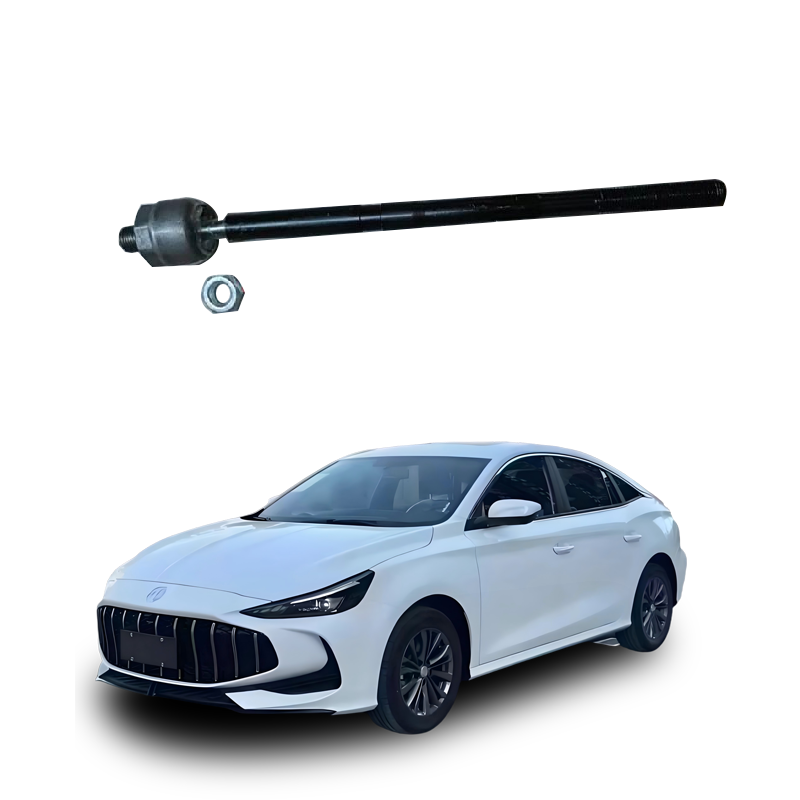
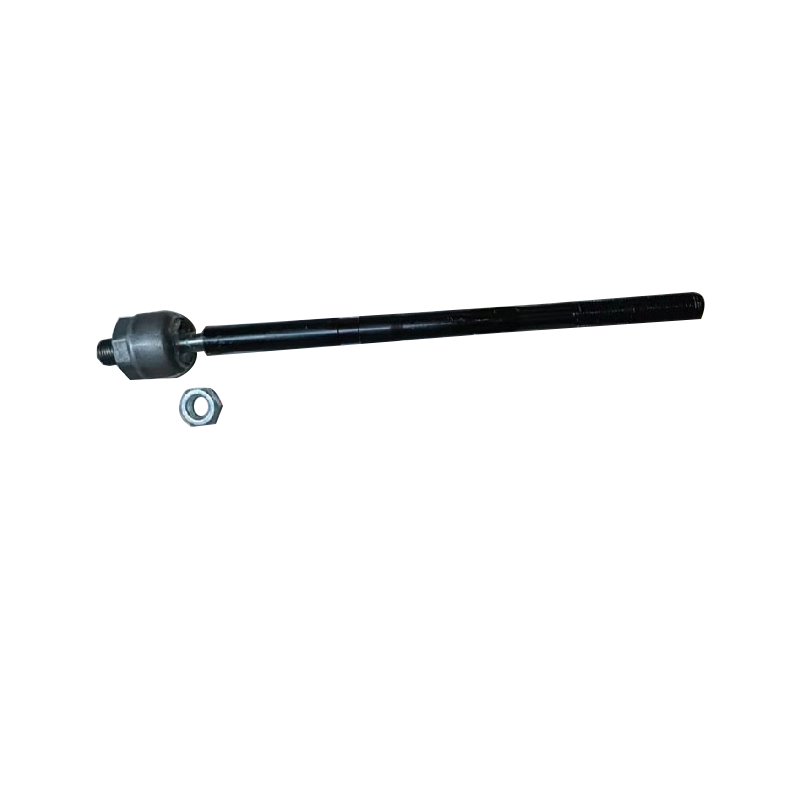
The function of the pull rod inside the car steering gear
In the automotive steering system, "the inner pull rod of the steering gear" usually refers to the inner part of the steering cross pull rod. It, together with the outer pull rod, constitutes the complete steering cross pull rod assembly, which is the key transmission component connecting the steering gear to the front wheels. Its core function is to transmit steering force, coordinate the movement of the left and right wheels, and adjust the front toe angle.
The specific functions can be summarized as follows:
Transmitting steering power
One end of the inner pull rod is connected to the steering gear (such as the gear end of a rack-type steering gear or the adjusting tube of a recirculating ball-type steering gear) through a ball joint, and the other end is connected to the outer pull rod. When the driver turns the steering wheel, the motion and torque output by the steering gear are first transmitted to the outer pull rod through the inner pull rod, and finally drive the steering knuckle to achieve the deflection of the wheels. It is the "power transmission bridge" that converts the steering wheel rotation into the steering action of the wheels.
Coordinating the synchronous steering of left and right wheels
The inner pull rod, together with the outer pull rod and the steering trapezoidal arm, constitutes the "steering trapezoidal mechanism". During vehicle turning, the steering angles of the inner and outer wheels are different, and the inner pull rod, as the "bottom edge" of this mechanism, can ensure that the left and right wheels rotate synchronously and coordinately according to the geometric relationship, avoiding wheel skidding or abnormal tire wear, and ensuring the stability and accuracy of steering.
Adjusting the front toe value
The inner pull rod usually adopts an adjustable structure (such as a threaded ball joint), and by changing the total length between the inner and outer pull rods, the "front toe" (Toe) parameter of the front wheels can be precisely adjusted. The front toe is a key parameter that affects tire wear, vehicle straight-line driving stability, and steering return ability. If the front toe is abnormal, it will cause tire "wear-out", increased fuel consumption, and wobbling of the steering wheel.
Ensuring driving safety and handling experience
If the ball joint connection of the inner pull rod at the end is worn, loose, or the dust cover is damaged, it will cause the steering wheel to have "false movement", the vehicle to veer when driving straight, produce abnormal sounds when passing over bumps or uneven road surfaces, and in severe cases, even affect the stability of high-speed driving. Therefore, regular inspection of the clearance of the ball joint and the integrity of the dust cover of the inner pull rod is an important part of ensuring driving safety.
Note: In some materials, "inner pull rod" may be generally referred to as "straight pull rod", and "directional gear inner pull rod" more accurately refers to the inner section of the steering cross pull rod, rather than the "straight pull rod" connecting the steering rocker arm and the steering knuckle, which is the core transmission component of the straight pull rod assembly in traditional mechanical steering systems. Modern passenger cars generally adopt rack-type steering gears, and the core transmission component is the combination of the inner and outer pull rods.
In conclusion, the directional gear inner pull rod is an indispensable "precise coordinator and force medium" in the steering system, directly related to the accuracy of vehicle handling, driving safety, and tire economy.
The main symptoms of damage to the inner pull rod of the automotive steering gear include vehicle veering, steering wheel shaking, steering heaviness, and bumping and abnormal sounds. These symptoms will seriously affect driving safety and require timely repair. The specific manifestations are as follows:
Core symptom manifestations
Vehicle veering: Automatically veers to one side during driving, especially more obvious when braking, usually caused by the loosening or fracture of the mechanical components of the pull rod.
Steering wheel shaking: Strong vibration during medium to high-speed driving, possibly accompanied by numbness in the hand, due to the damage of the pull rod causing uneven force on the wheels.
Steering heaviness: Difficult to turn the steering wheel, often caused by wear of the ball joint or leakage of the sealing parts of the pull rod.
Bumping and abnormal sounds: Produces "clunking" sounds on uneven road surfaces, due to the looseness of the pull rod or damage to the ball joint.
Other key symptoms
Unstable driving: Left and right swaying of the vehicle, decreased handling ability, obvious wheel bouncing at low speeds.
Brake veering: The vehicle suddenly veers to one side when braking, due to the failure of the pull rod affecting the balance of braking.
Steering failure: Severe cases where the steering wheel loses control and cannot control the vehicle's direction, a high-risk fault. Abnormal tire wear: Zigzag wear on one side, caused by damage to the tie rod, resulting in incorrect wheel alignment.
Abnormal steering return: The steering wheel returns to its original position slowly or fails to do so.
If you want to know more, keep reading the other articles on this site!
Please call us if you need such products.
Zhuo Meng Shanghai Auto Co., Ltd. is committed to selling MG&MAXUS auto parts welcome to buy.