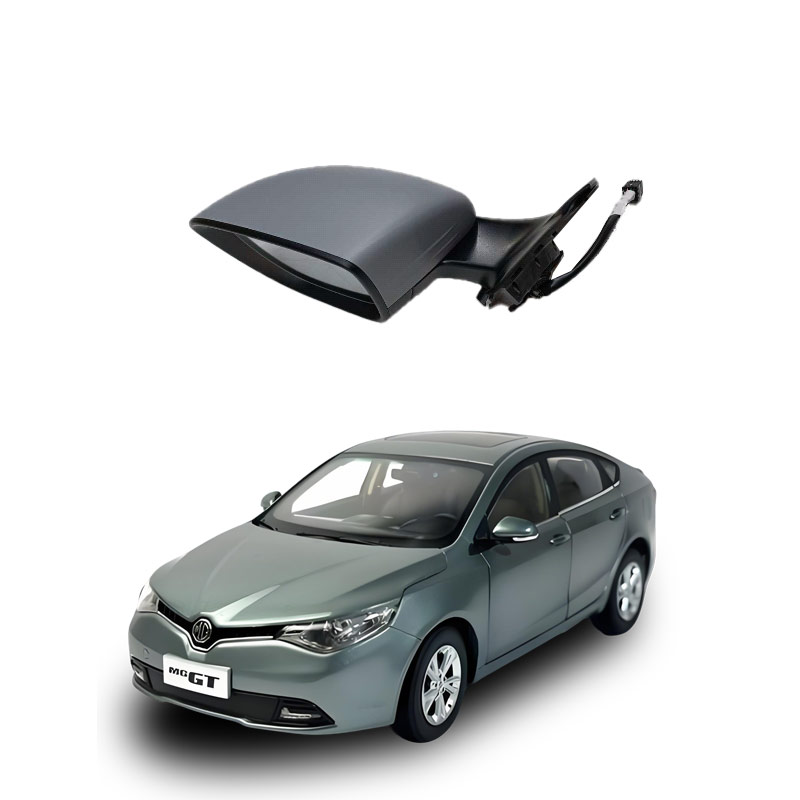
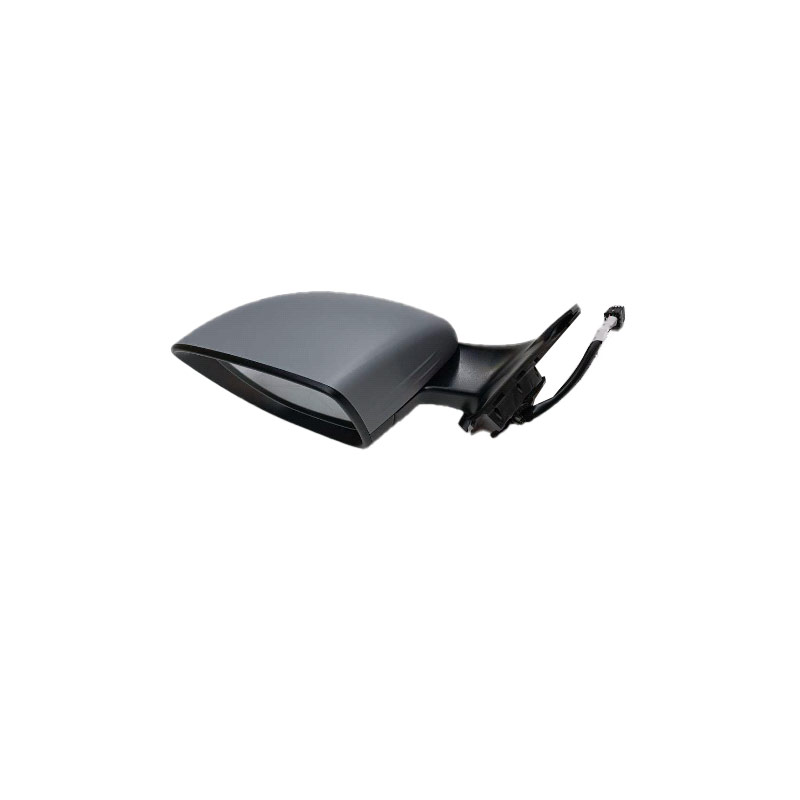
The function of the car reversing mirror
The rearview mirror (also known as the rearview glass) is a crucial safety device on vehicles. Its main functions can be summarized as follows:
Core Function
Observe the rear and side road conditions: Helps the driver understand the traffic situation behind and on both sides during driving, lane changing, turning, and reversing.
Expand the field of vision and reduce blind spots: Through the design of convex mirrors (especially the outer rearview mirror), it expands the visible range and reduces the risk of collision.
Assist in judging distance and position: Such as clearly seeing the relative position of the rear wheels and the curb or parking line when reversing, or estimating the distance from the rear vehicle through the rearview mirror inside the vehicle.
Specific Application Scenarios
Lane Changing: Confirm that there are no vehicles in the adjacent lane or ensure a safe gap.
Reversing/Stopping: Avoid scraping obstacles and precisely control the vehicle trajectory.
High-speed Driving: Monitor the speed of the vehicle behind and the following distance to prevent rear-end collisions.
Narrow Road Meeting or Complex Road Conditions: Judge the gap between the vehicle and surrounding objects.
Technical Evolution and Additional Functions
Modern rearview mirrors have integrated multiple intelligent and safety features:
Automatic Anti-glare: Reduces interference from the distant headlights of the following vehicle at night.
Heating and Dehumidification: Keeps the mirror surface clear in rainy and snowy weather.
Blind Spot Monitoring (BSD): Uses radar and warning lights to alert of vehicles in the side rear.
Electronic Rearview Mirror (CMS): Uses a camera and display instead of physical lenses, providing clearer vision in adverse weather conditions.
It is worth noting that "rearview mirror" is often used in a general sense to refer to all rearview mirrors, but strictly speaking, the outer rearview mirrors (on both sides) are usually convex mirrors to expand the field of vision, while the inner rearview mirror (in the center of the vehicle) is usually a flat mirror, providing a more realistic image.
Faults in the rearview mirror (i.e., the outer rearview mirror) may involve various causes. According to the latest authoritative data, they can be classified into the following common problems and corresponding solutions:
Common Fault Types and Causes
Unable to unfold/fold
Fuse blown (usually 15A)
Switch or control module failure
Motor or gear set damage
Damaged wiring, loose or water ingress
Mechanical components frozen due to low temperature
Settings mistakenly turned off (such as the "automatic unfold" function turned off)
Blurred or unclear mirror surface
Mirror surface dirtied, aging coating
Rain, fog, or temperature condensation
Camera (if equipped with images) water ingress, dust accumulation, or lens scratch
Not returning to position or angle deviation
Locking mechanism spring/lever damaged
Loose fixing screws
Internal bracket deformation or connecting rod fracture
Fault light illuminated (common in high-end models)
Environmental sensor failure
Poor circuit connection
Software needs to be updated or reset
External physical damage or foreign object interference
Recommended Troubleshooting Steps (in order of priority)
Check the basic settings
Confirm that the "automatic unfold/fold" function of the outer rearview mirror in the central control system is enabled.
Check if the adjustment knob on the driver's side door panel is in the "automatic" mode.
Examine the power system
Check if the battery voltage is normal (should be above 12V).
Locate the specific fuse for the rearview mirror (usually 15A, location reference the manual), and check if it is blown.
Handle mechanical jamming
If frozen in winter, use a warm air blower to thaw the rearview mirror for 3-5 minutes.
Spray WD-40 lubricant on the rotating shaft or use compressed air to clean dust.
Do not forcibly twist, as it may damage the gears or motor.
Try system reset
Disconnect the negative battery terminal for 5 minutes before reconnecting, and reset the vehicle control module.
Some models support performing the "rearview mirror initialization" program through the central control screen.
Emergency Temporary Solutions
Minor scratches on the mirror surface can be repaired with fine sandpaper and polishing agent.
If the mirror is broken, use transparent tape to temporarily fix it to prevent it from falling off.
The heating function failure can be alleviated by spraying anti-fog agent.
When is professional repair needed? In the following situations, it is recommended to immediately go to a 4S store or a professional repair center:
No response from the motor, abnormal noise
Worn-out wiring, corroded connectors
Fault in the control module (such as the vehicle control unit)
Deformed mirror frame, cracked shell affecting structural safety
The fault light keeps flashing and cannot be cleared
Safety reminder: Before operating, be sure to turn off the engine and disconnect the negative terminal of the battery to avoid short circuits or electric shock risks.
If further diagnosis is needed, you can use the vehicle's OBD device to read the fault codes, or obtain remote support through the brand's official APP (such as OnStar).
If you want to know more, keep reading the other articles on this site!
Please call us if you need such products.
Zhuo Meng Shanghai Auto Co., Ltd. is committed to selling MG&MAXUS auto parts welcome to buy.