What should be done to repair the front drive shaft assembly of a car that is broken?
When the front transmission half-shaft assembly of a car is damaged, corresponding maintenance measures should be taken based on the extent of the damage. According to the latest publicly available information as of April 2026, the standard handling process is as follows:
Determine the extent of the damage
Minor damage: If the dust cover is cracked or the oil seal leaks, the sealing parts can be replaced separately.
Moderate damage: If the ball cage (universal joint) is worn, there is abnormal noise but no fracture, the ball cage assembly or half-shaft assembly can be considered for replacement.
Severe damage: If the half-shaft is bent, broken, or has metal fatigue cracks, a completely new half-shaft assembly must be replaced; it cannot be repaired.
Recommended maintenance steps
Stop the vehicle immediately for inspection
If there is obvious abnormal noise (such as "clicking" sounds), shaking, or power interruption, stop the vehicle immediately to avoid further damage from continued driving.
Professional diagnosis
Raise the vehicle and check:
Whether the dust cover is damaged or leaking oil;
Whether the ball cage is loose, has clearance (standard axial clearance > 0.3mm requires replacement);
Whether the half-shaft body is deformed or cracked.
Replace the half-shaft assembly
It is recommended to replace in pairs (both left and right sides at the same time) to ensure transmission balance;
When replacing, also replace the half-shaft oil seal (usually a one-time part, easy to damage during removal).
Professional installation and debugging
It must be operated by an authorized 4S store or professional repair institution to ensure that the angle of the ball cage universal joint and the tightening torque meet the standards;
After installation, perform the following:
Test drive: Check if acceleration and steering are smooth, and if there are any abnormal noises or shaking;
Four-wheel alignment: Prevent the vehicle wheel alignment parameters from being affected due to half-shaft replacement, resulting in tire wear.
Precautions
Do not attempt to repair severely deformed or broken half-shafts yourself; there is an extremely high safety risk;
If the vehicle is a four-wheel drive or has a full-floating half-shaft structure, special attention to type matching is required;
Daily maintenance recommendations: Check the integrity of the dust cover every 10,000 kilometers, and check the lubrication status of the transmission system every 30,000 kilometers. Structural composition
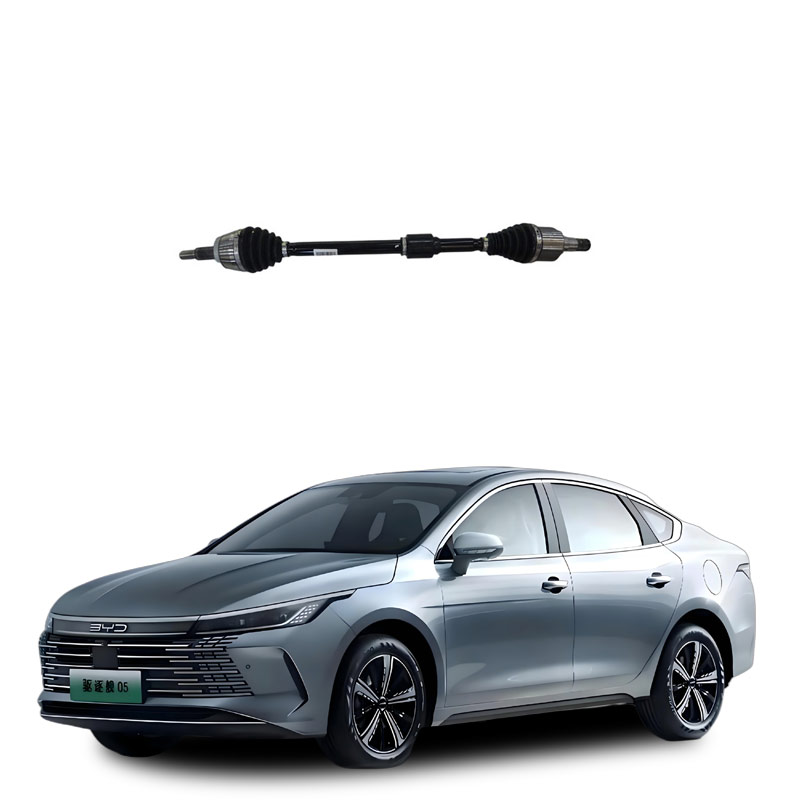
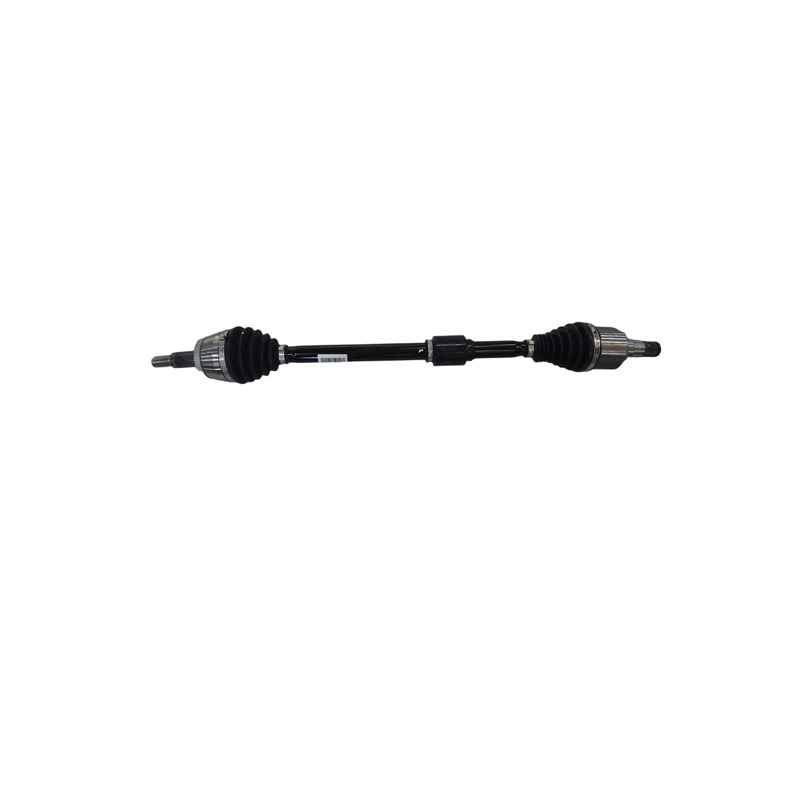
Inner ball cage: Connects to the differential side, usually using spline engagement.
Outer ball cage: Connects to the hub bearing, fixed by flanges or splines.
Intermediate shaft body: Solid or hollow shaft, transmits torque.
Dust cover: Seals the universal joint to prevent lubricant leakage and foreign object intrusion.
Common Problems and Maintenance Tips
Dust cover damage: Easily causes wear of the universal joint, leading to abnormal noise, shaking or power interruption.
Ball cage looseness: May produce a "clicking" sound during low-speed turns, and the vehicle becomes unstable at high speeds.
It is recommended to conduct regular inspections: Especially after driving through water or on bumpy roads, replacing damaged parts in time can avoid greater damage.
If you want to know more, keep reading the other articles on this site!
Please call us if you need such products.
Zhuo Meng Shanghai Auto Co., Ltd. is committed to selling MG&MAXUS auto parts welcome to buy.