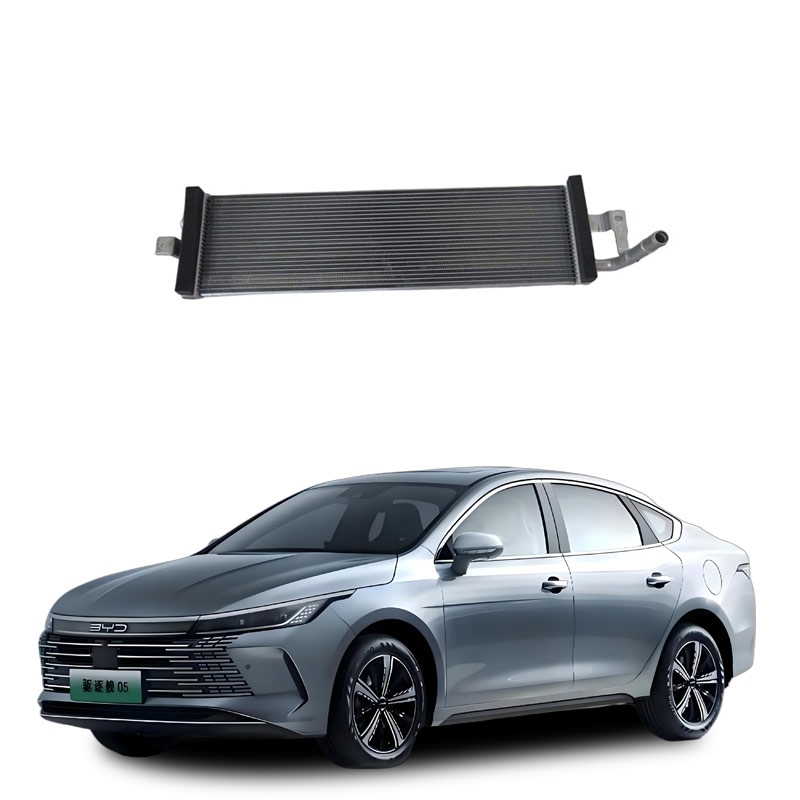
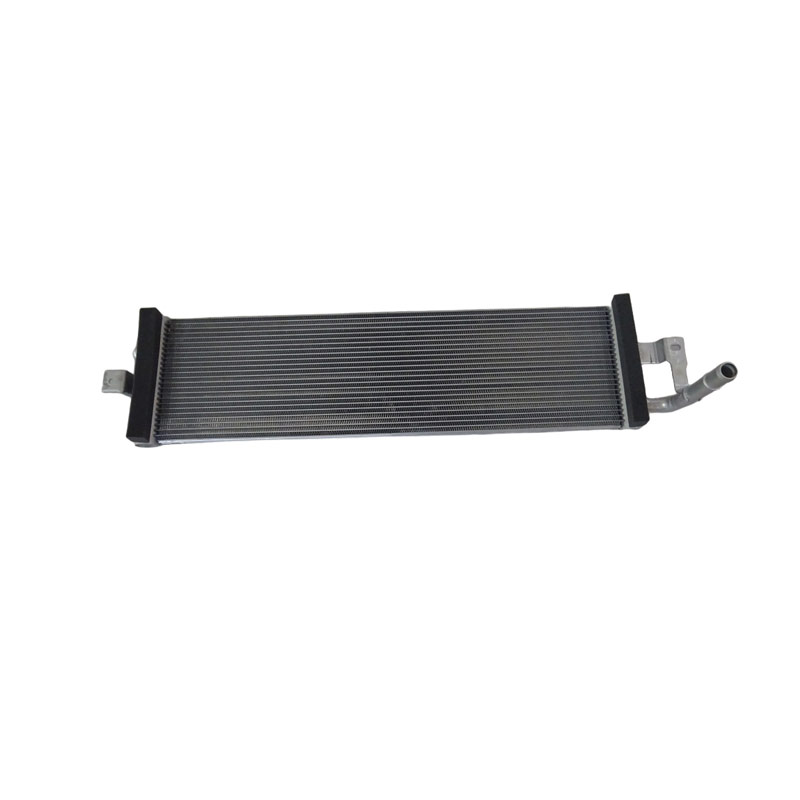
What is the automotive high-temperature radiator assembly?
The high-temperature radiator (High-Temperature Radiator, abbreviated as HT Radiator) is the core component of the main cooling system of the engine, mainly used to transfer the heat generated by the engine through the coolant to the outside air, preventing the engine from overheating. Its core components include the following parts:
Main structural components
Inlet chamber and outlet chamber: They are respectively connected to the outlet of the engine's high-temperature coolant and the return pipeline, enabling the flow of coolant in and out.
Radiator core: The core area for heat exchange, usually consisting of the following sub-components:
Cooling tubes: Flat circular cross-section aluminum or copper tubes, with high-temperature coolant flowing inside.
Heat spreaders/heat dissipation fins: Attached to the outside of the cooling tubes, used to expand the heat dissipation area; the tube band structure also has "louver" shaped cuts to disturb the airflow and enhance heat dissipation efficiency.
Main board and support plate: Fixing and supporting the core structure, ensuring sealing and mechanical strength.
Radiator cover: Includes steam valve and air valve, used to maintain the pressure of the cooling system and prevent boiling or air from entering.
Frame and seals: Provide structural support and ensure no leakage at the connection points of each component.
Material and type
Main materials: Aluminum alloy (accounting for over 80%, with a thermal conductivity of approximately 230 W/(m·K)), lightweight and corrosion-resistant; copper is mostly used for commercial vehicles, with good thermal conductivity but high cost.
Classification by structure:
Plate type: Cooling tubes and horizontal heat spreaders are assembled, with a simple structure.
Pipe band type: Cooling tubes are welded with corrugated heat spreaders, with a heat dissipation area approximately 12% higher than the plate type.
By coolant flow direction classification: Longitudinal flow type (up and down arrangement) and transverse flow type (left and right arrangement).
Functional features
The high-temperature radiator handles the high-temperature coolant of the engine's main circulation (usually above 90°C), directly affecting the engine's thermal stability.
It works in conjunction with the low-temperature radiator (used to cool compressed air, engine oil, etc.) to jointly achieve engine thermal management.
Note: During daily use, it is recommended to inspect the cooling system every 3 months or 5000 kilometers, keep the radiator surface clean, and avoid debris blocking the fins to affect the heat dissipation efficiency.
The components of the automotive high-temperature radiator are the core part of the engine cooling system. Its main function is to dissipate the excess heat generated by the engine through heat exchange to the outside air, maintaining the engine in an appropriate operating temperature range (usually 80°C–105°C), and preventing performance degradation or mechanical damage due to overheating.
Detailed explanation of the core function
Heat exchange cooling: The high-temperature coolant flows out of the engine, passes through the radiator core (composed of flat cooling tubes and corrugated fins), and achieves cooling through convective heat exchange with the external air, then returns to the engine to form a closed loop .
Pressure regulation and boiling point elevation: The radiator cover contains pressure valve and vacuum valve. In high temperatures, it automatically releases pressure (removing some coolant to the expansion water tank), and refills the coolant after the engine is turned off to prevent pipe rupture or air bubbles; pressurization can raise the boiling point of the coolant to above 120°C to prevent "boiling over" .
Multi-component coordinated temperature control: It works in conjunction with the water pump, thermostat, electronic fan, etc., adjusting the cooling intensity dynamically according to engine load and water temperature, ensuring both rapid heating and stable cooling .
Main structural components
Radiator core: The core area for heat exchange, composed of aluminum flat tubes and corrugated fins, to increase the contact area and enhance heat dissipation efficiency.
Inlet chamber and outlet chamber: They respectively receive the high-temperature coolant and output the cooled liquid, ensuring a one-way circulation .
Auxiliary components:
Cooling fan: Forces air to flow at low speed or idle, enhancing heat dissipation ; Dampers (for some high-end models): Optimize the flow distribution of coolant within the core to avoid localized overheating;
Sealing gaskets: Prevent leakage at the connection points, and regular checks for aging are required;
Material and design trends:
Main materials are aluminum (accounting for over 80%), due to its lightweight (about 40% lighter than copper), good thermal conductivity (thermal conductivity coefficient of approximately 230 W/(m·K)), and corrosion resistance.
Structural types: Include tube sheet type, tube belt type (with a 12% higher heat dissipation area than tube sheet type) and plate type. The tube belt type is more efficient due to its aerodynamic louvre design.
Modern development direction: Lightweighting, integrated thermal management (especially in electric vehicles), some models have integrated the cooling functions of engine oil and transmission oil into the same system.
Daily maintenance suggestions:
Regularly clean dust, insects, etc. from the cooling fins to maintain smooth ventilation;
Check the coolant level, sealing condition, and for any leakage in the pipes every 3 months or 5,000 kilometers;
Use special antifreeze (containing anti-corrosion agents), avoid using pure water which can cause scaling or corrosion;
If the vehicle experiences excessively high water temperature after hot weather or long uphill driving, prioritize checking if the radiator is clogged, if the fan is working properly, and if the coolant is sufficient.
If you want to know more, keep reading the other articles on this site!
Please call us if you need such products.
Zhuo Meng Shanghai Auto Co., Ltd. is committed to selling MG&MAXUS auto parts welcome to buy.