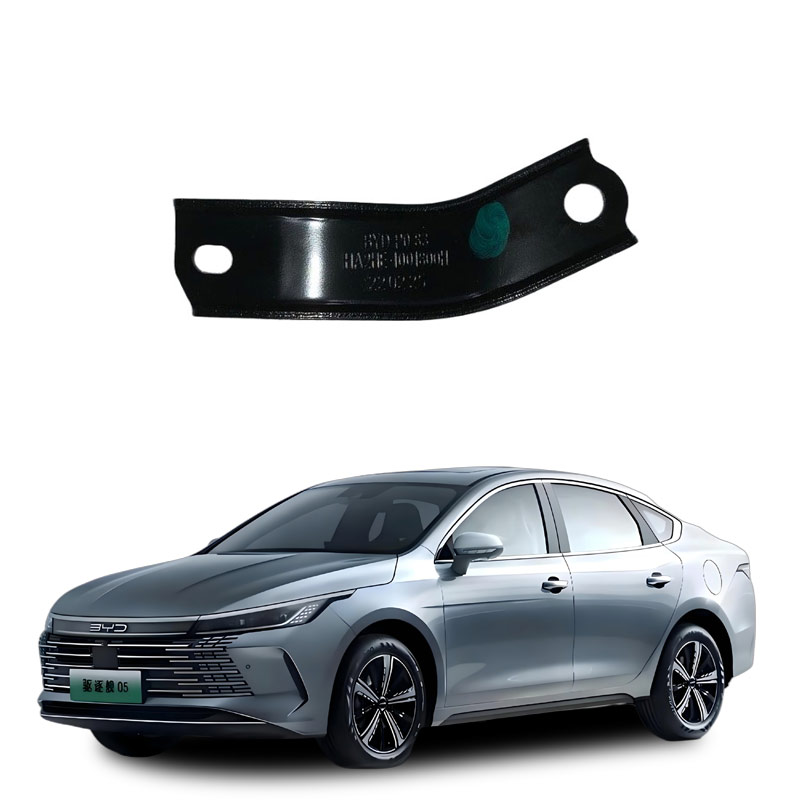
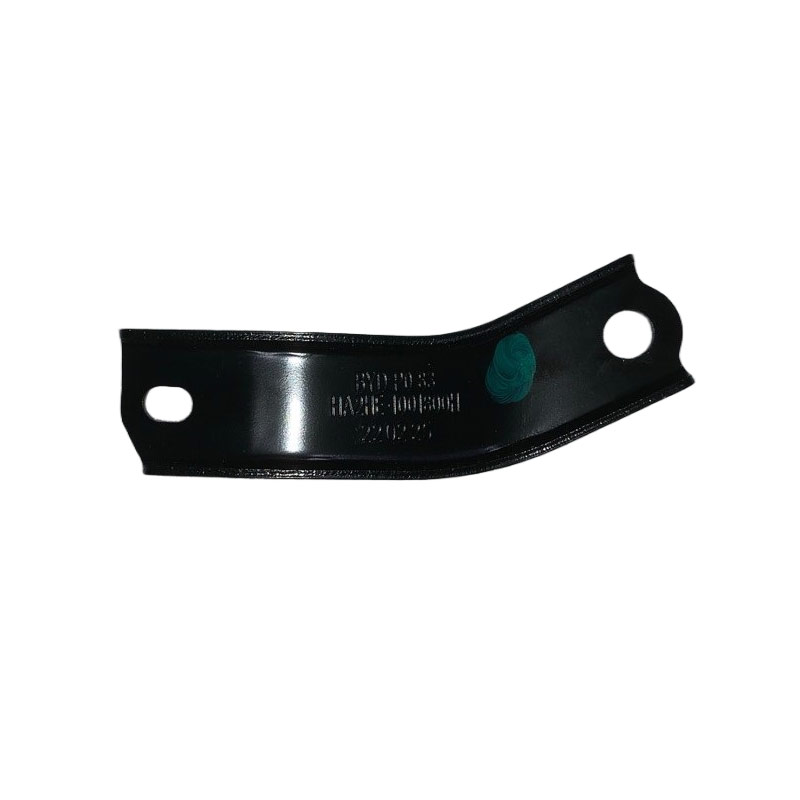
The function of the right suspension bracket assembly of the car
The function of the right suspension mount assembly needs to be understood in conjunction with "the overall structure of the suspension system" and "the functions of the mounting components within it". According to authoritative public information, the suspension system is typically composed of four parts: elastic elements, shock absorbers, steering mechanisms, and lateral stabilizers. The "mounting" components mostly belong to the steering mechanisms or connection support structures.
The main functions of the right suspension mount assembly
Fixation and support: As a key component connecting the suspension system (such as control arms, shock absorbers, springs, etc.) to the vehicle body or subframe, it is responsible for transmitting forces and torques.
Control of wheel movement trajectory: Through rigid connection, it ensures that the wheels move along the predetermined geometric trajectory, maintaining tire grip and steering stability.
Absorption and dispersion of loads: It withstands the impact loads from the road surface and distributes them reasonably to the vehicle structure, avoiding local stress concentration.
Enhancement of handling stability: During turns, braking, or acceleration, it limits the abnormal displacement of suspension components, reducing body roll or deviation.
Note: Some sources mention "right suspension mounts" (such as the right engine suspension mounts)
which belong to the powertrain suspension system and are used to fix the engine and isolate vibrations, and do not belong to the suspension system. If the question specifically refers to "suspension" rather than "engine", this interference item should be excluded.
Review of standard components of the suspension system
According to authoritative sources such as Pacific Auto,
the four core components of the suspension system are:
Elastic elements (such as coil springs): Buffering road impacts.
Shock absorbers: Reducing vibrations and preventing the vehicle body from continuous bouncing.
Steering mechanisms (including control arms, links, mounts, etc.): Transmitting forces and controlling the wheel movement trajectory.
Lateral stabilizers: Reducing side roll during cornering.
Among them, the right suspension mount belongs to the connecting or supporting components of the steering mechanisms, and its specific form varies by vehicle model (such as the lower arm mount, shock absorber mounting bracket, etc.).
Faults in the right suspension mount assembly of the vehicle usually refer to the damage, loosening, or aging of the supporting or connecting components in the right suspension system, which may affect the stability and safety of driving. Based on current public information (as of April 2026), combined with common fault types and diagnostic methods, the following is compiled:
Common fault manifestations
Abnormal noise: A "clunking" "thumping" or "clicking" sound is emitted from the right front or rear suspension area during driving, especially on bumpy roads or when turning.
Body inclination or deviation: The vehicle leans to the right, or needs to constantly correct the direction to maintain straight driving.
Reduced shock absorption effect: The bumping sensation is enhanced when passing over speed bumps or potholes, and the vehicle rebounds more than 2 times (normally it should stabilize within 1-2 times).
Abnormal tire wear: The right tire shows single-sided wear, zigzag wear, or accelerated wear.
Instrument panel indication: Some models (such as Land Rover) will display "suspension fault" or "dynamic suspension abnormality" warnings.
Possible causes
Rust or cracking of rubber bushings in the mounts: Leading to loosening of connections, causing abnormal noise and positioning errors.
Loosening or fracture of mount bolts: Causing displacement of suspension components and affecting parameters such as wheel camber and toe.
Wear of control arms or ball joints: The ball joint of the right suspension control arm is loose, causing deviation and abnormal noise.
Air suspension-related faults (if applicable):
Right front air spring leakage or collapse;
Abnormal signal from the height sensor (such as deformation of the bracket, circuit breakage);
Faults in the air pump or distribution valve causing insufficient support on the right side.
Suggested handling steps
Initial inspection:
Park on a flat surface and observe if the vehicle body sinks to the right;
Check if there are oil leakage marks on the right suspension shock absorber;
Slightly shake the tires and listen for any loose noise (be cautious and lift the vehicle if necessary).
Professional diagnosis: Use the OBD diagnostic tool to read the fault codes of the suspension system (especially applicable to vehicles with air suspension or electronically controlled suspension);
Pay special attention to checking the right front height sensor, wiring harness, air pump and air spring status.
Maintenance measures:
Replace damaged brackets, bushings or control arm assemblies;
Tighten loose bolts to the specified torque by the manufacturer;
If it is an electronic system failure, it is necessary to have the authorized service center perform ECU calibration or replace the sensor.
Subsequent verification:
After the repair, conduct four-wheel alignment;
Test drive to verify if the abnormal noise has been eliminated and if the vehicle is stable.
Note: Suspension faults directly affect driving safety. It is not recommended to drive the vehicle for a long time by yourself. If the vehicle is a brand equipped with air suspension such as Land Rover, it is recommended to go to the authorized repair center as soon as possible for handling to avoid greater losses due to misjudgment.
If you want to know more, keep reading the other articles on this site!
Please call us if you need such products.
Zhuo Meng Shanghai Auto Co., Ltd. is committed to selling MG&MAXUS auto parts welcome to buy.