The function of the car brake pedal assembly
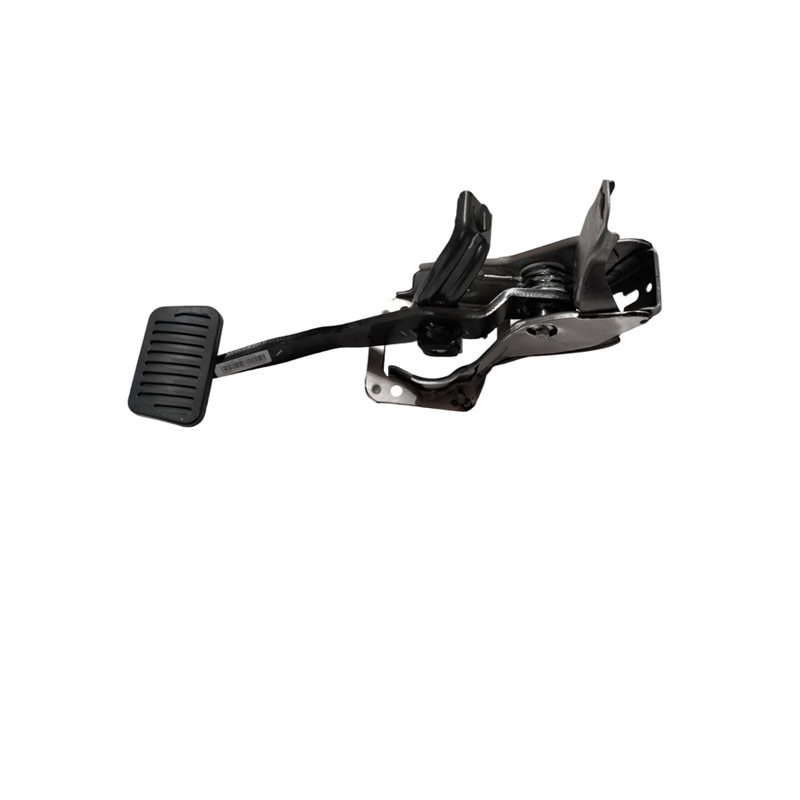
The automotive brake pedal assembly is the core control component in the vehicle braking system. Its main function is to convert the mechanical force applied by the driver into braking force, enabling the vehicle to decelerate or stop. According to authoritative public information, its specific functions and roles can be summarized as follows:
Core function
Control parking brake: As a device operated by the driver's right foot, it is used to slow down or stop the vehicle during driving, serving as the entry point for the "foot brake" (parking brake).
Key interface for human-machine interaction: Through the pedal force, which is amplified by components such as the master cylinder and booster, it is transmitted to the wheel brakes (such as disc or drum type), converting vehicle kinetic energy into heat energy to achieve effective braking.
Ensure driving safety: The accuracy of operation directly affects the stability and emergency response capability of the vehicle, especially in emergency braking and combined braking scenarios.
System composition and working principle
The brake pedal assembly typically includes the following key components:
Pedal assembly: Includes pedal arms, return springs, limit structures, and some integrated travel sensors.
Vacuum booster: Utilizes the negative pressure in the engine intake manifold to amplify the pedal force (usually 3–5 times), reducing the driver's burden.
Brake master cylinder: Converts mechanical thrust into hydraulic pressure, transmitting it through the brake fluid to each wheel.
Connecting mechanism: Push rods, connecting rods, etc., transfer the pedal action to the booster and master cylinder.
Special functions and technological evolution
Cooperation with ABS/ESP: In modern vehicles, the brake pedal assembly works in conjunction with the anti-lock braking system (ABS) and electronic stability program (ESP) to prevent wheel lockup and maintain steering control.
Compliance with new national standards: Since January 1, 2026, the mandatory national standards have stipulated that vehicles must complete the final braking stop through the brake pedal in default conditions, and cannot achieve complete stopping solely by releasing the accelerator pedal.
Lightweight design: Some new pedals use PEEK plastic or composite materials for one-piece molding, reducing weight by approximately 50%, while maintaining strength and durability.
Operating precautions
Correct timing of pedal application: For medium and low speeds, apply the clutch first and then the brake; for high speeds, apply the brake first and then the clutch to avoid engine stall or loss of control.
Avoid misoperation: The pedal is positioned higher than the accelerator (30–50mm), reducing the risk of accidental pedal application.
Regular inspection: Abnormal free travel, soft pedal, or changed travel length may indicate faults in the booster or push rod, requiring timely repair.
In summary, the brake pedal assembly is not only a direct execution component for deceleration and stopping, but also the starting point of the vehicle's braking safety system. Its performance and operation directly affect driving safety.
The failure of the automotive brake pedal assembly is an important issue affecting driving safety. According to the latest public information (as of April 2026), the common failure manifestations, causes, and solutions are as follows:
Common failure manifestations and corresponding causes
Brake pedal cannot be depressed or becomes hard
Vacuum booster failure (in fuel vehicles) or electronic assistance system failure (in electric vehicles)
Vacuum assistance disappears after engine shutdown (a normal phenomenon, can be restored by restarting the vehicle)
Insufficient, deteriorated, or leaking brake fluid
ABS or ESP module failure triggering protection mode
Excessive, soft, or no resistance in the brake pedal
Air mixed in the braking system (commonly occurs after brake fluid replacement or after maintenance without purging)
Sealing ring wear or piston jamming in the brake master cylinder or distributor cylinder
Severe wear of brake pads/pads, oil stains, or poor contact
Continuous pedal application is effective, but one-step braking is ineffective
Excessive free travel of the brake pedal or excessive clearance of the brake assembly
Brake disc deformation, uneven wear of brake pads; brake pads wear beyond limit; suspension or tire problems When the ABS system is activated normally, there will also be popping and clicking sounds, which is a normal phenomenon.
Emergency Handling Suggestions:
Stop immediately for inspection: If the brakes suddenly fail or the pedal is abnormal, turn on the hazard lights and slow down and pull over.
Try restarting the engine: For fuel vehicles, restarting may restore the vacuum assist.
Press the pedal forcefully multiple times: If due to system intake, rapid pressing can temporarily establish pressure.
Use the handbrake or engine braking: In manual transmission, you can downshift to slow down; in automatic transmission, you can shift to a low gear (such as L/S gear).
Do not continue driving: A brake system failure must be handled by professional mechanics.
Daily Preventive Measures:
Replace brake fluid every 2 years or 40,000 kilometers (whichever comes first)
Regularly check the thickness of the brake pads (the limit is generally 2-3mm)
Check if the brake discs are flat, have grooves or are deformed
Pay attention to whether the brake fluid level is between the MIN/MAX marks
Avoid bad driving habits such as continuous braking for a long time, emergency braking at high speed, etc.
If the brake pedal assembly fails, it is recommended to go to a 4S store or professional repair facility for diagnosis as soon as possible. Some models can read ABS/ESP fault codes through the OBD diagnostic instrument to assist in precise repair.
If you want to know more, keep reading the other articles on this site!
Please call us if you need such products.
Zhuo Meng Shanghai Auto Co., Ltd. is committed to selling MG&MAXUS auto parts welcome to buy.