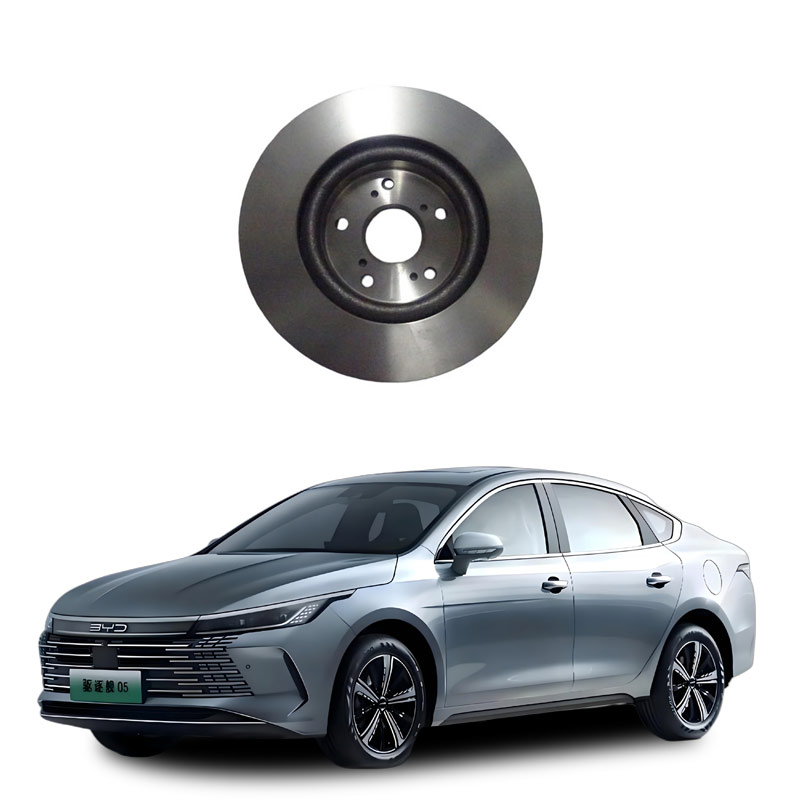
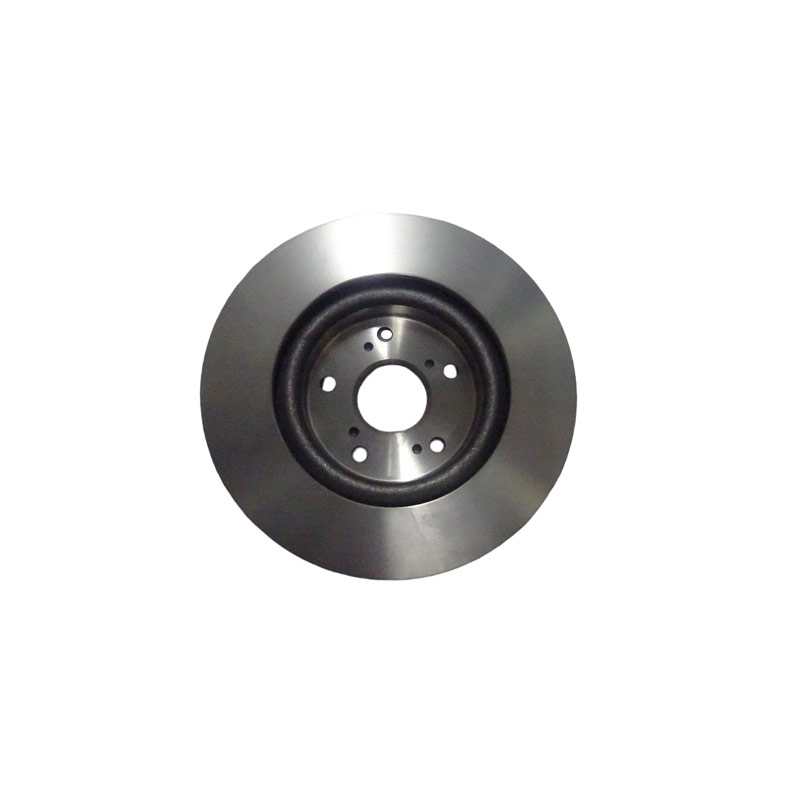
The function of the front brake disc of a car
The front brake disc of a car is a core component in the vehicle's braking system. Its main function is to convert the kinetic energy of vehicle movement into heat energy through friction with the brake pads, thereby achieving deceleration or stopping. Since the front wheels bear approximately 70%–80% of the braking force during braking, the front brake disc is particularly crucial in terms of safety and handling.
Core function
Energy conversion: After stepping on the brake pedal, the hydraulic system pushes the caliper to clamp the brake disc, and the friction converts kinetic energy into heat energy, causing the vehicle to decelerate or stop .
Efficient heat dissipation: Front brake discs generally adopt a ventilated disc design (with cooling channels), which significantly improves the heat dissipation efficiency and avoids thermal degradation during continuous braking .
Stable braking: Combined with electronic systems such as ABS and ESP, it provides rapid response and uniform braking force, enhancing the stability during emergency braking .
Main differences between front and rear brake discs
Brake force ratio: The front wheels bear most of the braking force, while the rear wheels play an auxiliary role in maintaining stability .
Structural differences: Front discs are mostly ventilated discs (with a temperature resistance of over 650°C), while rear discs are usually solid discs (with a temperature resistance of about 450°C) .
Performance configuration: Front wheels are often equipped with dual-piston calipers, while rear wheels mostly use single-piston calipers . Additional Explanation
Most family cars adopt the configuration of "front ventilated disc + rear solid disc" to balance cost and performance.
High-performance models may be equipped with "four-wheel ventilated disc" or even perforated/lined discs to further enhance heat dissipation and chip removal capabilities.
The front brake disc is a key component of the braking system, and its failure can directly affect driving safety. According to authoritative public information, the common types, manifestations, and causes of common brake disc failures are as follows:
Common failure manifestations:
Brake shake: Obvious vibration of the steering wheel and vehicle body during high-speed or heavy braking, usually caused by uneven wear or thermal deformation of the brake disc.
Strange noise: Sharp metallic sound, creaking sound, or continuous squeaking when braking, possibly caused by rust, foreign objects, excessive wear, or quality problems with the brake pads.
Single-side overheating: After parking, place your hand on the hub (do not directly touch), if the temperature of one brake disc is significantly higher than the other, it may be due to pump jamming or drag braking.
Brake warning light on the dashboard: The brake warning light on the dashboard is on, possibly indicating excessive wear of the brake disc/plate, insufficient brake fluid, or abnormal system pressure.
Brake drift: The vehicle automatically leans towards one side when braking, often caused by pump failure, uneven wear, or brake disc deformation.
Brake disc cannot rotate or has high resistance: In severe cases, it may be due to insufficient lubrication, excessive wear and adhesion of the brake pads, or complete jamming of the pump.
Main failure causes:
Normal wear: The brake disc gradually thins with use, when the thickness is lower than the manufacturer's limit value (usually marked on the disc), it needs to be replaced.
Abnormal friction:
Brake pump/brake caliper piston or guide pin is corroded and stuck, causing the brake pads to fail to return and continuous friction and heat generation.
Excessive wear of the brake pads or new pads not properly worn out, abnormal contact with the disc.
Heat damage: Frequent emergency braking, long downhill braking, causing the brake disc temperature to be excessively high (up to over 300°C), resulting in deformation, thermal cracks, or even loss of roundness.
External factors:
Rust: Long-term parking or damp environment causes rust on the disc surface, resulting in strange noises.
Foreign objects entering: Sand, dust embedded between the brake pad and the disc, causing scratches or noise.
Hub bearing damage: Increased resistance during rotation, heat transferred to the brake disc causing it to become hot.
Suggestions for handling and dealing with:
Initial judgment of abnormality:
If overheating occurs after experiencing congestion, long downhill, or intense driving, it is normal and can be cooled down by parking.
If one side is significantly overheated, has strange noises or shakes while driving on a flat road, it is necessary to be vigilant of a fault.
Safety self-check steps:
Check the thickness of the brake pads (normal about 10mm, below 6mm is recommended for replacement).
Observe if there are cracks, deep grooves, or obvious deformation on the surface of the brake disc.
Compare the temperature differences between the left and right front wheels.
Check if the brake fluid level is between MIN and MAX.
Handling principles:
Minor issues (such as abnormal noise during new pad wear, slight rust): Can continue driving and observe, most cases will be eliminated on their own.
Severe faults (such as shaking, continuous strange noises, abnormal temperature, brake warning light on): Immediately stop driving, contact a professional repair agency.
Do not wash the hot brake disc yourself, as it may cause cracking due to thermal expansion and contraction.
Preventive measures:
Regularly check the braking system (suggested every 10,000 kilometers or as per the manual requirements).
Avoid long-term light braking or "left foot braking" habits.
Use engine braking during long downhill, reducing the frequency of braking.
Replace high-quality brake pads to avoid exacerbating wear.
Replace brake fluid every 2–3 years or 4–60,000 kilometers to prevent deterioration and gas blockage.
If you want to know more, keep reading the other articles on this site!
Please call us if you need such products.
Zhuo Meng Shanghai Auto Co., Ltd. is committed to selling MG&MAXUS auto parts welcome to buy.