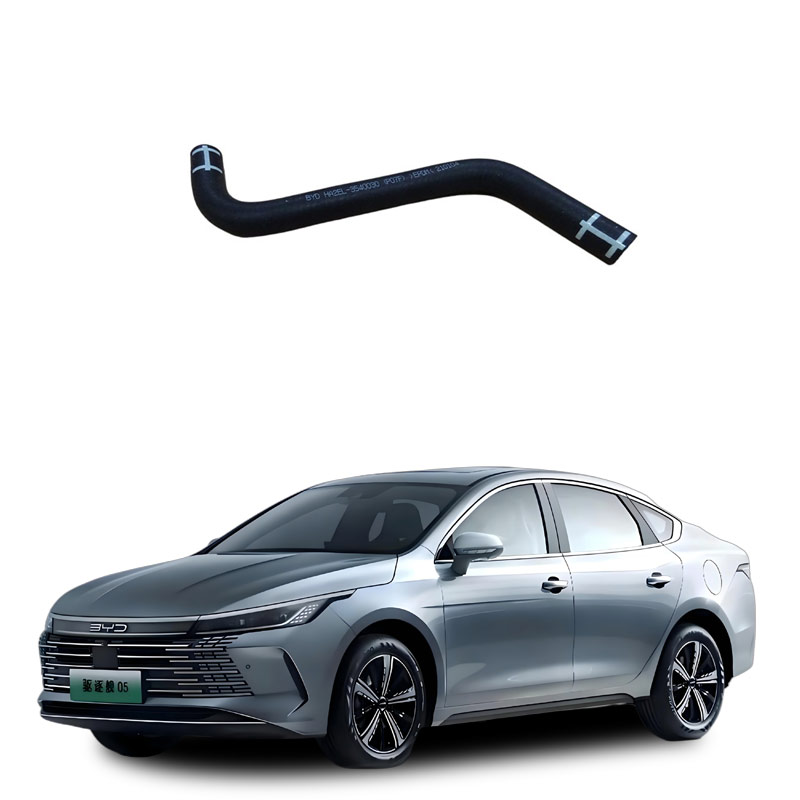
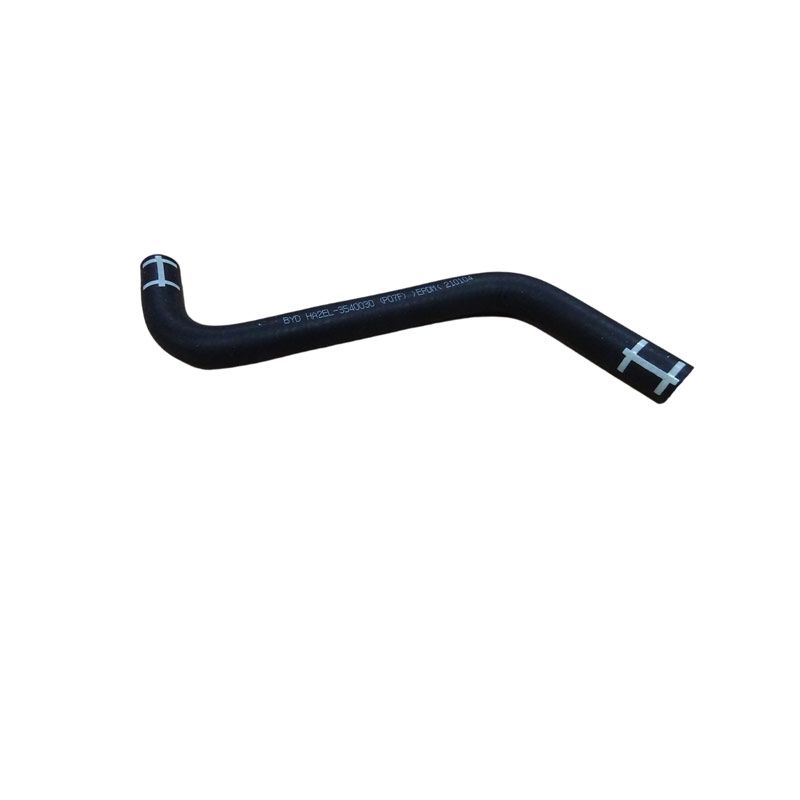
The function of the connection hose assembly for the car brake fluid tank
The flexible hose assembly connected to the brake fluid reservoir (i.e., the master cylinder reservoir) is an important component of the flexible hydraulic transmission channel in the braking system. Its core function is to smoothly transport the brake fluid from the reservoir to the master cylinder and ultimately to each wheel brake caliper, achieving reliable braking.
The specific functions can be summarized as follows:
Connection and Transmission: As the flexible connection pipe between the brake fluid reservoir (storage tank) and the master cylinder, it ensures that the brake fluid flows smoothly within the system without leakage or air resistance.
Adaptation to Displacement and Vibration: Due to the relative movement and vibration of the components in the engine compartment, the flexible design of the hose can absorb vibrations, avoiding breakage or loosening caused by rigid connections.
Maintaining System Sealing: The hose assembly usually has a multi-layer structure (inner rubber layer, reinforcing layer, and outer protective layer), which can withstand the chemical corrosion of the brake fluid and maintain structural integrity under high pressure (up to 30 MPa during emergency braking).
Ensuring Brake Response: If this hose becomes aged, bulged, or leaks, it will cause brake fluid loss or air entry, resulting in "brake softness," "longer pedal travel," and even brake failure.
Note: In some materials, "brake hose" mainly refers to the flexible pipeline connecting the master cylinder and the wheel brake calipers, while "brake fluid reservoir connection hose" should more accurately be called the refill pipe or intake pipe from the brake fluid reservoir to the master cylinder. It has a lower pressure (usually at atmospheric or slightly pressurized) but is crucial for preventing air entry into the system and ensuring adequate fluid supply to the master cylinder. If this pipe is damaged or aged, it may also cause insufficient brake fluid, indirectly leading to reduced braking performance.
If you need to inspect or replace it, it is recommended to refer to the vehicle maintenance manual or use professional diagnostic tools to confirm whether there is air or leakage in the braking system. During regular maintenance, you can also check if the hose has hardened, cracked, or loose connections.
The flexible hose assembly connected to the brake fluid reservoir is a key component of the braking system, responsible for transporting the brake fluid from the master cylinder (usually located below the brake fluid reservoir) to each wheel brake booster. If this hose assembly fails, it will directly affect braking performance and even cause brake failure, so it must be given high priority.
Common Fault Types
Rubber Aging and Cracking: The brake hose is mostly made of rubber, and long-term use or exposure to ozone and high temperatures will cause aging, resulting in cracks, bulges, and leakage.
Loose or Corroded Connectors: Metal connectors may become loose due to vibration or moisture, causing brake fluid leakage.
Pipe Scratches or Burst: It may be scratched by foreign objects in adverse road conditions; if the material is substandard or overused, it may burst under high pressure.
Sealing Surface Contamination or Installation Improperly: If the connector is not cleaned properly before replacement or the wrong sealing measures are used, oil leakage may occur.
Handling Suggestions
Stop Driving Immediately and Inspect
Once you notice abnormal drop in brake fluid level, soft brake pedal, longer braking distance, or visible cracks, bulges, or oil leakage in the hose, you should stop driving immediately to avoid further operation.
Do Not Temporarily Repair
The braking system is related to life safety, and it is not recommended to use tape or glue for temporary repairs. Even a slight leak should be replaced immediately as a whole hose assembly.
Replacement Key Points
Use the original or compliant with the original factory specifications brake hose assembly;
It is recommended to replace the connector at the same time, as aging may have affected its sealing performance;
After installation, air must be released and the braking system tested (such as braking test on a safe area) to confirm normal pedal rebound and effective braking.
Regular Maintenance Suggestions
Replace the brake hose assembly every 60,000 kilometers or every 3 years, even if there are no obvious faults.
During daily maintenance, please have the technician check if there are any signs of hardening, cracks, bulges or other issues with the hose.
Emergency Handling (Temporary Only)
If you encounter a minor oil leak during the journey and it cannot be repaired immediately, you can:
Dry the area where the oil is leaking, temporarily tighten the joint (if it is loose only);
Drive to the repair point as soon as possible; do not travel long distances;
Do not rely on temporary repairs (such as sealant, tape); the braking system must not be risked.
Important Reminder: A malfunction of the braking system can lead to brake failure. Any suspected problem should be handled by professional repair personnel; do not attempt to disassemble or assemble the high-pressure oil circuit components by yourself.
If you want to know more, keep reading the other articles on this site!
Please call us if you need such products.
Zhuo Meng Shanghai Auto Co., Ltd. is committed to selling MG&MAXUS auto parts welcome to buy.