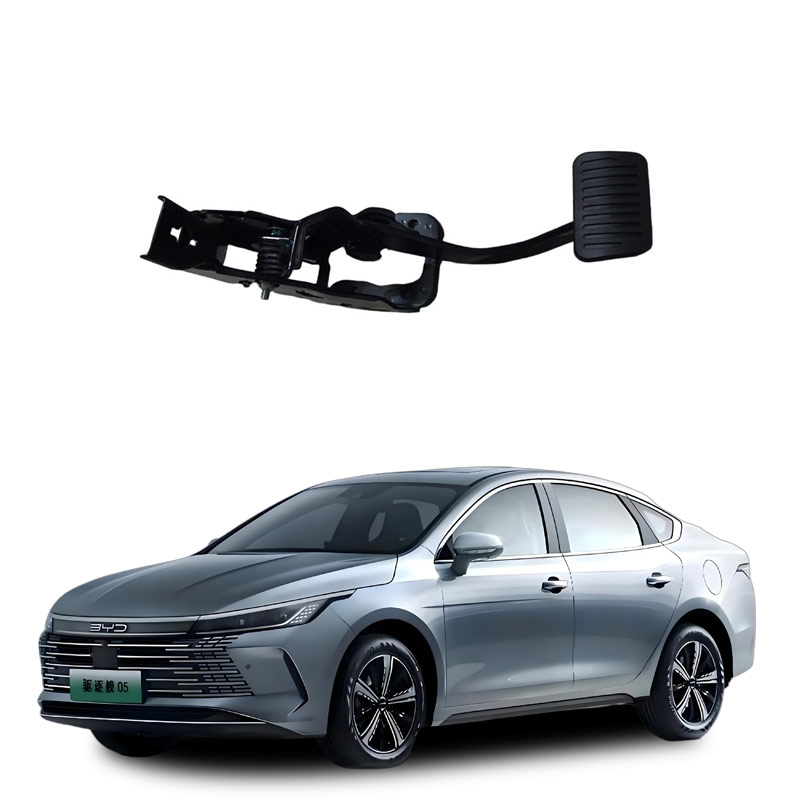
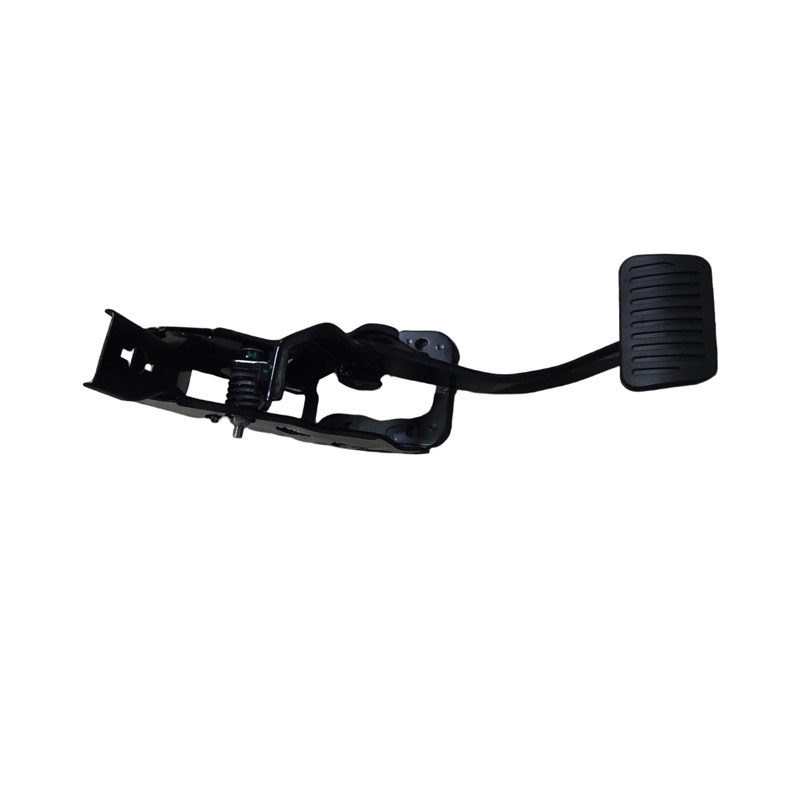
What is the car brake pedal assembly?
The automotive brake pedal assembly is the core control component in the vehicle braking system, responsible for converting the force applied by the driver into braking force to achieve vehicle deceleration or stopping. It is not merely a simple pedal but a system integrating multiple functional components.
Core functions
Driving brake: By pressing the pedal, the entire braking system is triggered, causing the vehicle to decelerate or stop.
Parking brake assistance: In some models, the brake pedal assembly is linked with electronic or mechanical parking systems.
Emergency brake activation: In emergency situations, it responds quickly to ensure safety.
Main components
According to authoritative public information, the brake pedal assembly typically includes the following key components:
Pedal arm: The lever structure directly operated by the driver, mostly composed of steel plates and rubber pads.
Return spring: Automatically resets the pedal after releasing it.
Pedal base/limiting plate: Fixed the pedal and limits its travel.
Connecting rod/lever: Transmits the pedal force to the vacuum booster or main cylinder.
Vacuum booster: Utilizes the vacuum pressure from the engine intake manifold to amplify the braking force (typically 3–5 times).
Brake main cylinder: Converts mechanical energy into hydraulic energy, driving the brake fluid through the pipeline to be transmitted to each wheel's brake pump or caliper.
Travel sensor (for modern models): Monitors the pedal position and pressure, used for electronic systems such as ESP and ABS.
Rubber pad/anti-slip pattern: Enhances the friction between the foot and the pedal, preventing skidding.
Working principle summary
Driver presses the brake pedal;
The pedal arm uses the lever principle to push the lever;
The lever acts on the vacuum booster, using the vacuum pressure difference to amplify the force;
The amplified force drives the brake main cylinder to generate high-pressure brake fluid;
The high-pressure brake fluid is transmitted through the brake pipeline to each wheel's brake pump or caliper;
The brake pads clamp the brake disc (or the brake shoes press against the brake drum), generating friction to slow down or stop the vehicle.
Precautions
New national standards require: Starting from 2026, passenger vehicles are not allowed to achieve complete parking solely by releasing the accelerator pedal; final braking must be accomplished through the brake pedal.
Maintenance tips: If you feel "suspicious position" when pressing the pedal, slow response, or poor braking response, it may be necessary to check the return spring, sensor, or booster status.
Recall cases: In recent years, some manufacturers have initiated recalls due to issues such as loose connection between the pedal and the booster lever. It is recommended to pay attention to official notifications.
The automotive brake pedal assembly is a core control component in the vehicle braking system. Its main function is to convert the mechanical force applied by the driver into braking force to achieve vehicle deceleration or stopping. According to authoritative public information, its specific functions and roles can be summarized as follows:
Core function
Control driving brake: As the driver's right foot operation device, it is used to decelerate or stop the vehicle during driving, serving as the entry point for the "foot brake" (driving brake).
Key human-machine interaction interface: Through the pedal force transmitted through the main cylinder, booster, etc., it converts vehicle kinetic energy into heat energy, achieving effective braking.
Ensuring driving safety: The accuracy of operation directly affects vehicle stability and emergency response capabilities, especially in emergency braking, combined braking, etc.
System composition and working principle
The brake pedal assembly typically includes the following key parts:
Pedal assembly: Includes pedal arm, return spring, limiting structure, and may integrate travel sensor.
Vacuum booster: Utilizes the negative pressure from the engine intake manifold to amplify the pedal force (typically 3–5 times), reducing the driver's burden.
Brake main cylinder: Converts mechanical force into hydraulic pressure, transmitting through brake fluid to each wheel.
Connecting mechanism: Lever, connecting rod, etc., transfer the pedal action to the booster and main cylinder. Special functions and technological evolution
In conjunction with ABS/ESP: In modern vehicles, the brake pedal assembly works in coordination with the Anti-lock Braking System (ABS) and Electronic Stability Program (ESP) to prevent wheel lockup and maintain steering control.
Compliant with new national standards: As of January 1, 2026, the mandatory national standards stipulate that vehicles must complete the final braking through the brake pedal in the default state, and cannot achieve complete stopping solely by releasing the accelerator pedal.
Lightweight design: Some new pedals are made by integrating PEEK plastic or composite materials, reducing the weight by approximately 50%, while maintaining strength and durability.
Operating precautions
Correct timing of pedal application: At lower speeds, apply the clutch first and then the brake; at high speeds, apply the brake first and then the clutch to avoid engine stall or loss of control.
Avoiding incorrect operation: The pedal position is higher than the accelerator (30–50mm), reducing the risk of accidental pedal application.
Regular inspection: Abnormal free travel, soft pedal, or changed pedal travel may indicate faults in the booster or push rod, and prompt timely maintenance.
In summary, the brake pedal assembly is not only the direct execution component for deceleration and braking, but also the starting point of the vehicle's braking safety system. Its performance and operation directly affect driving safety.
If you want to know more, keep reading the other articles on this site!
Please call us if you need such products.
Zhuo Meng Shanghai Auto Co., Ltd. is committed to selling MG&MAXUS auto parts welcome to buy.