What is the left front longitudinal beam sealing assembly of the car?
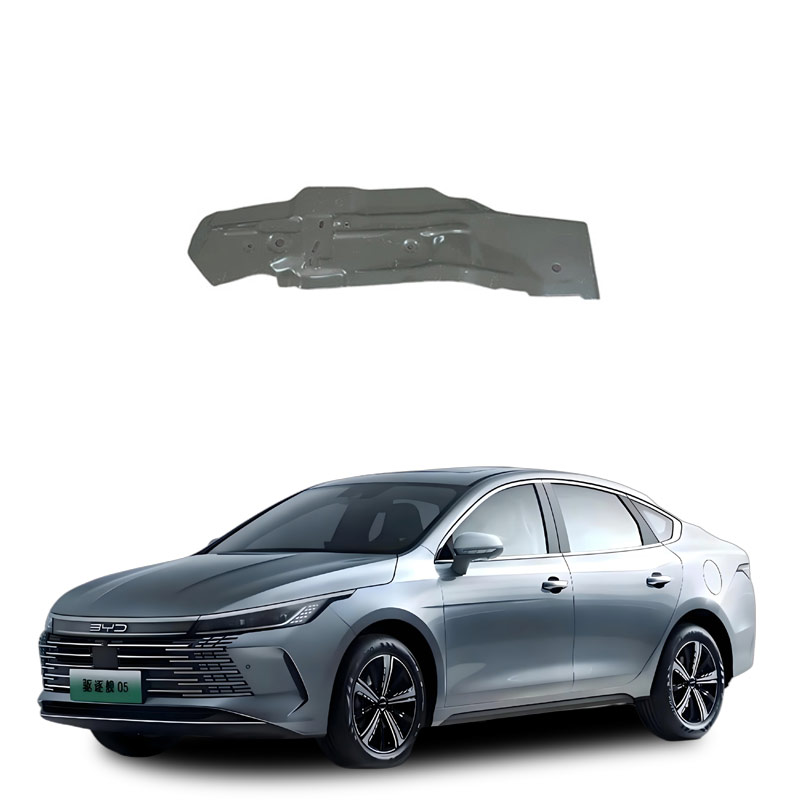
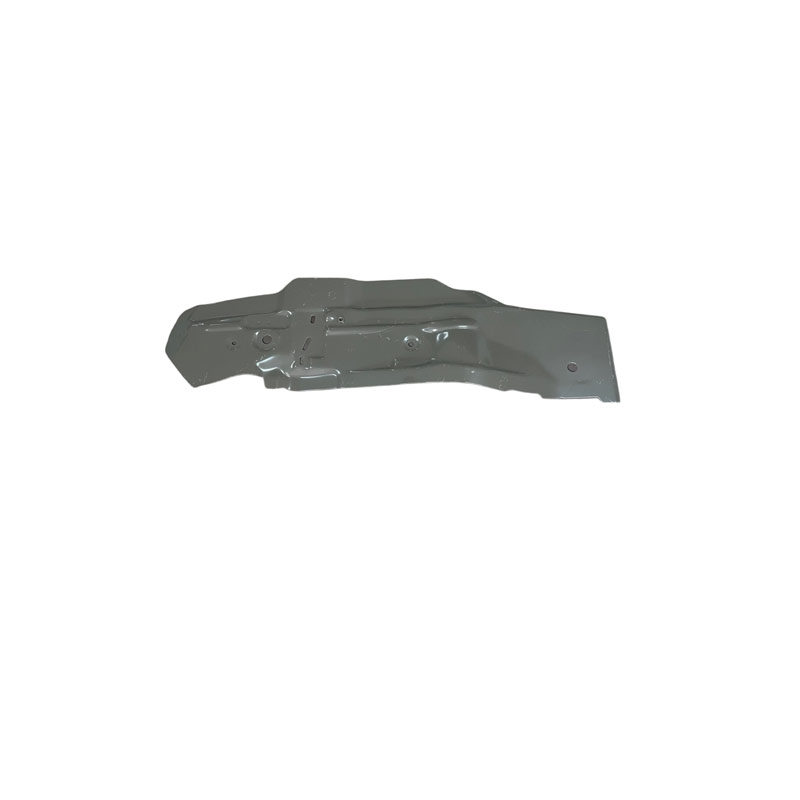
The left front longitudinal beam sealing assembly is a key component in the vehicle body structure, mainly used to seal and protect the rear end opening of the left front longitudinal beam assembly. It serves functions such as structural sealing, dust and water prevention, enhancing stiffness, and assisting in energy absorption.
According to public information:
The left front longitudinal beam is an important load-bearing structure in the front part of the vehicle, located on the left side of the engine compartment. It is usually made of high-strength steel and performs functions of energy absorption and force transmission in frontal or oblique collisions.
The sealing assembly generally refers to the sheet metal part covering the end (usually the rear end) of the longitudinal beam, used to seal the internal cavity of the beam, prevent foreign objects from entering, enhance torsional stiffness, and form an overall connection with surrounding structures (such as the front panel, floor, subframe, etc.).
"Assembly" means that this component not only includes the sealing plate itself, but may also integrate reinforcing ribs, mounting brackets, wire harness fixing points and other auxiliary structures, belonging to the structural components of the complete vehicle.
This term is clearly recorded in patent literature:
The patent title is "Sealing Assembly of the Left Front Longitudinal Beam of the Automobile", with the application number 2010305549996. It was applied for by Lifan Industrial (Group) Co., Ltd. in 2010, used to seal the rear end of the left front longitudinal beam assembly. In short, the left front longitudinal beam sealing assembly = the rear end cover plate of the left front longitudinal beam + related connection/ reinforcement structures, and it is a component that ensures the integrity and safety of the front structure of the vehicle body.
The left front longitudinal beam sealing assembly is a crucial component of the front longitudinal beam structure. Its functions mainly include the following aspects:
Structural load-bearing and energy absorption: As a part of the front longitudinal beam, the sealing assembly participates in forming the high-strength frame of the vehicle's front section. During a collision, it absorbs and disperses impact energy, protecting the safety of the passenger compartment.
Supporting the engine compartment assembly: It provides an installation foundation and structural support for key components such as the engine, transmission, front suspension, and steering system.
Maintaining vehicle rigidity and stability: Together with the right front longitudinal beam, the subframe, and the front panel, it forms a stable front structure, ensuring the vehicle's handling stability and geometric accuracy during operation.
Sealing and protection: The sealing structure can play a certain sealing role, preventing sand, water from entering the longitudinal beam interior, and reducing corrosion (especially for low-alloy steel materials).
Note: If this component is damaged due to an accident and requires sheet metal repair or replacement, due to the involvement of high-temperature welding or cutting, it may lead to a decrease in material strength, positioning accuracy deviation, and thereby affect vehicle safety and driving performance. It is recommended to handle it by a professional repair facility using original factory techniques.
A fault in the left front longitudinal beam sealing assembly of the vehicle is usually classified as a structural component damage and requires high attention. According to the current public information, the following are key information summaries:
Impact and risk of failure
Decreased safety performance: The longitudinal beam is the core structural component for energy absorption and load-bearing of the vehicle. A fault in the sealing assembly may weaken its impact resistance, increasing the risk of deformation of the passenger compartment during a collision.
Reduced driving stability: Even a slight deformation may cause misalignment of the four-wheel alignment, tire wear, driving deviation, or abnormal noise.
Depreciation of used car value: Once the longitudinal beam repair or replacement is involved, the vehicle will be clearly classified as an "accident vehicle", significantly affecting residual value.
Is it an "accident vehicle"?
Yes. According to industry consensus and mainstream platforms (such as Autohome, Youjia):
As long as the front longitudinal beam undergoes repair, cutting, welding, or replacement, regardless of the degree, it belongs to the category of "accident vehicle".
Although the national standard does not have a unified quantification, most testing institutions use the criterion that the deformation, cutting, or welding area of a single side longitudinal beam exceeds 30mm×30mm as one of the criteria for determining an "accident vehicle".
Handling suggestions
Immediately stop using and conduct professional assessment: Avoid driving further to prevent structural fatigue from intensifying.
Choose a regular repair facility:
For minor deformations, try laser correction + reinforcement;
For severe deformations or cracks, replace the entire longitudinal beam, and use original factory or equivalent strength components.
After repair, perform four-wheel alignment and dynamic testing: Ensure the recovery of handling and safety.
If you want to know more, keep reading the other articles on this site!
Please call us if you need such products.
Zhuo Meng Shanghai Auto Co., Ltd. is committed to selling MG&MAXUS auto parts welcome to buy.